Elliptical vs Treadmill: Choose by Joints, Not Calories
At the same effort, ellipticals and treadmills burn about the same. Choose by impact, knee demand, bone loading, running goals and floor space instead.
Choose the elliptical if impact on your feet or a running injury is what limits you, and the treadmill if you want to run, race or load your bones with high-impact work. In lab studies the two machines cost about the same energy at the same effort, so calories should not decide it. The elliptical does ask more of your knees in bend.
How GymScored is paid: Amazon Associates commission plus brand-direct affiliate (Rogue / REP / Titan when approved). No sponsored placements, no paid reviews, no pay-to-rank. Picks are ranked by the Gym Score formula and nothing else. Read the full disclosure.
Calories are a tie at equal effort, so decide on your body. The elliptical cuts impact and plantar pressure and keeps fitness through a running layoff, but it bends the knee more. The treadmill is the only one that trains your stride and lets you add high-impact bone loading. Space-wise, the elliptical is narrower but does not fold.
| Product | Owner rating | Key specs | Pros | Cons | Price | Buy |
|---|---|---|---|---|---|---|
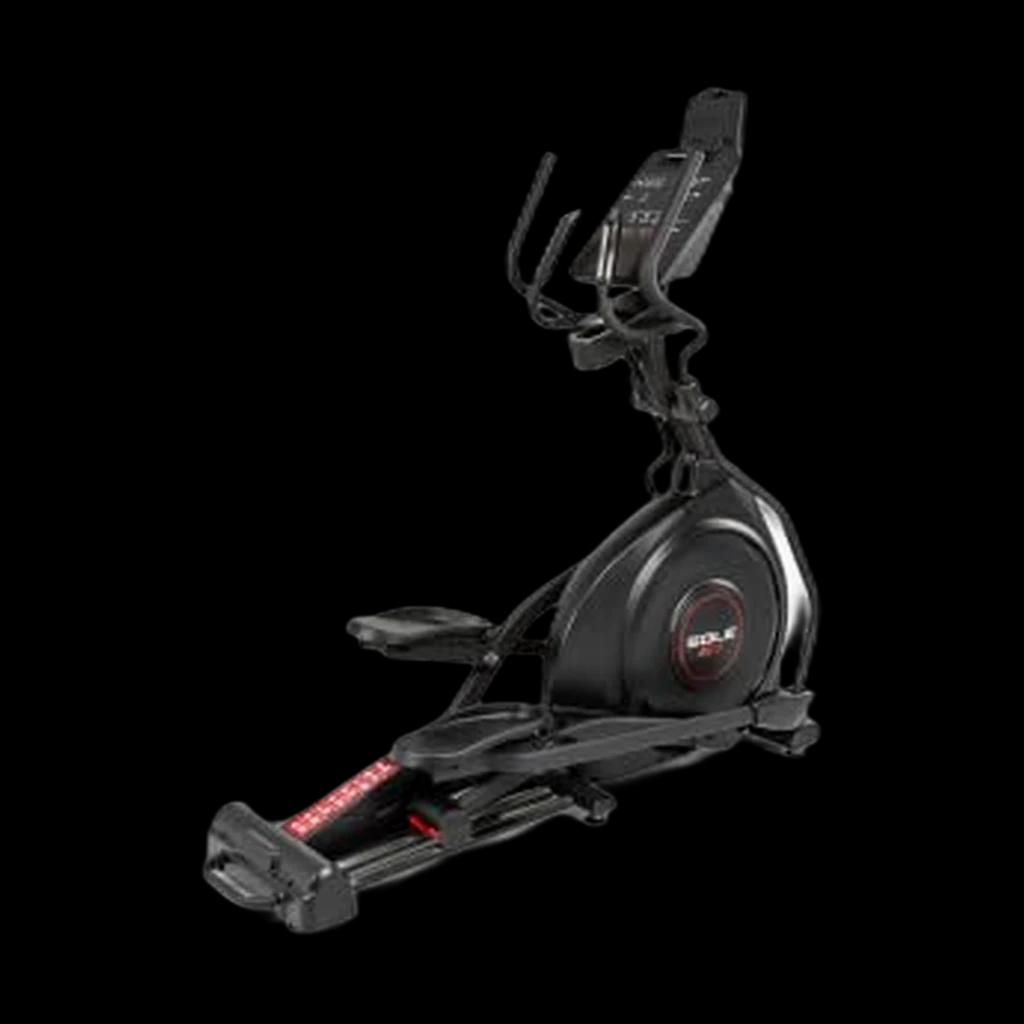 SOLE E25 Elliptical The clearest fit spec in the group. Sole publishes a 20-inch stride, a 20 lb flywheel and no monthly subscription, which covers most adult heights without an app account. | Key specs
| Pros
| Cons
| $1,199.99 | Buy on Amazon | |
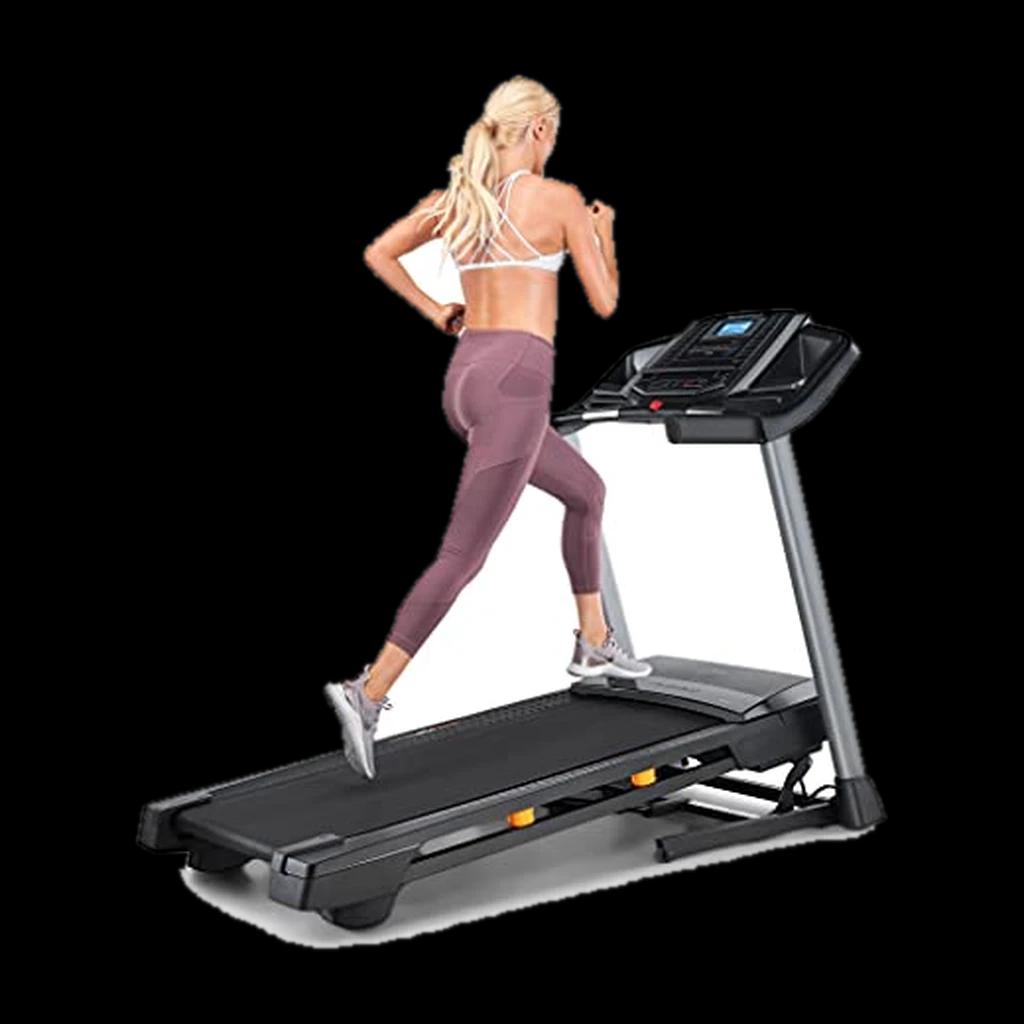 The entry point into the NordicTrack line this roundup already recommends. Same folding deck and iFIT compatibility as the 1750 above it, at roughly half the price — the trade is motor size and deck length. | Gym Score 74 | Key specs
| Pros
| Cons
| $751.14 | Buy on Amazon |
Amazon prices checked Nov 16, 2026. Amazon prices change often — the listing is authoritative.
Elliptical or treadmill, by situation
Decide by your situation, not the generic ranking.
| If | You want | Pick |
|---|---|---|
| Heel or foot pain flares when you walk or run | Lower loading rate and plantar pressure | Elliptical |
| Kneecap pain with deep knee bend | A machine with less knee flexion than the elliptical | Treadmill, walking first |
| You are training for a race | Practice of the actual running stride | Treadmill |
| You are returning from a running injury | Aerobic work without running load | Elliptical |
| You want the most bone loading and are cleared for impact | A path from walking to running | Treadmill |
| Your room is narrow and you will not fold anything | A slimmer frame that stays put | Elliptical |
Most elliptical-versus-treadmill comparisons crown a winner on calories. The lab data says calories are where the two machines sit closest. The real differences are what each does to your feet, knees and bones, whether it trains you to run, and how much floor it takes. That is how to choose.
| What you care about | Elliptical | Treadmill |
|---|---|---|
| Energy cost at the same perceived effort | Similar | Similar |
| Heart rate at that same effort (Brown et al.) | 164 bpm average | 145 bpm average |
| Impact at foot contact | Lower loading rates and plantar pressure than walking | Running is high-impact |
| Bone loading (BHOF) | Low-impact weight-bearing | Walking low-impact, running high-impact |
| Knee bend (Chester et al.) | More than treadmill running | Less than either elliptical |
| Running carryover | Keeps aerobic fitness | Rehearses the running stride |
| Footprint (Sole pair) | 70 x 24 in, no fold | 77 x 36 in, folds to 48 x 36 in |
Calories: a tie at the same effort
A 2010 study in the Journal of Strength and Conditioning Research put 18 untrained college-age adults on both machines for 15 minutes at the same perceived exertion (a rating of 12 to 13). Oxygen consumption and energy expenditure did not differ between the treadmill and the elliptical.
A 2021 study of 18 trained runners matched intensity a different way, at 60%, 70% and 80% of each machine's own peak workload. Oxygen consumption, heart rate and fuel use did not differ between treadmill, elliptical and stepper. Peak oxygen uptake was 49.3 ml/kg/min on the treadmill and 48.0 on the elliptical, not a significant gap.
One result cuts the other way. In a 2016 lab comparison of 16 runners, a standard elliptical used less oxygen than treadmill running, while a lateral elliptical matched the treadmill. How hard you push the machine matters more than which machine it is.
The rule: calories follow how hard you work, not the machine you work on.
The heart-rate catch
The same 2010 study found something that matters if you train by zones. At equal perceived effort, average heart rate was 164 bpm on the elliptical and 145 bpm on the treadmill, about 19 beats apart, while energy cost stayed level.
- A zone you set from treadmill sessions will not line up beat for beat on an elliptical.
- Calibrate each machine on its own, using our heart rate zone guide.
- A higher number on the elliptical display is not proof of a harder workout.
Top pick in this guide
The entry point into the NordicTrack line this roundup already recommends. Same folding deck and iFIT compatibility as the 1750 above it, at roughly half the price — the trade is motor size and deck length.
Feet and knees: what the elliptical changes
The elliptical's low-impact reputation holds up, with a twist at the knee.
A 2007 study in Medicine and Science in Sports and Exercise compared 15 men walking and using an elliptical at matched cadence and step length. Loading rates around heel strike were all smaller on the elliptical. The cost: greater peak hip, knee and ankle flexion, and larger hip flexor and knee extensor moments. The authors advised weighing knee function and muscle strength before using it for training or rehab.
A 2020 pilot study of 10 young adults on four commercial ellipticals found plantar pressures lower than walking for most measures, though the models differed from one another under the heel.
| The elliptical reduces | The elliptical does not reduce |
|---|---|
| Loading rate at heel strike, vs walking | Knee extensor demand, which rose vs walking |
| Peak plantar pressure, vs walking | Knee bend, which exceeded treadmill running |
| Maximum heel force, vs walking | Variation between models, which showed under the heel |
That knee-bend finding comes from the 2016 runner study: sagittal knee range of motion was greater on both elliptical types than on the treadmill. The lateral elliptical's extra knee flexion and abduction, the authors warned, may aggravate anterior knee pain.
Knee check: the elliptical removes impact, not knee work. If deep knee bend is what hurts, test it before you buy.
Bones: both count, running counts most
The Bone Health and Osteoporosis Foundation lists elliptical training machines and fast walking on a treadmill as low-impact weight-bearing exercise. It lists jogging and running as high-impact weight-bearing exercise, the kind it says helps build bones.
- If you are cleared for impact, a treadmill lets you move up from walking to running.
- If you have broken a bone from osteoporosis or are at risk of one, the foundation says you may need to avoid high-impact work. Ask your clinician first.
- Either way, the elliptical still counts as weight-bearing. It is not a seated bike.
Running: only the treadmill rehearses it
The 2021 runner study concluded the elliptical is a suitable substitute when running load has to come down, such as during recovery from a running injury. It holds your aerobic engine. It does not copy the stride: the 2016 study measured different knee and hip motion on both ellipticals than in treadmill running.
Race rule: for a race, run. For a layoff, the elliptical keeps the engine warm.
If you are training for a race, set treadmill sessions with our treadmill pace chart.
Floor space: narrower, but it never folds
Sole publishes full dimensions for both its E25 elliptical and its F80 treadmill, which makes a fair same-brand comparison. Floor area is our arithmetic from Sole's figures.
| Measure | Sole E25 elliptical | Sole F80 treadmill |
|---|---|---|
| Length | 70 in | 77 in (48 in folded) |
| Width | 24 in | 36 in (36 in folded) |
| Height | 70 in | 59 in (66 in folded) |
| Floor area | about 11.7 sq ft | about 19.3 sq ft (12 folded) |
The E25 is a foot narrower and needs about 7.6 square feet less floor in use. Folded, the F80 needs about the same floor as the E25, so a folding treadmill wins only if you fold it after every session. Neither Sole page gives a minimum ceiling height. You stand on raised pedals on an elliptical, so measure your head clearance against the machine's step-up height before ordering.
If you are buying
- Elliptical: the SOLE E25 is our pick for most heights, with a 20-inch stride and no subscription, per Sole. Our elliptical guide covers stride length and the rest of the field.
- Treadmill: the NordicTrack T Series 6.5 S is the entry NordicTrack folding treadmill in our treadmill rankings, and the Sole F80 is the no-subscription step up.
- Both on one budget: you do not need two machines. Pick the one your joints will let you use four days a week.
Frequently Asked Questions
Is an elliptical or a treadmill better for weight loss?+
Neither has a built-in edge. In a 2010 study, adults working at the same perceived effort used the same energy on both, and a 2021 study of trained runners found no difference at matched workloads. Pick the machine you will use most often and push hardest on.
Is the elliptical better for bad knees?+
It depends on what hurts. The elliptical lowers impact at foot contact compared with walking, but studies found more knee bend and greater knee extensor demand. People whose knees hurt with deep bending, such as kneecap pain, may find it no easier.
Does the elliptical count as weight-bearing exercise for bones?+
Yes. The Bone Health and Osteoporosis Foundation lists elliptical training machines as low-impact weight-bearing exercise. Running is high-impact weight-bearing exercise, which the foundation says helps build bone, but it may not be suitable if you are at risk of fracture.
Can an elliptical replace running?+
For aerobic fitness, largely yes: trained runners showed the same oxygen use and heart rate on both at matched workloads, and researchers called the elliptical a suitable substitute during running injury recovery. It does not reproduce the running stride, so race training still needs running.
Why is my heart rate higher on the elliptical?+
In one study, heart rate averaged about 19 beats per minute higher on the elliptical than the treadmill at the same perceived effort, even though energy use was the same. Set heart rate zones separately for each machine.
Sources & Research
- Journal of Strength and Conditioning Research — Brown et al. 2010: Energy expenditure on a treadmill vs an elliptical device at a self-selected intensityresearch
- International Journal of Sport Nutrition and Exercise Metabolism — Bosch et al. 2021: Physiological and metabolic responses on treadmill, elliptical trainer and stepperresearch
- Journal of Applied Biomechanics — Chester et al. 2016: Lower limb kinematics and metabolic cost during elliptical exercise and treadmill runningresearch
- Medicine and Science in Sports and Exercise — Lu et al. 2007: Joint loading in the lower extremities during elliptical exerciseresearch
- The Foot — Cesar et al. 2020: Plantar pressure on elliptical devices vs overground walkingresearch
- Bone Health and Osteoporosis Foundation — Osteoporosis exercise for strong bonesauthority
- Sole Fitness — SOLE E25 elliptical specificationsmanufacturer
- Sole Fitness — SOLE F80 treadmill specificationsmanufacturer
Your next step
Chosen a machine? Compare the ranked ones.
Related reviews
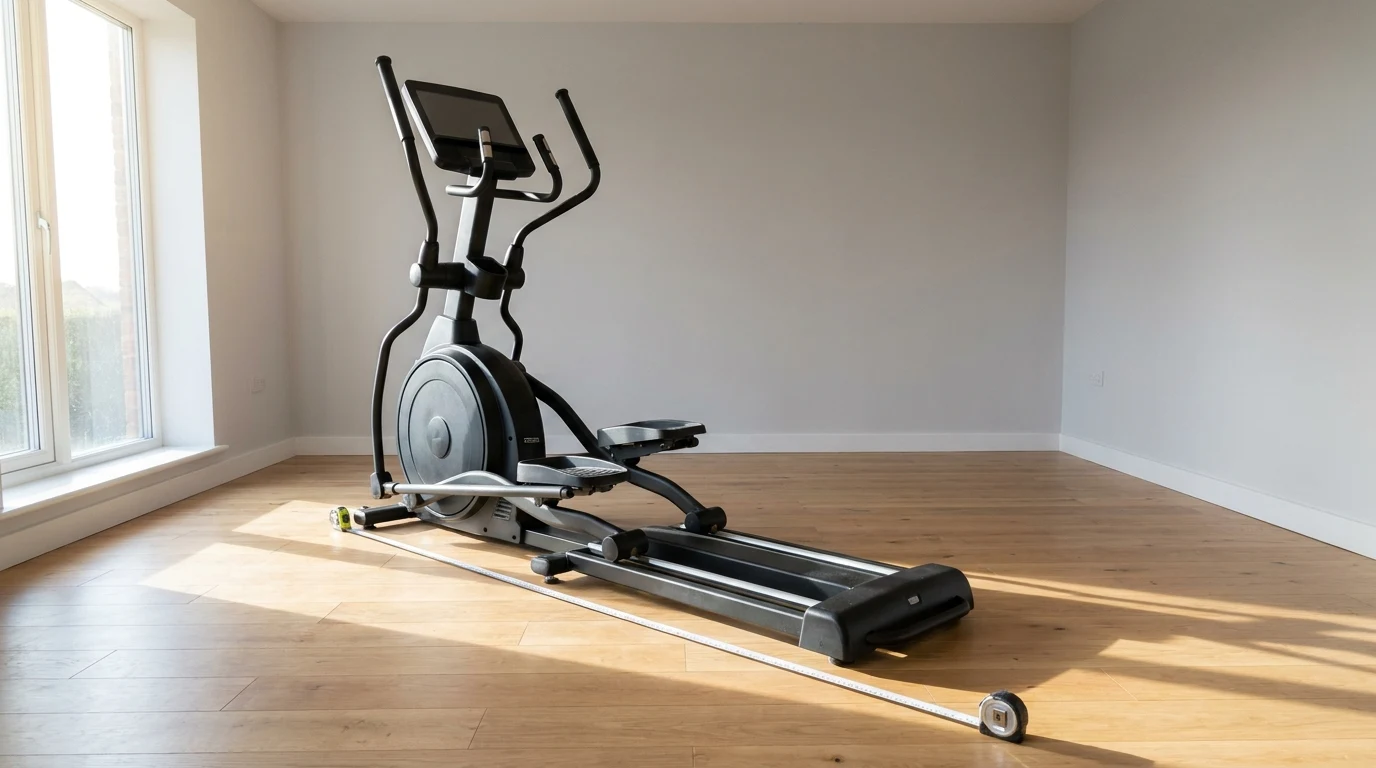
Best Ellipticals for Home Use in 2026: Stride Decides
Stride length decides which elliptical fits you. Four home ellipticals that clear an 18-inch stride and 4.3 stars, from $550 to $1,000, compared.
Best Treadmill for Home Runners in 2026
The NordicTrack Commercial 1750 is the best running treadmill of 2026; the T Series 10 is the value runner and the MERACH is the incline pick. Seven decks scored.
How to Use Heart Rate Zones for Home Cardio (the Right Way)
Set heart rate zones from your max HR, spend most home cardio time moderate with some vigorous work, and skip the fat-burning-zone myth. The simple system.
Hilly Shore Labs
Editorial teamThe independent product research team behind GymScored. Every recommendation is researched, never hands-on tested — recommendations draw on manufacturer specifications and available published research. Category order is editorial; the Gym Score is a separate comparison aid.
174 listed products across 27 home gym categories. Scores use category criteria, value and owner-rating inputs; missing evidence limits what a score can tell you.
See the scoring methodology and who we are.
Affiliate disclosure: GymScored is a participant in the Amazon Services LLC Associates Program. We earn from qualifying purchases at no extra cost to you. Full disclosure →