Treadmill Pace Chart: MPH to Min/Mile and the 1% Incline
A calculated treadmill pace chart from 3 to 10 mph with km/h, min/km and 5K, 10K and half times, plus what the 1% incline study tested and what it didn't.
Minutes per mile = 60 ÷ mph: 5 mph is a 12:00 mile, 6 mph is 10:00, 7.5 mph is 8:00, 8 mph is 7:30 and 10 mph is 6:00. The 1% incline rule traces to Jones and Doust (1996): in nine trained male runners at about 6.5 to 11.2 mph, a 1% grade matched the energy cost of road running. At the two slowest speeds tested, a flat treadmill matched too, and walking was never tested.
How GymScored is paid: Amazon Associates commission plus brand-direct affiliate (Rogue / REP / Titan when approved). No sponsored placements, no paid reviews, no pay-to-rank. Picks are ranked by the Gym Score formula and nothing else. Read the full disclosure.
Divide 60 by the speed for minutes per mile, and treat 1% incline as a default for trained runners at 6.5 mph and up, not a rule every treadmill session needs.
| Product | Rating | Pros | Cons | Price | |
|---|---|---|---|---|---|
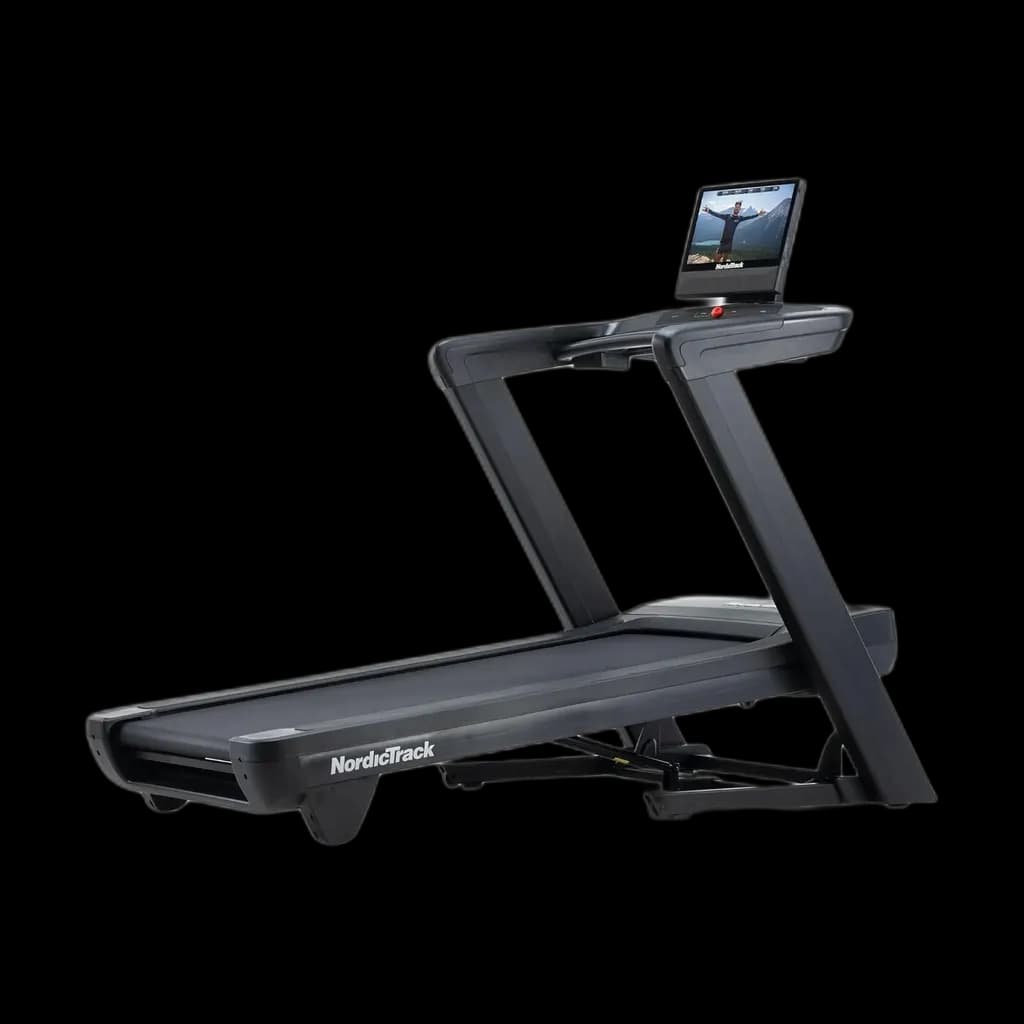 Best software + motor combo under $2,000. iFIT integration is the differentiator. ↑ 3.5 Chp Motor↑ 60" Deck↓ Ifit Subscription Near-RequiredBased on 25 buyer mentions | 4.6 Gym Score 85 | Pros
| Cons
| $1,999.00 | Buy on Amazon |
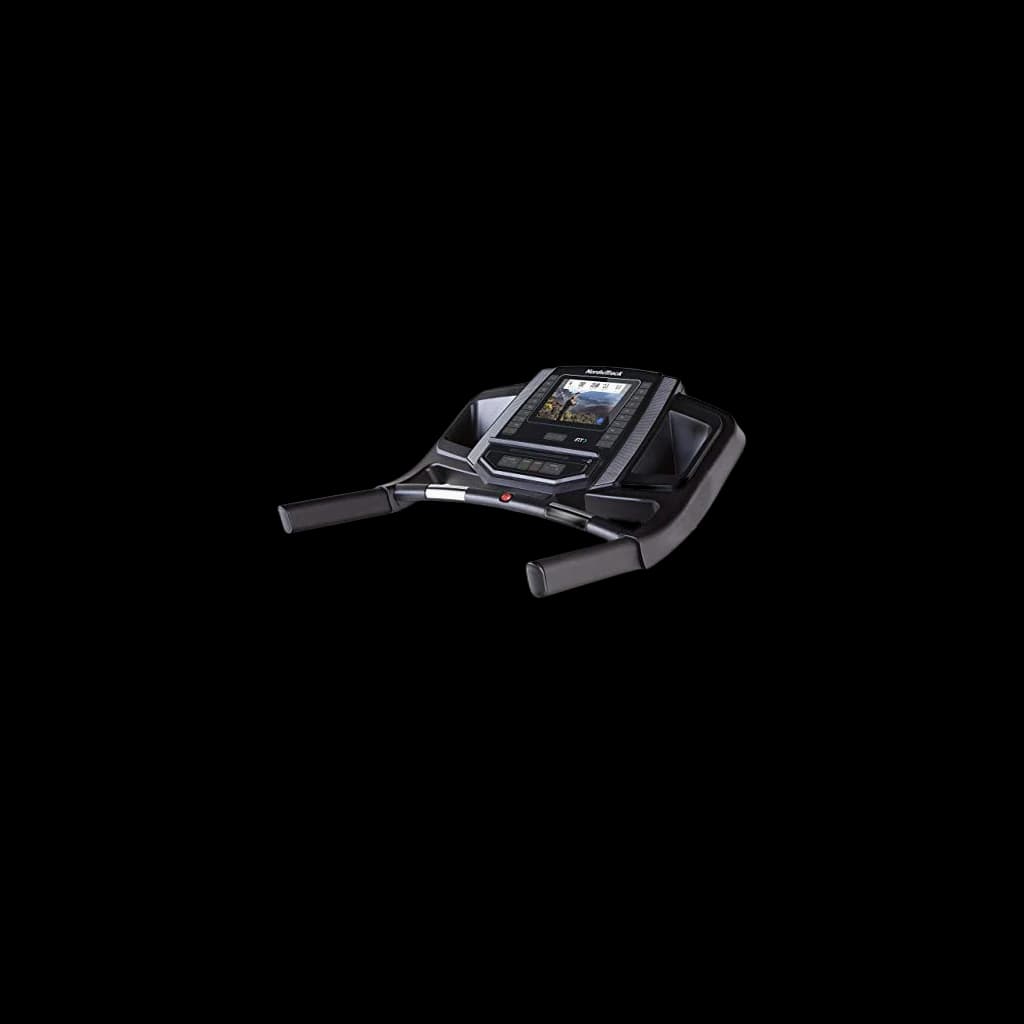 The current NordicTrack budget runner: a 10-inch tilting touchscreen, folding frame, 12 mph top speed, and 0–12% incline at about $999. Best for walkers and moderate runners who value guided workouts. ↑ Quality↑ Value for money↓ DurabilityBased on 1,595 buyer mentions | 3.8 Gym Score 73 | Pros
| Cons
| $999.00 | Buy on Amazon |
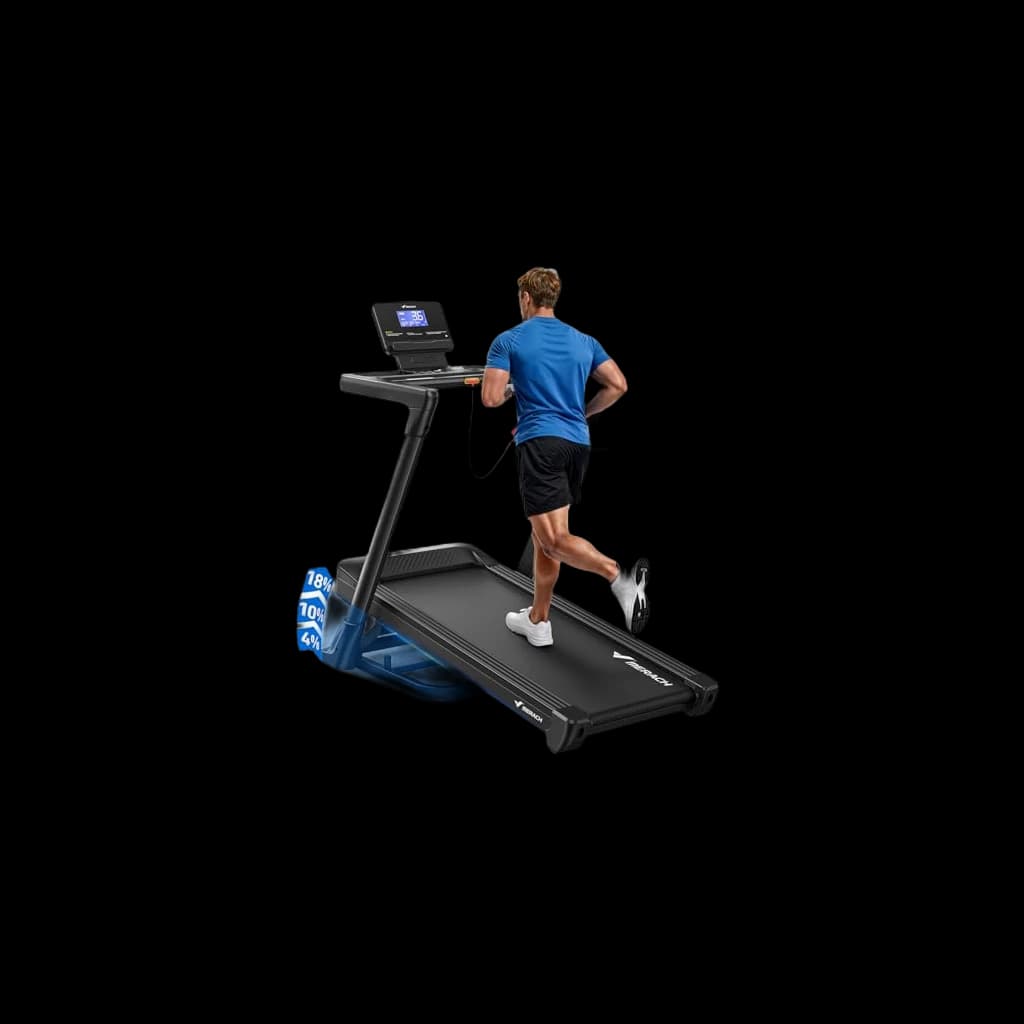 The value pick for incline work. MERACH state auto incline to 15-18% on a wide belt, which is a steeper grade than most treadmills at twice the price offer. | Gym Score 74 | Pros
| Cons
| $449.99 | Buy on Amazon |
Amazon prices checked Sep 12, 2026. Amazon prices change often — the listing is authoritative.
Metric-first treadmill pace chart: 5 to 16 km/h
Calculated, not measured: seconds per km = 3,600 ÷ km/h; 1 mile = 1.609344 km (NIST Guide to the SI, Appendix B.9); half marathon = 21.0975 km (World Athletics). Rounded to the nearest second, steady speed, no pauses.
| Speed (km/h) | Speed (mph) | Pace per km | Pace per mile | 5K | 10K | Half marathon |
|---|---|---|---|---|---|---|
| 5 | 3.1 | 12:00 | 19:19 | 1:00:00 | 2:00:00 | 4:13:10 |
| 6 | 3.7 | 10:00 | 16:06 | 50:00 | 1:40:00 | 3:30:59 |
| 7 | 4.3 | 8:34 | 13:48 | 42:51 | 1:25:43 | 3:00:50 |
| 8 | 5.0 | 7:30 | 12:04 | 37:30 | 1:15:00 | 2:38:14 |
| 9 | 5.6 | 6:40 | 10:44 | 33:20 | 1:06:40 | 2:20:39 |
| 10 | 6.2 | 6:00 | 9:39 | 30:00 | 1:00:00 | 2:06:35 |
| 11 | 6.8 | 5:27 | 8:47 | 27:16 | 54:33 | 1:55:05 |
| 12 | 7.5 | 5:00 | 8:03 | 25:00 | 50:00 | 1:45:29 |
| 13 | 8.1 | 4:37 | 7:26 | 23:05 | 46:09 | 1:37:22 |
| 14 | 8.7 | 4:17 | 6:54 | 21:26 | 42:51 | 1:30:25 |
| 15 | 9.3 | 4:00 | 6:26 | 20:00 | 40:00 | 1:24:23 |
| 16 | 9.9 | 3:45 | 6:02 | 18:45 | 37:30 | 1:19:07 |
Set the incline by what the session is for
Decide by your situation, not the generic ranking.
| If | You want | Pick |
|---|---|---|
| Matching a flat road run | 1% if you run at 6.5 mph or faster | The speeds and runners where Jones and Doust found 1% matched road energy cost |
| Easy running under 6.5 mph | 0% or 1%, whichever you prefer | The study tested nothing slower, and at its two slowest speeds 0% matched the road too |
| Walking workout | Set by the talk test, not a rule | Walking was never tested; incline here adds work rather than correcting for indoors |
| Hill session | Whatever the plan calls for | The incline is the workout, not a correction |
| Comparing runs over time | Same machine, same speed, same incline | Belt speed can differ from the display, so repeatable settings beat cross-machine comparisons |
At the speed on the console, how long does a mile take? The chart below answers that for every half-mph step from a brisk walk to a 6-minute mile, with 5K, 10K and half-marathon times alongside.
It can't tell you whether the belt really moves at that speed, or whether you need an incline to match running outside. Those get their own sections.
The treadmill pace chart: 3.0 to 10.0 mph
Every figure here is calculated, not measured: seconds per mile = 3,600 ÷ mph, and 1 mile = 1.609344 km, the exact factor in NIST's unit-conversion guide. Race times use 5 km, 10 km and 21.0975 km, the half-marathon distance World Athletics gives. Times are rounded to the nearest second and assume a steady speed with no pauses.
| Speed (mph) | Speed (km/h) | Pace per mile | Pace per km | 5K | 10K | Half marathon |
|---|---|---|---|---|---|---|
| 3.0 | 4.8 | 20:00 | 12:26 | 1:02:08 | 2:04:16 | 4:22:11 |
| 3.5 | 5.6 | 17:09 | 10:39 | 53:16 | 1:46:31 | 3:44:44 |
| 4.0 | 6.4 | 15:00 | 9:19 | 46:36 | 1:33:12 | 3:16:38 |
| 4.5 | 7.2 | 13:20 | 8:17 | 41:25 | 1:22:51 | 2:54:48 |
| 5.0 | 8.0 | 12:00 | 7:27 | 37:17 | 1:14:34 | 2:37:19 |
| 5.5 | 8.9 | 10:55 | 6:47 | 33:54 | 1:07:47 | 2:23:01 |
| 6.0 | 9.7 | 10:00 | 6:13 | 31:04 | 1:02:08 | 2:11:06 |
| 6.5 | 10.5 | 9:14 | 5:44 | 28:41 | 57:21 | 2:01:01 |
| 7.0 | 11.3 | 8:34 | 5:20 | 26:38 | 53:16 | 1:52:22 |
| 7.5 | 12.1 | 8:00 | 4:58 | 24:51 | 49:43 | 1:44:53 |
| 8.0 | 12.9 | 7:30 | 4:40 | 23:18 | 46:36 | 1:38:19 |
| 8.5 | 13.7 | 7:04 | 4:23 | 21:56 | 43:52 | 1:32:32 |
| 9.0 | 14.5 | 6:40 | 4:09 | 20:43 | 41:25 | 1:27:24 |
| 9.5 | 15.3 | 6:19 | 3:55 | 19:37 | 39:15 | 1:22:48 |
| 10.0 | 16.1 | 6:00 | 3:44 | 18:38 | 37:17 | 1:18:39 |
The anchors worth memorising: 6 mph is a 10:00 mile, 7.5 mph is 8:00, 8 mph is 7:30, 10 mph is 6:00. Everything else sits between them.
Console in km/h? The metric-first chart on this page runs from 5 to 16 km/h.
Doing the conversion yourself
The formula is 60 ÷ mph for minutes per mile, and 60 ÷ km/h for minutes per kilometre. Two traps catch most people:
- Decimals are not seconds. 60 ÷ 8 = 7.5 minutes, which is 7:30, not 7:05. Multiply the decimal part by 60.
- Equal speed steps are not equal pace steps. Going from 5 to 6 mph takes two minutes off the mile (12:00 to 10:00). Going from 9 to 10 mph takes 40 seconds off (6:40 to 6:00).
From a target pace back to a speed
- Turn the pace into decimal minutes: 9:30 becomes 9.5.
- Divide 60 by it: 60 ÷ 9.5 = 6.32 mph.
- Round to what the console allows. At 6.3 mph the calculated pace is 9:31, one second off. That is rounding, not a missed workout.
Where the 1% incline rule comes from
The rule traces to one paper: Andrew Jones and Jonathan Doust, published in the Journal of Sports Sciences in 1996. Their premise: a treadmill removes air resistance, so the same speed costs less energy indoors. Nine trained male runners, all used to treadmills, ran 6-minute bouts at six speeds, from about 6.5 to 11.2 mph, on a level road and on a treadmill at 0%, 1%, 2% and 3% grade, with oxygen uptake measured each time.
| Speed tested | mph (calculated) | Pace per mile | Treadmill grade that matched the road |
|---|---|---|---|
| 2.92 m/s | 6.5 | 9:11 | 0% or 1% |
| 3.33 m/s | 7.4 | 8:03 | 0% or 1% |
| 3.75 m/s | 8.4 | 7:09 | 1% only |
| 4.17 m/s | 9.3 | 6:26 | 1% or 2% |
| 4.58 m/s | 10.2 | 5:51 | 1% or 2% |
| 5.0 m/s | 11.2 | 5:22 | No grade differed significantly |
1% was the one grade that matched the road at every speed, hence the rule. But at 6.5 and 7.4 mph, a flat treadmill was not significantly different from the road either.
What the study did not test
- Slower running. Nothing under about 6.5 mph, a 9:11 mile. Most of the chart above sits below that.
- Walking. No walking speeds at all.
- Other runners. Nine trained men, habituated to the treadmill. No women, beginners or older adults.
- Long runs. The conclusion covers bouts of roughly 5 minutes.
- Anything but energy cost. It measured oxygen uptake, not how the run felt or how stride changed.
How to read the 1% rule: it is a sound default for a trained runner at 6.5 mph and up who wants a treadmill run to cost what a flat road run costs. It is not a correction every workout needs.
Incline never changes the chart: 6 mph is a 10:00 mile at 0% or 1%. Only the work changes, so log speed and incline separately.
Why your treadmill and your watch disagree
The chart assumes the belt moves at the speed displayed. It often doesn't, exactly. A 2021 study in Scientific Reports tracked belt speed with motion capture on four laboratory treadmills, one of them low-cost and one with a worn-out belt and bed, while seven people walked and ran. Average belt speed ran between about 98% and 103% of the speed on the control panel, and belts slowed briefly with each footstrike, by more for heavier runners.
Run that range through the formula at a displayed 6 mph:
| Belt speed | Actual mph | Actual pace per mile |
|---|---|---|
| 98% of display | 5.88 | 10:12 |
| 100% | 6.00 | 10:00 |
| 103% of display | 6.18 | 9:43 |
That is a 29-second spread per mile. Before blaming either device, check the boring causes: km/h vs mph, a paused console, and whether warm-up and cooldown were logged on one device but not the other. If a consistent gap remains, use the calibration or service procedure in the owner's manual rather than improvising checks near a moving belt.
Using the chart for walking workouts
The CDC counts walking briskly, at 2.5 mph or faster, as moderate-intensity activity, and its talk test is the simplest effort check there is: at moderate intensity you can talk but not sing; at vigorous intensity you can't say more than a few words without pausing for breath.
Two things change for walkers:
- The 1% rule has no evidence behind it here. Jones and Doust never tested walking. On a walk, incline is a way to add work, set by the talk test, not a correction for being indoors.
- Walk-run sessions need total time ÷ total distance. Ten minutes at 6 mph covers 1 mile; ten minutes at 4 mph covers about 0.67. The 20-minute average is 12:00 per mile, not the 12:30 you get by averaging the 10:00 and 15:00 paces.
Stop the session for chest pain, faintness or anything alarming, whatever the chart says.
What the chart asks of a treadmill
Two specs decide whether a machine can run this chart: top speed and incline. The NordicTrack Commercial 1750 lists a 12 mph top speed, a 5:00 mile, with incline from -3% to 15%. The NordicTrack T Series 10 also tops out at 12 mph, with 0 to 12% incline. For hill work on a budget, the MERACH Treadmill with 15/18% Auto Incline is sold on its steep incline range, as stated by MERACH.
For the full runner's shortlist, see the best treadmills for home runners. Weighing a class-led machine? See NordicTrack Commercial 1750 vs Peloton Tread.
Frequently Asked Questions
How do I convert treadmill mph to minutes per mile?+
Divide 60 by the speed. 6 mph gives 10 minutes per mile, 8 mph gives 7.5 minutes, which is 7:30. Multiply any decimal part of a minute by 60 to get seconds.
What pace is 6 mph on a treadmill?+
A 10:00 mile, or about 6:13 per kilometre. Held steady, that is a 31:04 5K, a 1:02:08 10K and a 2:11:06 half marathon, all calculated.
Should I always set the treadmill to 1% incline?+
Not always. In the 1996 Jones and Doust paper, 1% matched the energy cost of road running for nine trained male runners at about 6.5 to 11.2 mph. At the two slowest speeds tested, a flat treadmill matched too, and slower running and walking were not tested.
Does incline change my pace on the chart?+
No. The belt speed sets the pace, so 6 mph is a 10:00 mile at any incline. Incline changes how much work that pace takes, so log the two separately.
Why does my watch show a different pace from the treadmill?+
Check units, paused time and whether both devices logged the same start and finish first. Belt speed itself can differ from the display: on four lab treadmills tracked with motion capture in a 2021 Scientific Reports paper, average belt speed ran about 98 to 103% of the displayed speed.
How do I work out average pace for a walk-run session?+
Divide total time by total distance. Ten minutes at 6 mph plus ten minutes at 4 mph covers about 1.67 miles in 20 minutes, a 12:00 average, not the 12:30 you get by averaging the two paces.
Sources & Research
- Journal of Sports Sciences (PubMed) — A 1% treadmill grade most accurately reflects the energetic cost of outdoor running (Jones and Doust, 1996)research
- Scientific Reports (PMC) — A new method for measuring treadmill belt velocity fluctuations: effects of treadmill type, body mass and locomotion speed (2021)research
- NIST — NIST Guide to the SI, Appendix B.9: Factors for units listed by kind of quantity or field of sciencestandard
- World Athletics — Half Marathonauthority
- CDC — How to Measure Physical Activity Intensityauthority
Related reviews
Best Treadmill for Home Runners in 2026
The NordicTrack Commercial 1750 is the best running treadmill of 2026; the T Series 10 is the value runner and the MERACH is the incline pick. Seven decks scored.
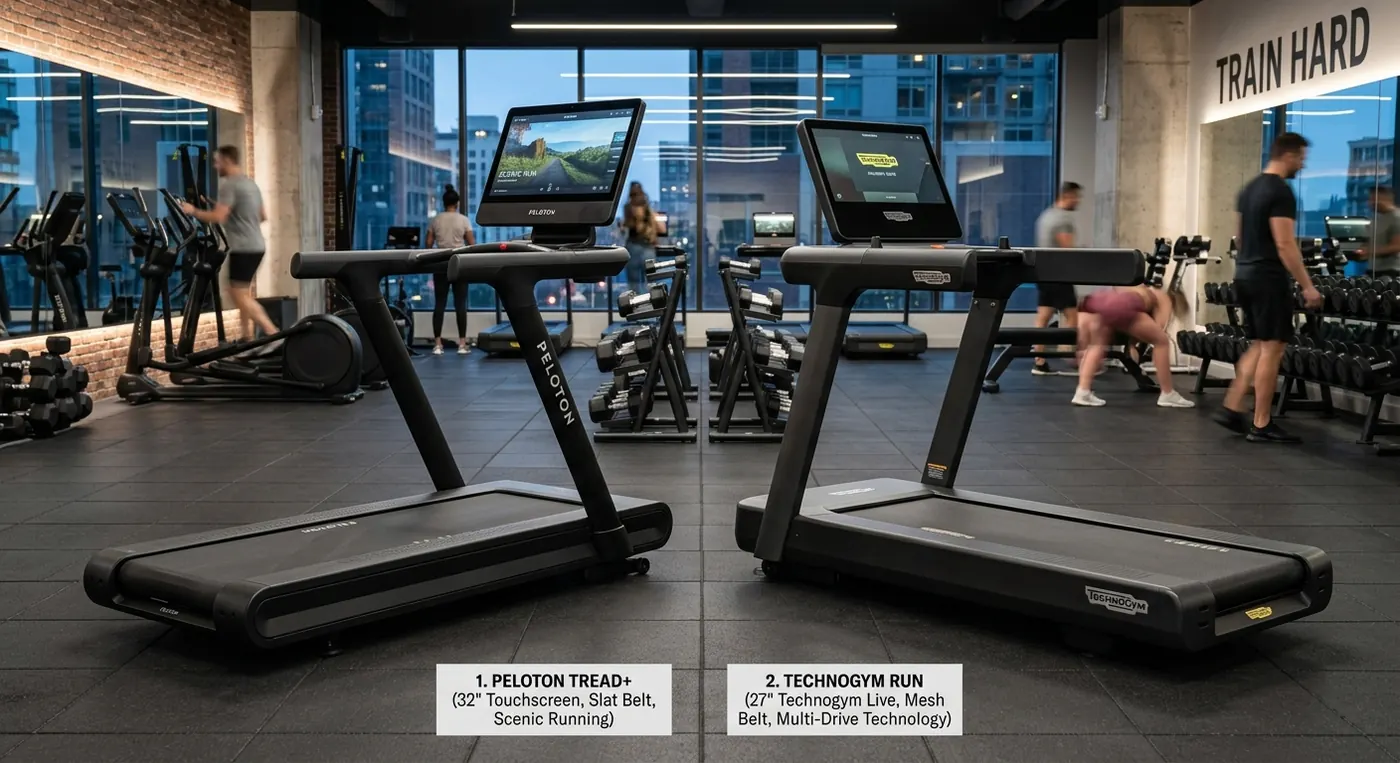
NordicTrack Commercial 1750 vs Peloton Tread: Which Treadmill Wins?
NordicTrack 1750 wins on hardware; the Peloton Tread wins on content polish. We compare both treadmills on motor, deck, software, and price to settle it.
Does Your Treadmill Need an App to Work? Three Tiers
Treadmills split into three tiers: standalone, account-to-activate, and membership-gated. No subscription does not mean no app - check before you buy.
Hilly Shore Labs
Editorial teamThe independent product research team behind GymScored. Every recommendation is researched, never hands-on tested — rankings come from manufacturer specifications, published standards, and aggregated buyer sentiment.
163 products scored across 26 home gym categories, each on the same 5-dimension Gym Score formula.
See the scoring methodology and who we are.
Affiliate disclosure: GymScored is a participant in the Amazon Services LLC Associates Program. We earn from qualifying purchases at no extra cost to you. Full disclosure →