Power Rack Attachments: What to Buy First
Which power rack attachments to buy first, in order, with the two fitment numbers to measure before you shop and five verified picks under $70.
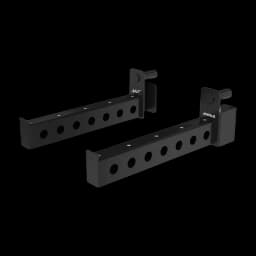
- 800 Lb Maker Rating
- Sold As A Pair
- Simple Pin Mount
Evidence snapshot · Updated September 23, 2026
The evidence-backed answer
Mikolo Safety Catches Spotter Arms is our default pick for the scope of this guide: Buy a second pair of J-cups first if your rack only came with one, then these. Flat spotter arms for 2x2 uprights with 1-inch holes, rated by the maker to 800 lb the pair, and the attachment that makes training to failure alone a reasonable thing to do.
Scope: 5 shortlisted products compared using published specifications, owner-feedback signals, value and category-specific performance. 5 comparison entries match our catalog. Retailer rating totals are snapshots, not a count of people whose reviews we independently analyzed. This is research synthesis, not hands-on testing.
The side-by-side comparison below carries each shortlisted product's owner rating, price context, pros, cons and buy state in one actionable view.
How GymScored is paid: Amazon Associates commission plus brand-direct affiliate (Rogue / REP / Titan when approved). No sponsored placements, no paid reviews, no pay-to-rank. Picks are ranked by the Gym Score formula and nothing else. Read the full disclosure.
Buy attachments in order of how often you will touch them, not how many exercises they unlock. A second pair of J-cups, then spotter arms, then plate storage covers the friction that actually stops people training, and all three fit inside the price of one lat tower. Measure your upright size and hole diameter first: almost every returned attachment is a fitment mistake, not a quality one.
| Product | Owner rating | Key specs | Pros | Cons | Price | Buy |
|---|---|---|---|---|---|---|
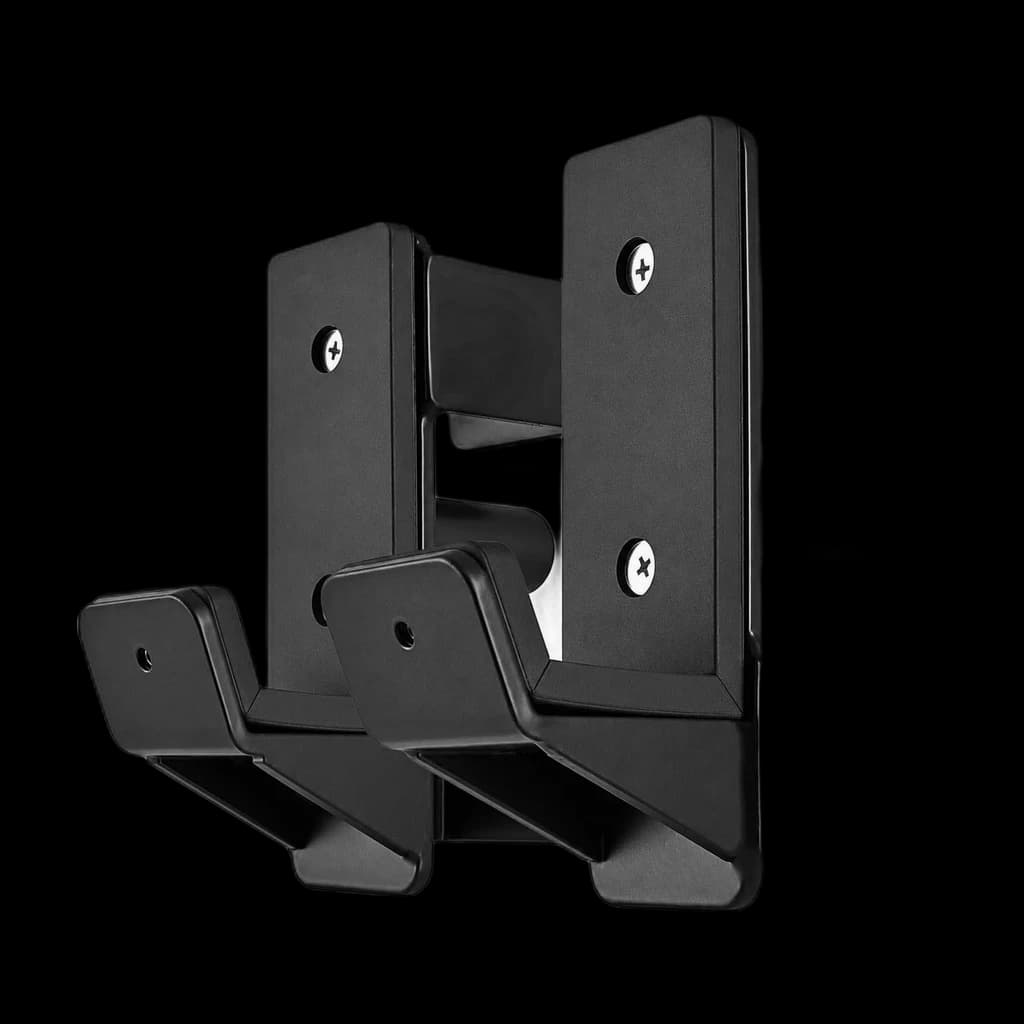 The first attachment to buy twice. Bottom-reinforced steel cups for 2x2 uprights with 1-inch holes, rated by the maker to 1,200 lb the pair, with rubber pads between bar and cup. | Owner rating Gym Score 72 | Key specs
| Pros
| Cons
| $35.99 | Buy on Amazon |
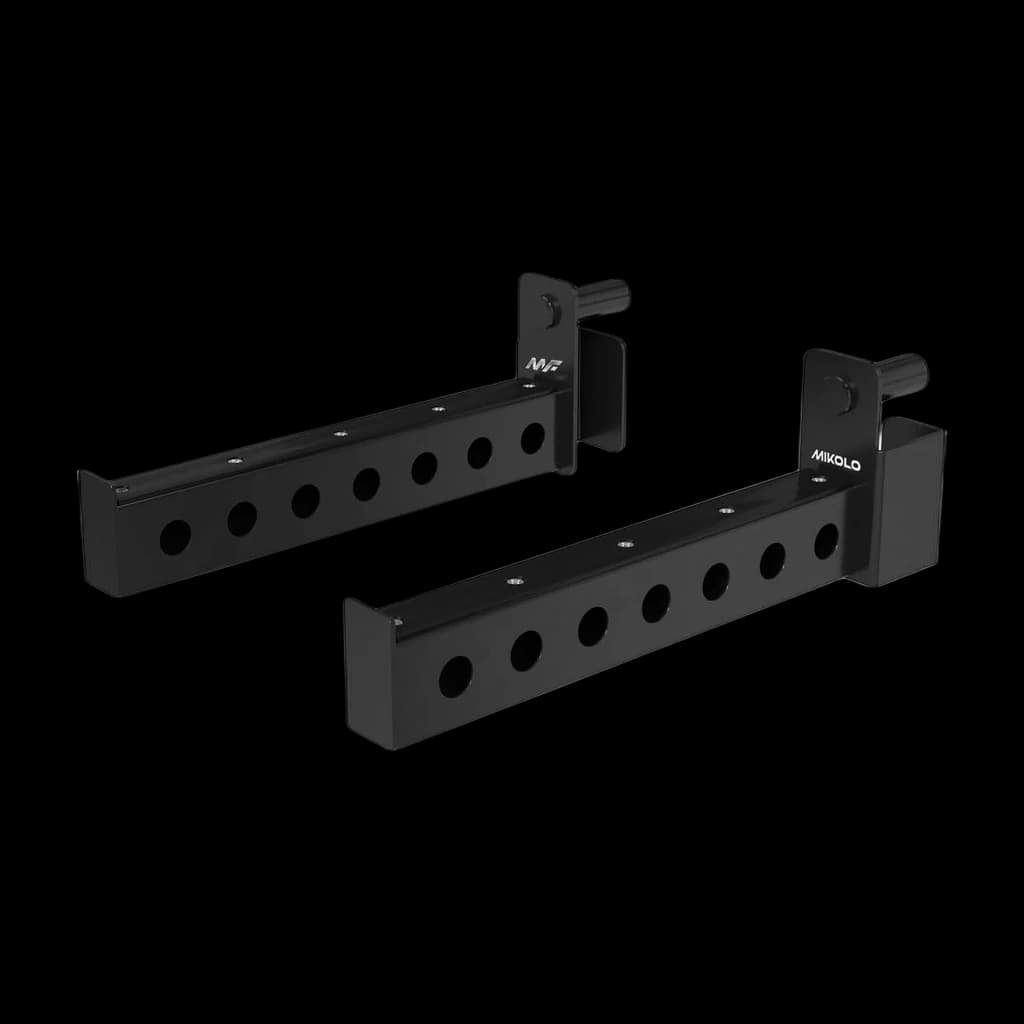 The attachment that changes what you can train alone. Flat catches for 2x2 uprights with 1-inch holes, rated by the maker to 800 lb the pair. | Owner rating Gym Score 77 | Key specs
| Pros
| Cons
| $63.99 | Buy on Amazon |
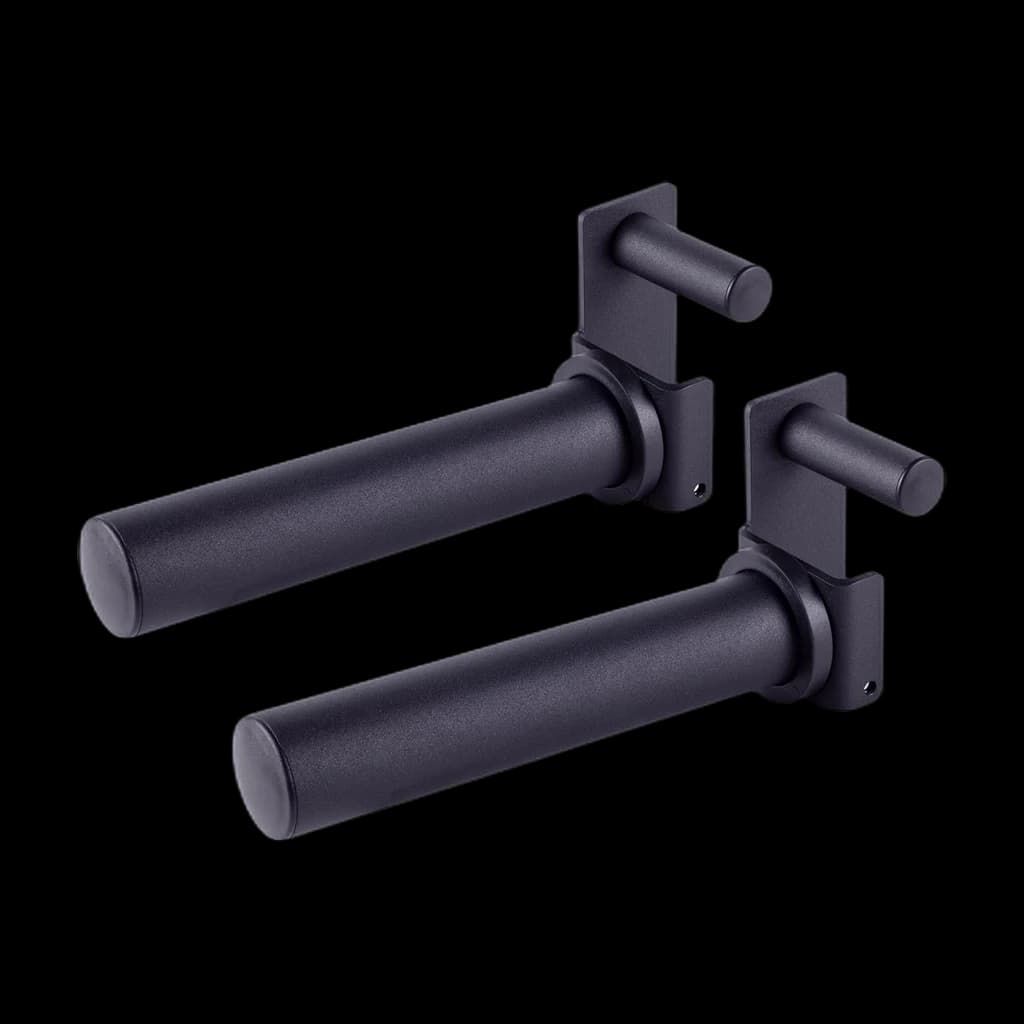 Plate horns pay twice: they clear the floor and they weigh down an unbolted rack that walks during dips and pull-ups. | Owner rating Gym Score 75 | Key specs
| Pros
| Cons
| — | Check on Amazon |
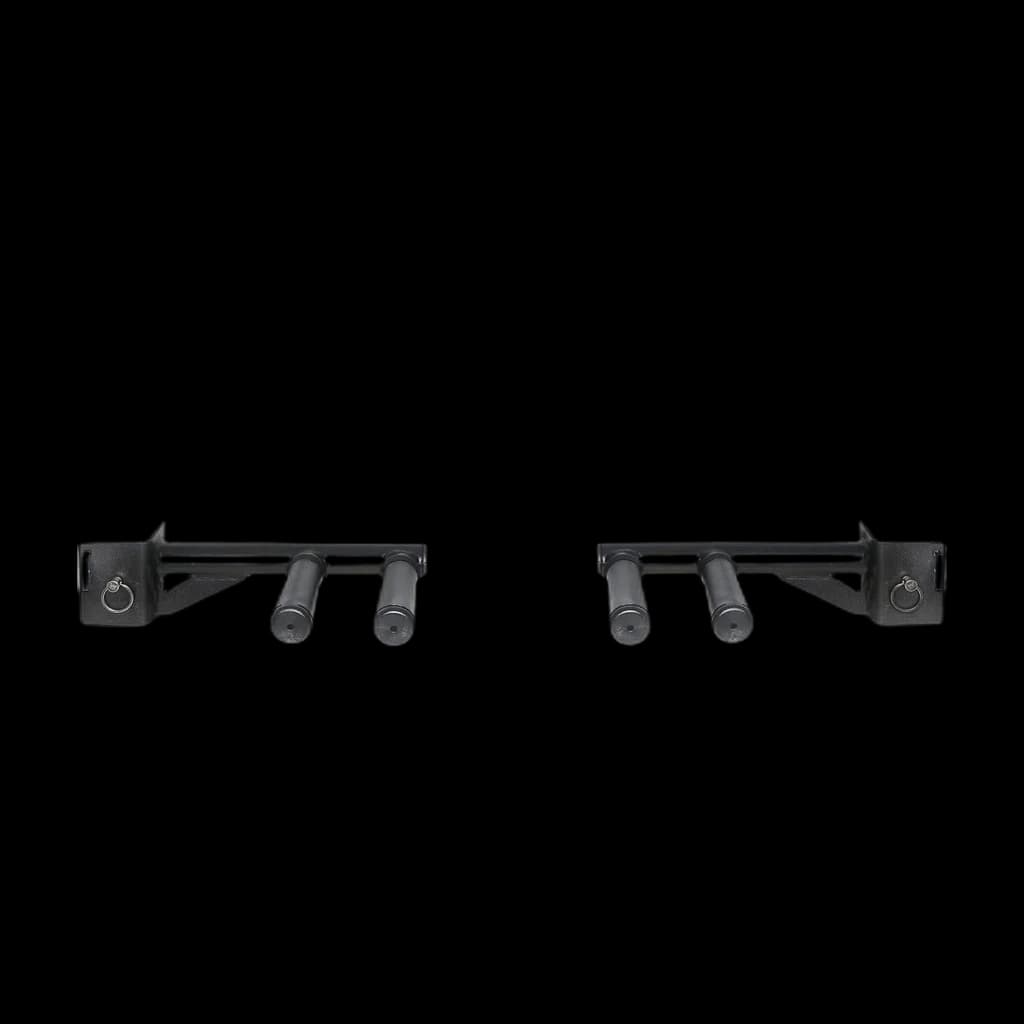 The cheapest way to add a real dip station to a rack you already own, with both a wide and a narrow grip. | Owner rating Gym Score 72 | Key specs
| Pros
| Cons
| $44.99 | Buy on Amazon |
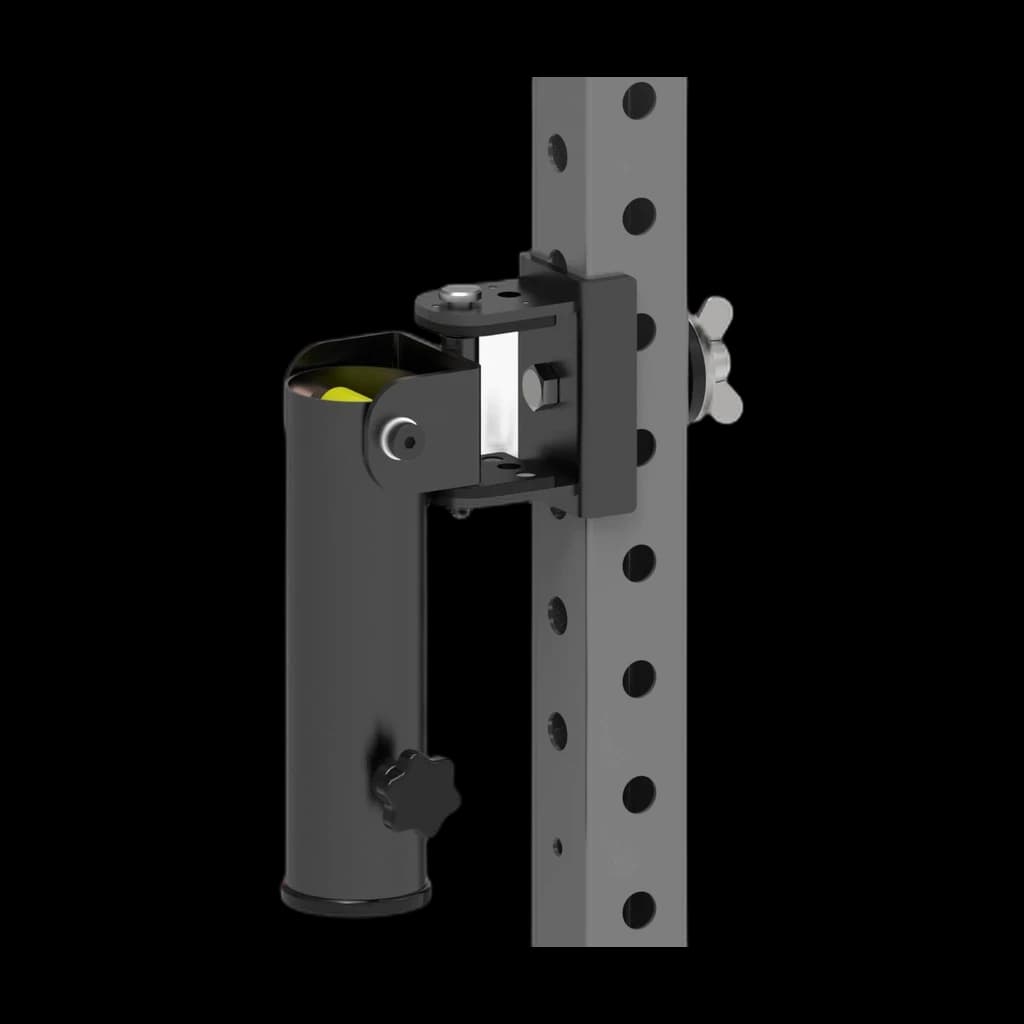 The most distinct movements per dollar on the list. The plastic sleeve liner is the spec that matters in a one-barbell gym. | Owner rating Gym Score 78 | Key specs
| Pros
| Cons
| $36.94 | Buy on Amazon |
Amazon prices checked Oct 17, 2026. Amazon prices change often — the listing is authoritative.
The buying order, and what each step actually removes
Ordered by how often the attachment gets touched, not by how many exercises it adds. Bands are typical street prices, not our picks' live prices.
| Order | Attachment | Typical band | What it removes |
|---|---|---|---|
| 1 | Second pair of J-cups | Under $60 | Re-setting cup height between bench and squat |
| 2 | Spotter arms or strap safeties | $50-100 | The reason you stop a set short when training alone |
| 3 | Plate storage horns | $40-70 | Plates on the floor, and a rack that walks |
| 4 | Dip attachment | $40-60 | A missing pressing movement |
| 5 | Landmine | $30-50 | The gap between barbell and dumbbell angles |
| 6 | Band pegs and a bar anchor | Under $40 | Setup time, and bar clutter in the rack |
| Later | Lat and low-row tower | $250-450 | Nothing, until the six above are done |
Which attachment next, by what is actually stopping you
Decide by your situation, not the generic ranking.
| If | You want | Pick |
|---|---|---|
| Your rack came with one pair of J-cups | Fewer height resets per session | A second pair of J-cups |
| You bench or squat alone in the house | A catch under the bar you trust | Mikolo Safety Catches Spotter Arms |
| Plates live on the floor, rack walks on dips | Storage and ballast in one buy | AmStaff Fitness Olympic Weight Plate Holder |
| You want one more pressing movement cheaply | Wide and narrow dip grips | SYL Fitness Dip Bar Attachment |
| You want angles a barbell cannot reach | Rows, presses and rotation from one sleeve | SYL Fitness Rack-Mounted Landmine Attachment |
| You want a lat pulldown at home | A second machine, not an accessory | Budget it separately, buy it last |
The order people actually land on
A power rack is the one purchase in a home gym that arrives unfinished. It ships with a pull-up bar, one pair of J-cups and usually one pair of safeties, and everything after that is a separate box. The attachment catalogue for a mid-priced rack runs to thirty items, and most of them are things you will use twice.
r/homegym re-runs this argument every year or two, and the shape of the answer is stable. The attachments people still use a year later are the boring ones they touch every session, not the ones that unlock a new exercise. Buy in that order and the whole list stays inside a few hundred dollars.
| Order | Attachment | Band | What it actually buys |
|---|---|---|---|
| 1 | A second pair of J-cups | Under $60 | No re-racking between bench and squat |
| 2 | Spotter arms or strap safeties | $50-100 | Training to failure alone |
| 3 | Plate storage horns | $40-70 | Floor space, and ballast on an unbolted rack |
| 4 | Dip attachment | $40-60 | A whole pressing movement |
| 5 | Landmine | $30-50 | Rows, presses and rotation from one sleeve |
| 6 | Band pegs, bar anchor | Under $40 | Accommodating resistance, faster setup |
| — | Lat and cable tower | $250-450 | The only one that breaks the budget |
Our pick
Buy a second pair of J-cups first if your rack only came with one, then these. Flat spotter arms for 2x2 uprights with 1-inch holes, rated by the maker to 800 lb the pair, and the attachment that makes training to failure alone a reasonable thing to do.
First, the two numbers that decide what you can buy
Every compatibility argument on a rack forum reduces to two measurements. Take both before you open a single product page, because an attachment that does not fit is a return, not a compromise.
Upright size is the catalogue
Uprights come in 2x2, 2x3 and 3x3 inch square tube. That number decides which catalogue you are shopping from, and it is not negotiable — a 2x2 J-cup will rattle on a 3x3 upright and a 3x3 dip bar will not close on a 2x2. Budget racks are overwhelmingly 2x2. The 3x3 tier starts around the Rep and Rogue price bracket and is what people mean when they call a rack future-proof.
Hole diameter is the price, not the strength
Hardware comes in 1-inch and 5/8-inch pin diameters. This is the spec people worry about most and should worry about least: in the r/homegym Targeted Talk on the best power rack for most home gyms, the recurring line is that 5/8-inch attachments are consistently cheaper with no perceivable loss in quality, because nobody is snapping the pin either way.
Rule of thumb: measure the upright, measure the hole, and write both on a note in your phone. Every attachment page you open asks for exactly those two numbers.
| Check | Where to measure | Why it matters |
|---|---|---|
| Upright tube | Across one face of a front post | Decides the entire attachment catalogue |
| Hole diameter | Any numbered hole in the upright | Decides hardware price, not strength |
| Post spacing | Front upright to front upright, inside faces | Dip bars and some safeties specify a range |
| Hole pattern | Spacing between holes in the bench zone | Whether J-cups land at your handoff height |
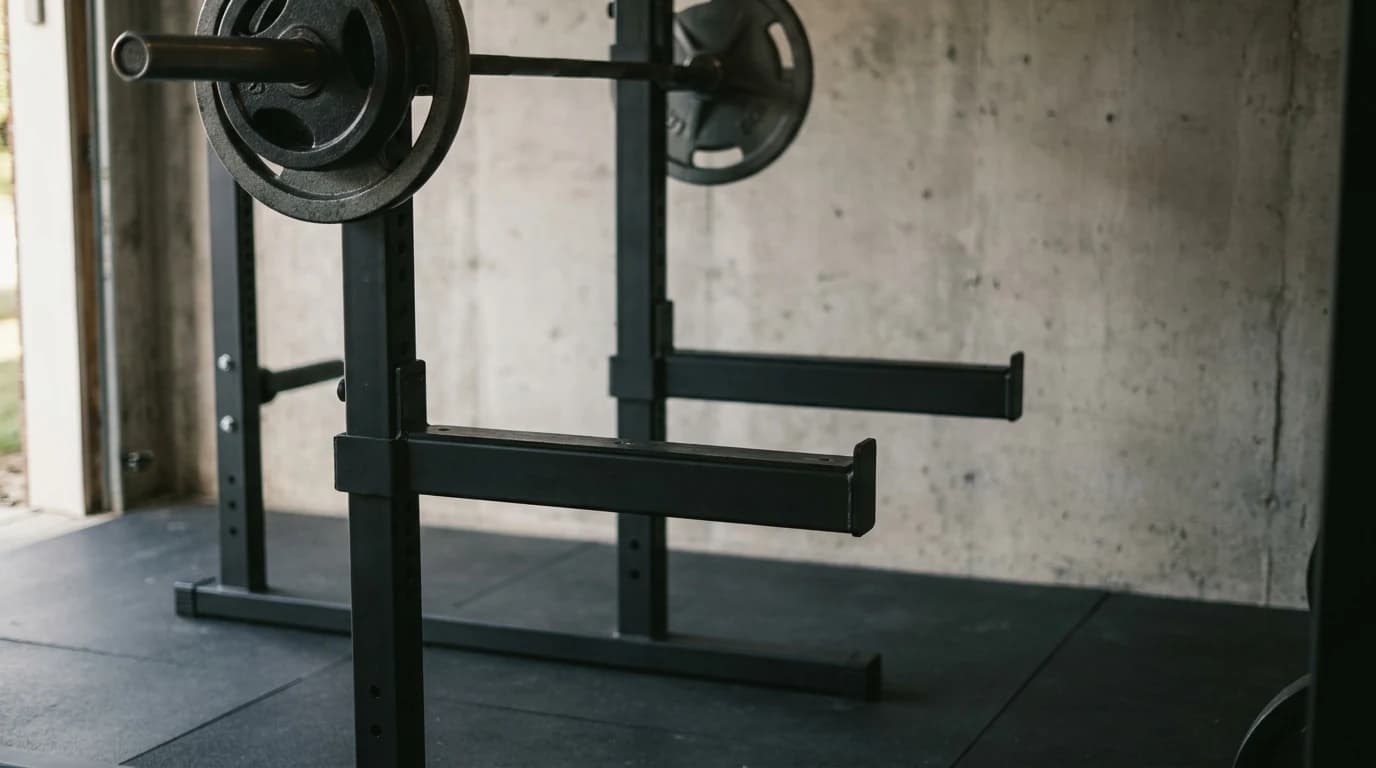
1. A second pair of J-cups — $35.99
The least exciting purchase on this list is the one that gets recommended first, every time. In the r/homegym Targeted Talk on rack attachments one of the most-repeated setups is running three pairs at once:
- One pair left on the back posts, set at bench handoff height.
- One pair inside the front posts, set for squats.
- The original pair outside the front posts, set for rack pulls.
The Favorite Rack Attachments thread lands in the same place — several people say J-cups are the only attachment they own.
The payoff is not strength, it is friction. If bench and squat share one pair of cups, every session that contains both costs you two unbolting jobs and a height reset. At the price of a pair of cups, that is the cheapest minute you will ever buy back.
The pick: AINAFIX J-Hooks for 2x2 Power Rack, bottom-reinforced steel cups for 2x2 uprights with 1-inch holes, rated by the maker to 1,200 lb the pair, with rubber pads between the bar and the cup. Read the fitment line twice before you order: the same product is sold in 1-inch, 5/8-inch and 1/2-inch hole versions and they do not swap. Owners split on the pad — most say it kills the clang and saves the knurling, a minority report it feeling bouncy on a hard re-rack. Our full write-up is on the AINAFIX J-hooks page.
2. Spotter arms — $63.99
Safeties are what make a rack a rack, and most racks ship with pin-and-pipe safeties that only work inside the cage. Flat spotter arms extend the safe zone forwards, which is what you want if you bench alone or squat outside the uprights.
The Mikolo Safety Catches Spotter Arms fit 2x2 tube with 1-inch holes and are rated by the maker to 800 lb the pair. That is a manufacturer figure, not a tested one — but the number that matters here is your working weight, and it is a long way under either.
The honest framing: spotter arms do not make you stronger. They make it rational to take a set to failure when nobody else is home, which over a year is a training difference.
3. Plate storage
Plate horns are the attachment that pays twice. The obvious return is floor space. The second one comes up constantly in the r/homegym weight tree versus rack pegs thread: plates hanging on the uprights are ballast, and an unbolted rack that shifts during dips or pull-ups stops shifting once it is carrying two hundred pounds of iron.
The AmStaff Fitness Olympic Weight Plate Holder is a 2x2 pair rated by the maker to 300 lb. Two caveats the same threads raise, both worth taking seriously:
- Past roughly four horns, loaded plates start intruding on the space you actually walk and lift in.
- A separate tree is more movable, but in a garage several owners report it simply got in the way and went.
If floor space is the binding constraint, our small-space storage guide covers the rest of the room.
4. Dip attachment — $44.99
This is the first attachment on the list that adds an exercise rather than removing friction, and it is the cheapest way to do it. The SYL Fitness Dip Bar Attachment mounts to 2x2 uprights with 98-105 cm post spacing and gives both a wide and a narrow grip, which is the difference between a chest-biased and a triceps-biased dip.
Read this fitment spec twice: the dip bar keys off post spacing, not hole diameter. A rack with unusual width rules it out even when the tube size matches perfectly.
5. Landmine — $36.94
Per dollar, the landmine adds more distinct movements than anything else on this list:
- T-bar and Meadows rows, from one sleeve and one bar.
- Single-arm and half-kneeling presses, at an angle a barbell cannot reach.
- Rotational and anti-rotational core work.
In the what rack attachments do you actually use thread, spotter arms, a landmine and a suspension trainer hung off the pull-up bar are named together as the short list that survives.
The SYL Fitness Rack-Mounted Landmine Attachment mounts tool-free with a hand knob and carries a plastic sleeve liner. That liner is the spec to look for — a bare steel sleeve scuffs the barbell sitting in it, and in a one-bar home gym that is your only bar.
6. Band pegs and a bar anchor
Worth adding once the list above is done:
- Band pegs, for accommodating resistance on squats and bench, and for anchoring bands at floor level.
- A barbell anchor or dock, repeatedly called one of the more useful home-gym attachments in the Favorite Rack Attachments thread because it stores the bar without occupying the rack.
Worth skipping until you have a reason:
- Jammer arms, monolift attachments and belt-squat setups. All three are excellent and all three are large.
- Anything that has to come off the rack to use the rack. The single most repeated warning in these threads is that a big, heavy attachment you have to move is one you will resent.
The pulley tower is the one that breaks the budget
Every other attachment here is a rounding error next to the rack. A lat and low-row tower is not: rack-mounted plate-loaded towers start in the mid-hundreds and cable towers run higher again. It is also the attachment the community argues about most — the Targeted Talk on rack attachments rates the REP Ares 2.0 the best cable option on price-to-value, with the Rogue Monster unit behind it on cost, while a recurring minority argue for a standalone tower over anything that bolts to the back of a rack.
How to think about the decision:
- Treat a tower as a second machine, not an accessory, and budget for it separately.
- Buy it after the six attachments above, not instead of three of them.
- Rack-mounted saves floor space; standalone survives a rack upgrade. Pick the one that matches how settled your setup is.
If you have not bought the rack yet, the power racks category and the Rogue versus Rep versus Titan comparison both cover which ecosystems have the deepest attachment catalogues.
Attachments are among the items rack brands discount hardest in their holiday sales; the Black Friday home gym deals guide shows what past sale pages actually listed.
How we chose
We do not operate a test facility and do not claim hands-on data. This buying order synthesises manufacturer fitment specifications, published capacity ratings, and the recurring consensus of r/homegym's periodic rack-attachment discussions, paraphrased rather than quoted. Every Amazon listing named here was checked live for a main-block buybox price and an active Add to Cart on the date shown, and prices render from that check rather than from this page. See our methodology for the scoring rubric.
Frequently Asked Questions
What rack attachment should I buy first?+
A second pair of J-cups, if your rack shipped with only one. It adds no new exercise, which is why it gets overlooked, but it is the attachment r/homegym members report using every single session because it removes a height reset from every workout that contains both a bench and a squat.
Do 3x3 attachments fit a 2x2 rack?+
No. Upright size is the one fitment number with no workaround: a 2x2 attachment rattles on a 3x3 upright and a 3x3 attachment will not close on a 2x2. Measure across one face of a front post before you shop, and shop only within that catalogue.
Is 1-inch hardware worth paying more for than 5/8-inch?+
Usually not. The recurring view in r/homegym rack discussions is that 5/8-inch attachments cost less with no perceivable difference in quality, because home-gym loads are nowhere near the shear strength of either pin. Buy whichever your rack takes and spend the difference on another attachment.
Should I buy a rack-mounted lat tower or a standalone one?+
A rack-mounted tower saves floor space and a standalone one survives a rack upgrade. Either way it costs several times what any other attachment on this list does, so treat it as a second machine with its own budget rather than as an accessory, and buy it after the cheaper attachments are in place.
How many plate horns should I put on a rack?+
Around four is where the community consensus sits. Loaded plates on the uprights help hold an unbolted rack still, but past roughly four horns owners report the plates start intruding on the space they walk and lift in, at which point a separate tree or a wall rack is the better answer.
Sources & Research
- r/homegym — Targeted Talk - Best Rack Attachmentscommunity
- r/homegym — Favorite Rack Attachmentscommunity
- r/homegym — What rack attachments do you actually use?community
- r/homegym — Targeted Talk - Best Power Rack For Most Home Gymscommunity
- r/homegym — Weight tree vs additional rack pegscommunity
- r/homegym — 2022 Rack Attachments Targeted Talkcommunity
Related reviews
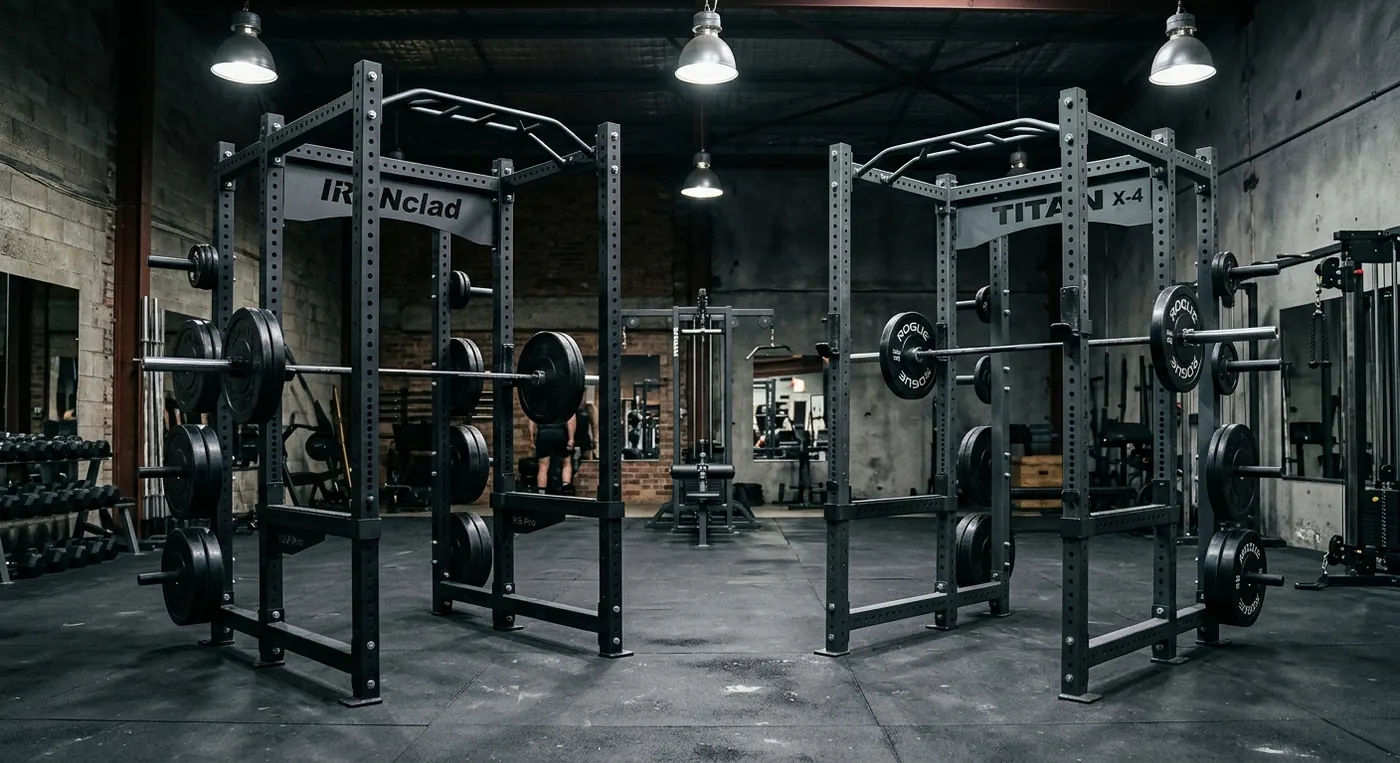
Rep PR-4000 vs Rogue R-4: Which Power Rack Wins in 2026?
Rep PR-4000 vs Rogue R-4: the PR-4000 runs 3x3 inch 11-gauge uprights, the R-4 runs 2x3 inch, and the R-4 ships with the attachments Rep charges for. How to pick.
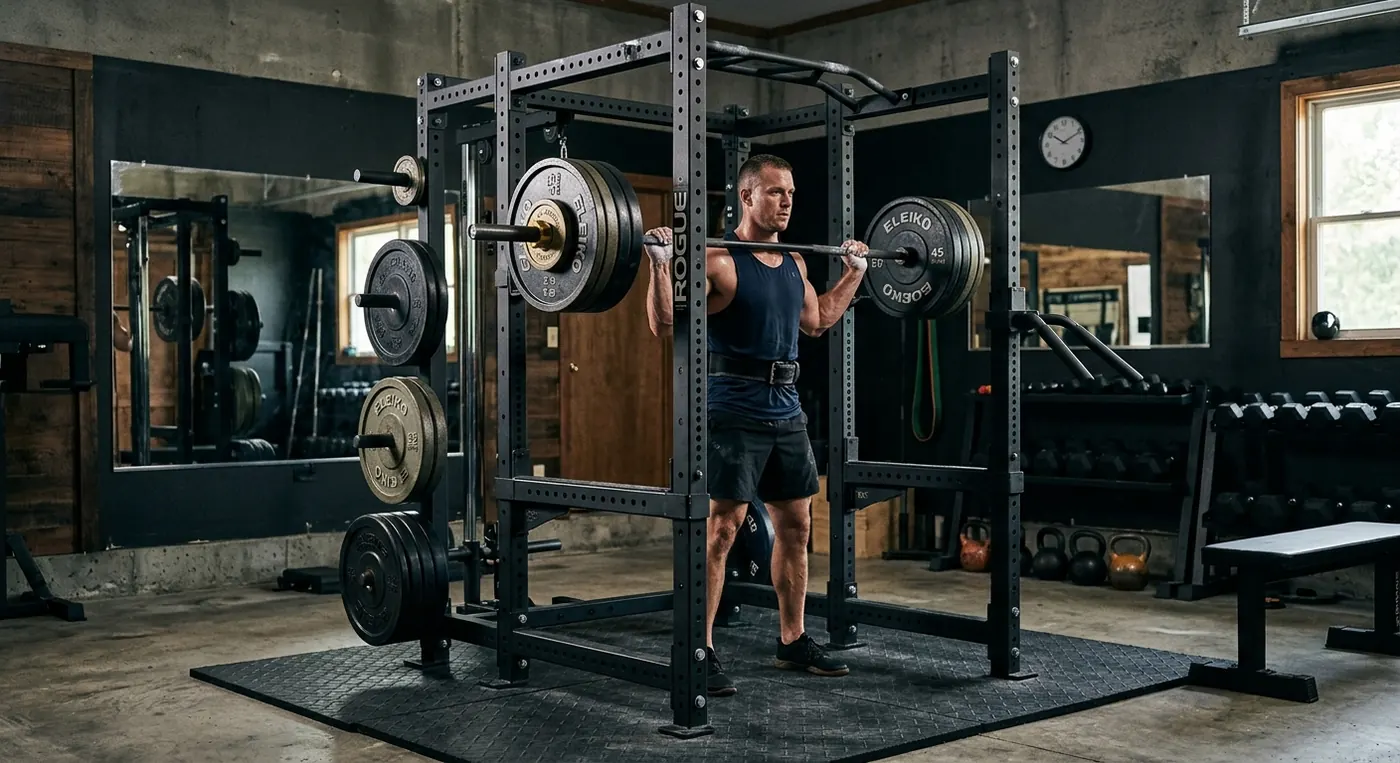
Best Power Racks for a Home Gym in 2026
The Rep PR-4000 is the best home gym power rack of 2026 at under $900. Five racks ranked on build quality and footprint; Rogue R-4 is the lifetime pick.
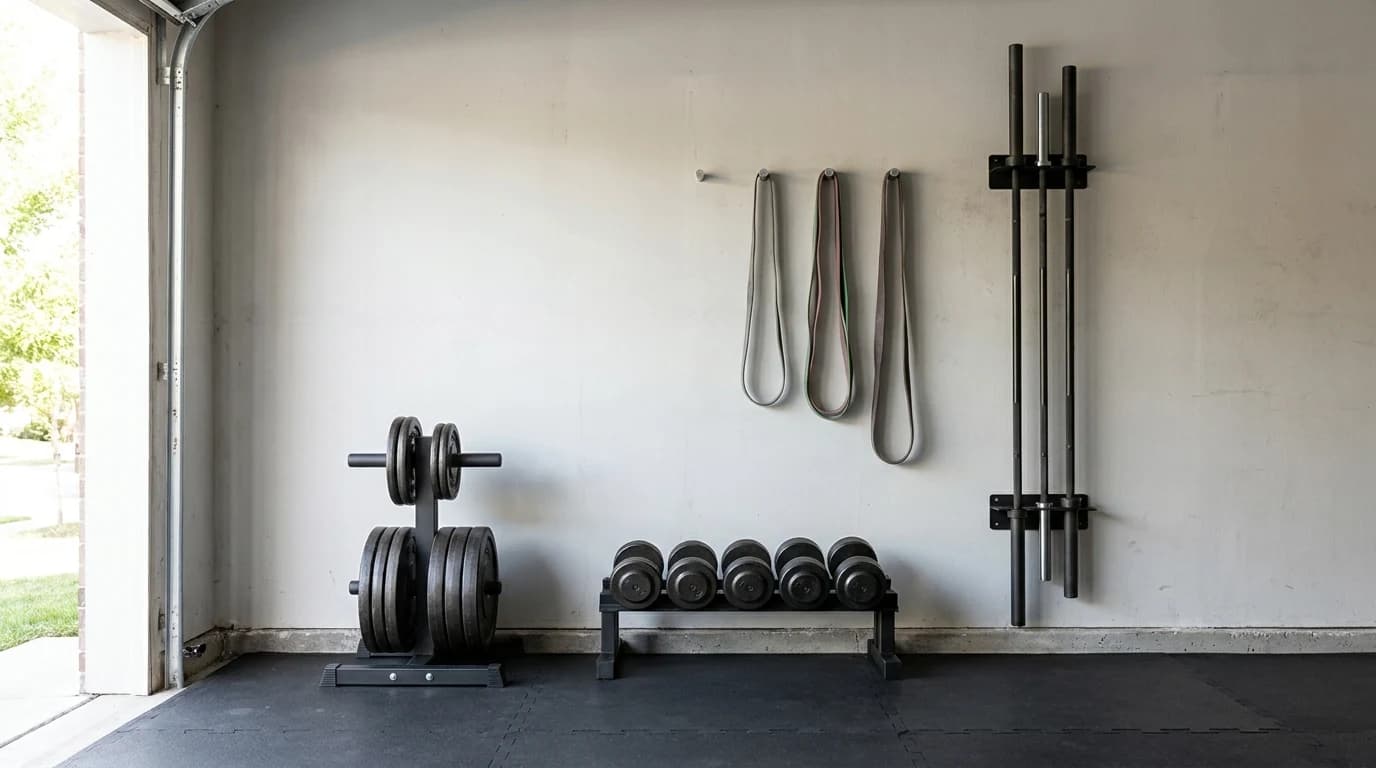
Home Gym Storage: Where to Put Plates, Bars, and Dumbbells
Store home gym gear by weight, not type: heavy stays low, bars and bands go vertical. Where plates, dumbbells, and accessories belong in a small space.
Hilly Shore Labs
Editorial teamThe independent product research team behind GymScored. Every recommendation is researched, never hands-on tested — recommendations draw on manufacturer specifications and available published research. Category order is editorial; the Gym Score is a separate comparison aid.
161 listed products across 26 home gym categories. Scores use category criteria, value and owner-rating inputs; missing evidence limits what a score can tell you.
See the scoring methodology and who we are.
Affiliate disclosure: GymScored is a participant in the Amazon Services LLC Associates Program. We earn from qualifying purchases at no extra cost to you. Full disclosure →