How Much Weight Fits on a Barbell With Bumper Plates?
Thick bumpers fill a 16.4-inch sleeve near 405 lb. The pounds-per-inch math for Rogue HG, Echo, competition and iron plates, and why mixing is a bad idea.
It depends on plate width, not weight. Divide your bar's loadable sleeve length by the plate's published width and round down, leaving room for a collar. On Rogue's Ohio Bar (16.40-inch sleeve), that is four Rogue HG 2.0 45 lb bumpers per side (about 405 lb with the bar), six Echo V2 45s (584 lb) or seven competition 45s (674 lb), against eleven thin iron 45s.
How GymScored is paid: Amazon Associates commission plus brand-direct affiliate (Rogue / REP / Titan when approved). No sponsored placements, no paid reviews, no pay-to-rank. Picks are ranked by the Gym Score formula and nothing else. Read the full disclosure.
Thick bumpers are the right buy until your lifts approach 400 lb. Past that, switch to thinner bumpers or add 55s, which carry more weight per inch, rather than finishing the bar with iron: REP advises against mixing the two, because the larger bumper takes the whole impact on a drop.
A full set of thick bumper plates runs out of barbell before most home lifters run out of strength. On a Rogue Ohio Bar, with its 16.40-inch loadable sleeve, Rogue's own HG 2.0 bumpers fit four 45s per side with room for a collar. That is about 405 lb, and it is where that bar fills up, not where it is rated to stop.
Bumper shopping is usually framed as price per pound. The number that decides how far a set takes you is pounds per inch of sleeve, and makers publish everything you need to work it out.
The spec nobody prints: pounds per inch
Divide a plate's weight by its published width. The higher the number, the more weight a sleeve holds before it runs out of room.
| Plate (maker's published width) | Width | Lb per inch of sleeve |
|---|---|---|
| Barbell Standard iron, 45 lb | 1.375 in | 32.7 |
| Rogue Deep Dish iron, 45 lb | 1.97 in | 22.8 |
| Rogue competition, 55 lb | 2.50 in | 22.0 |
| Rogue competition, 45 lb | 2.15 in | 20.9 |
| Rogue Color Echo, 55 lb | 2.75 in | 20.0 |
| Rogue Echo V2, 45 lb | 2.40 in | 18.8 |
| Rogue HG 2.0, 55 lb | 3.75 in | 14.7 |
| Rogue HG 2.0, 45 lb | 3.25 in | 13.8 |
Two things stand out. Thin iron carries more than twice the weight per inch of Rogue's thickest bumper. And within bumpers, the gap between a budget-thick plate and a competition disc is about 50%, which is the difference between a bar that tops out near 400 and one that clears 650.
Rule of thumb: within each Rogue line, the 55 carries more weight per inch than the 45, so the big plate is the one to buy when sleeve space runs short.
The sleeve-fill math, worked on one bar
Same bar, same 44 lb (20 kg) shaft, only 45s loaded. Count how many plates fit on 16.40 inches, then see what is left over for a collar.
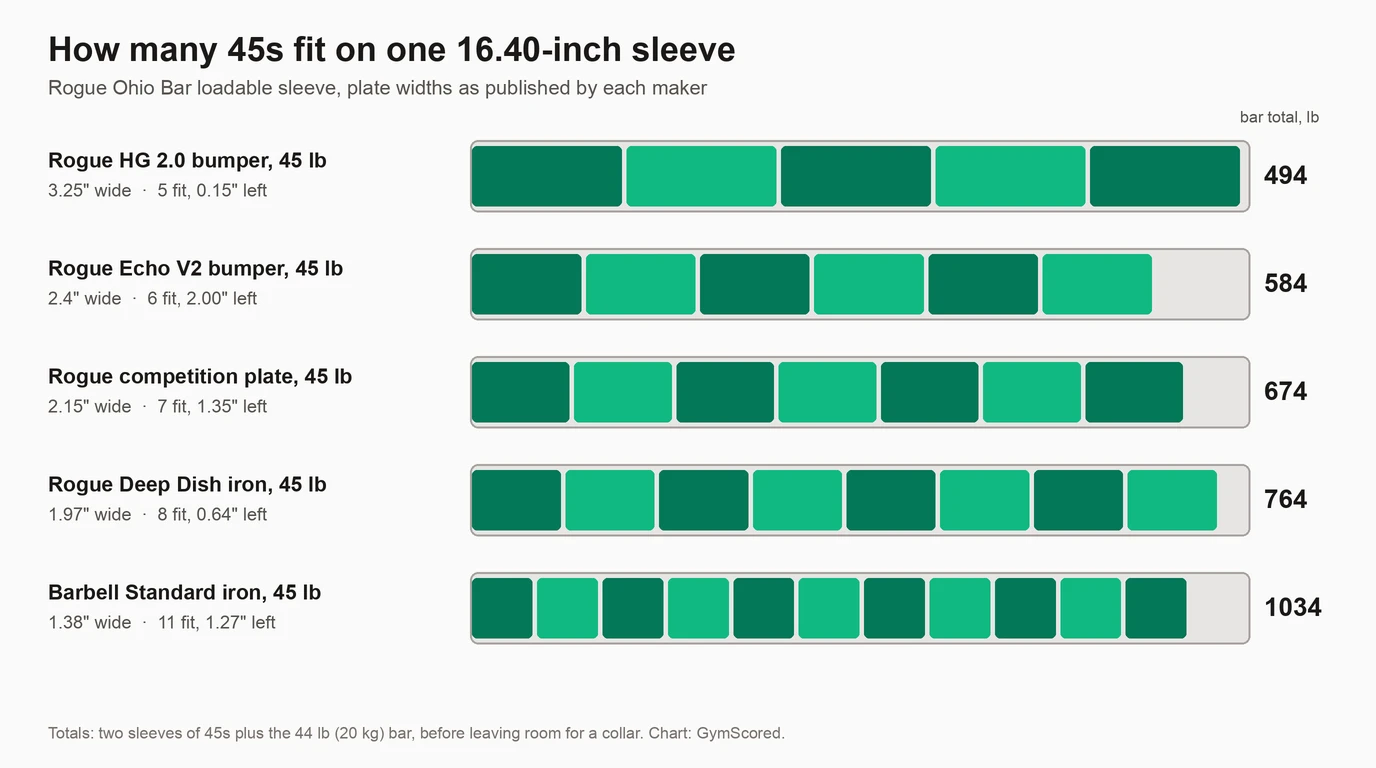
| 45 lb plate | Fit per side | Sleeve left | Bar total |
|---|---|---|---|
| Rogue HG 2.0 bumper | 5 | 0.15 in | 494 lb |
| Rogue HG 2.0, leaving collar room | 4 | 3.40 in | 404 lb |
| Rogue Echo V2 bumper | 6 | 2.00 in | 584 lb |
| Rogue competition plate | 7 | 1.35 in | 674 lb |
| Rogue Deep Dish iron | 8 | 0.64 in | 764 lb |
| Barbell Standard iron | 11 | 1.28 in | 1,034 lb |
The fifth HG plate technically goes on, but 0.15 inch leaves no room for a clamp collar. That makes four per side the practical ceiling for those bumpers on this bar, and the same arithmetic applies to any bar: loadable sleeve length divided by plate width, rounded down, minus the collar.
Where the ceiling actually bites
Thick bumpers are fine if:
- Your deadlift and squat sit comfortably under 400 lb
- You want the bar to sit at full height for light pulls and Olympic lifts
- Drops are part of training and you want the plate doing the absorbing
Pay for thinner plates if:
- Your deadlift is heading past 400 and you want it all on bumpers
- You plan to add a few 55s rather than more 45s
- You share the bar with a stronger lifter who loads heavier than you do
Can you finish the bar with iron?
It is the obvious workaround: bumpers on the inside, thin iron on the outside. REP's own FAQ on its Sport Bumper Plates 2.0 says it does not recommend mixing the two. Iron and bumpers can differ in diameter, so when a mixed bar lands the larger plate takes all the force, and that plate and the bar wear faster.
The published sizes show why. Rogue's bumpers are 450 mm (17.72 in) across. Barbell Standard lists its iron 45 at 17.375 in, about a third of an inch smaller, so on a drop the bumper meets the floor and the iron rides along on top of it.
The trap: a mixed bar looks fine on the way up. The problem shows up on the way down, when the bumper hits the floor alone.
If you never drop the bar, the warning matters less. But a home lifter who is past the bumper ceiling is usually better served by thinner bumpers, or by a separate iron setup for slow lifts, than by a hybrid stack the maker advises against. Our standard vs Olympic plate guide covers matching hole sizes if you go the iron route.
The light bumpers are the fragile ones
The 10s and 15s are the thinnest bumpers you will buy, and makers price that risk into the warranty:
- Rogue covers its HG 2.0 bumpers for three years at 25 to 55 lb, and for 90 days at 10 and 15 lb
- The Echo V2 10 lb plate is 0.83 in wide, roughly a third the width of the same line's 45
- REP advises dropping plates as close to straight down as possible and retightening loose collars, to cut the sideways force on the insert
Light bumpers earn their place anyway, because every IWF-sized bumper is 450 mm across. A 10 lb bumper holds the bar at the same height as a 45, which iron cannot do: Barbell Standard's iron 25 is 11 in across, so a bar loaded with it sits about 3.4 in lower than on a bumper. For a beginner pulling 95 lb from the floor, that is the difference between a normal deadlift start and a deficit pull.
Rule of thumb: buy light bumpers for bar height. Their short warranty says they are not built to take the same abuse as the 45s.
A buying order that does not run out of sleeve
- Measure the sleeve first. Find the loadable sleeve length on your bar's spec sheet, not the overall bar length.
- Find each plate's published width. If a listing gives none, as with the CAP Olympic Bumper Plate Set, measure the plates or ask before you count on a number.
- Do the division for the load you expect to reach in two years, not today.
- Add 55s before more 45s once space gets tight, since they carry more weight per inch.
- Check the result against the plates you own with our plates per side calculator.
REP describes its Sport Bumper Plates 2.0 as thinner than its Black and Pinnacle bumpers and slightly thicker than its competition plates. That places them in the middle of the table above without a published width to calculate from. Our barbell and plate guide ranks the bars and sets themselves, and our gym flooring guide covers what goes under them.
Frequently Asked Questions
How many bumper plates fit on an Olympic barbell?+
Divide the bar's loadable sleeve length by the plate's published width. On a 16.40-inch Rogue Ohio Bar sleeve that is five Rogue HG 2.0 45s with no room for a collar (four in practice), six Echo V2 45s or seven Rogue competition 45s per side.
Can I put iron plates and bumper plates on the same bar?+
REP does not recommend it. Iron and bumper plates can differ in diameter, so on a drop the larger plate takes all the force and it and the bar wear faster. Keep one plate type on a bar you drop.
Are 10 lb bumper plates worth buying?+
Yes, for bar height: an IWF-sized 10 lb bumper is 450 mm across, the same as a 45, so light pulls start from a normal height. They are the thinnest bumpers, though, and Rogue warranties its HG 2.0 10s and 15s for 90 days versus three years for the heavier plates.
Sources & Research
- Rogue Fitness — Ohio Bar specifications: 16.40-inch loadable sleeve, 20 kgmanufacturer
- Rogue Fitness — HG 2.0 Bumper Plates: plate widths, 450 mm diameter, warranty by weightmanufacturer
- Rogue Fitness — Echo Bumper Plates V2: plate widths per weightmanufacturer
- Rogue Fitness — Color Echo Bumper Plates: 55 lb plate widthmanufacturer
- Rogue Fitness — Competition Plates: plate thickness chartmanufacturer
- Rogue Fitness — Deep Dish Plates: iron plate widthsmanufacturer
- Barbell Standard — Olympic iron plate dimensions by weightmanufacturer
- REP Fitness — Sport Bumper Plates 2.0 FAQ: mixing iron and bumpers, drop caremanufacturer
Related reviews
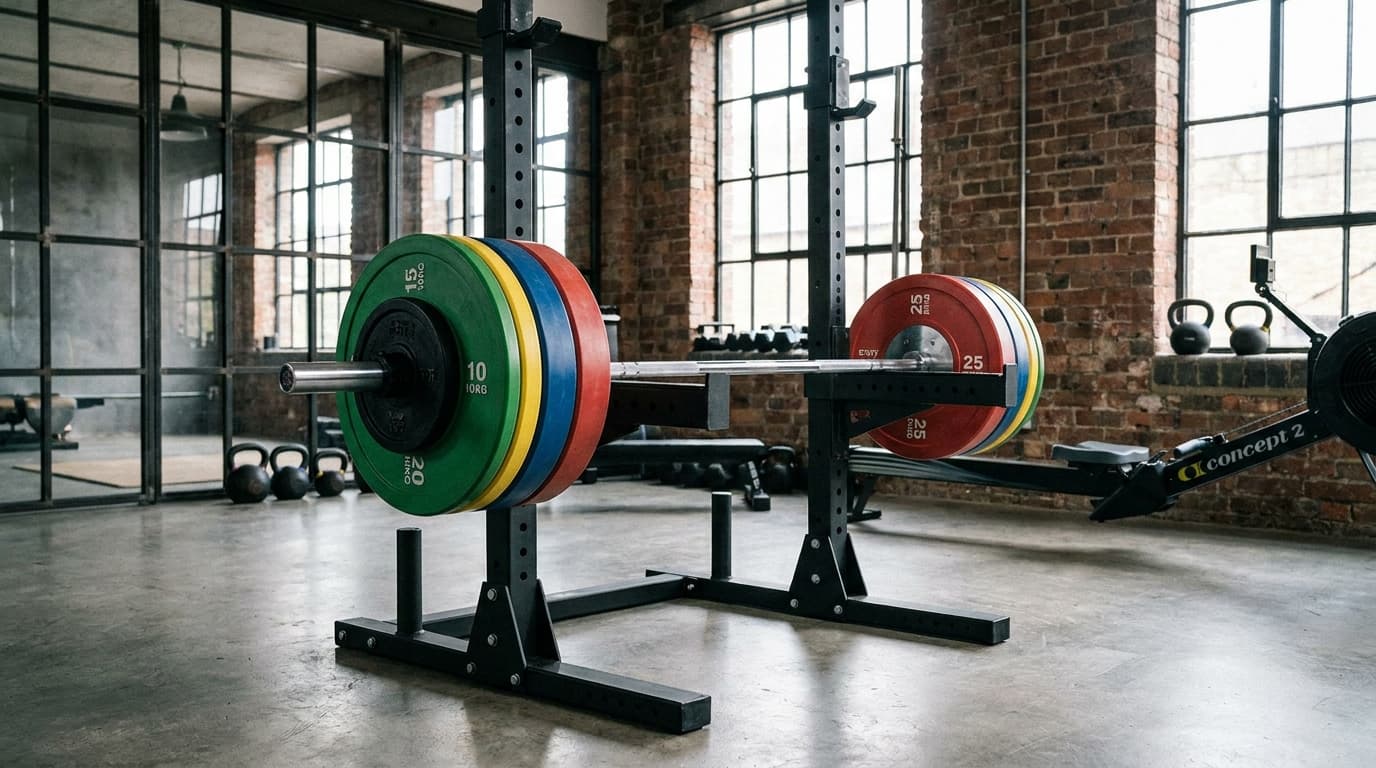
Best Barbell and Plates for Home Gyms 2026: Rogue Ohio Wins
The Rogue Ohio Bar is the best barbell for home gyms in 2026, and Rep V2 bumpers are the plate standard. Plus when a trap bar wins, and bumper vs iron.
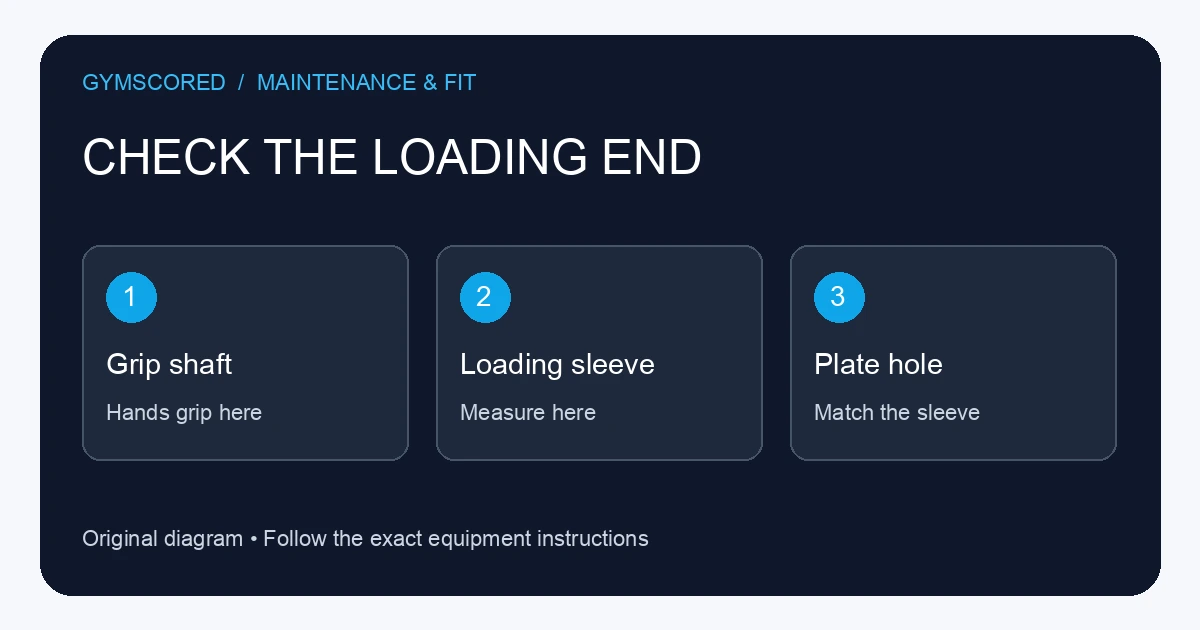
Standard vs Olympic Weight Plates: 1-Inch vs 2-Inch Sleeves
Standard plates fit 1-inch bars; Olympic plates need a 2-inch sleeve. Why a 29 mm shaft spec misleads, where adapters fit in, and how to vet a used set.
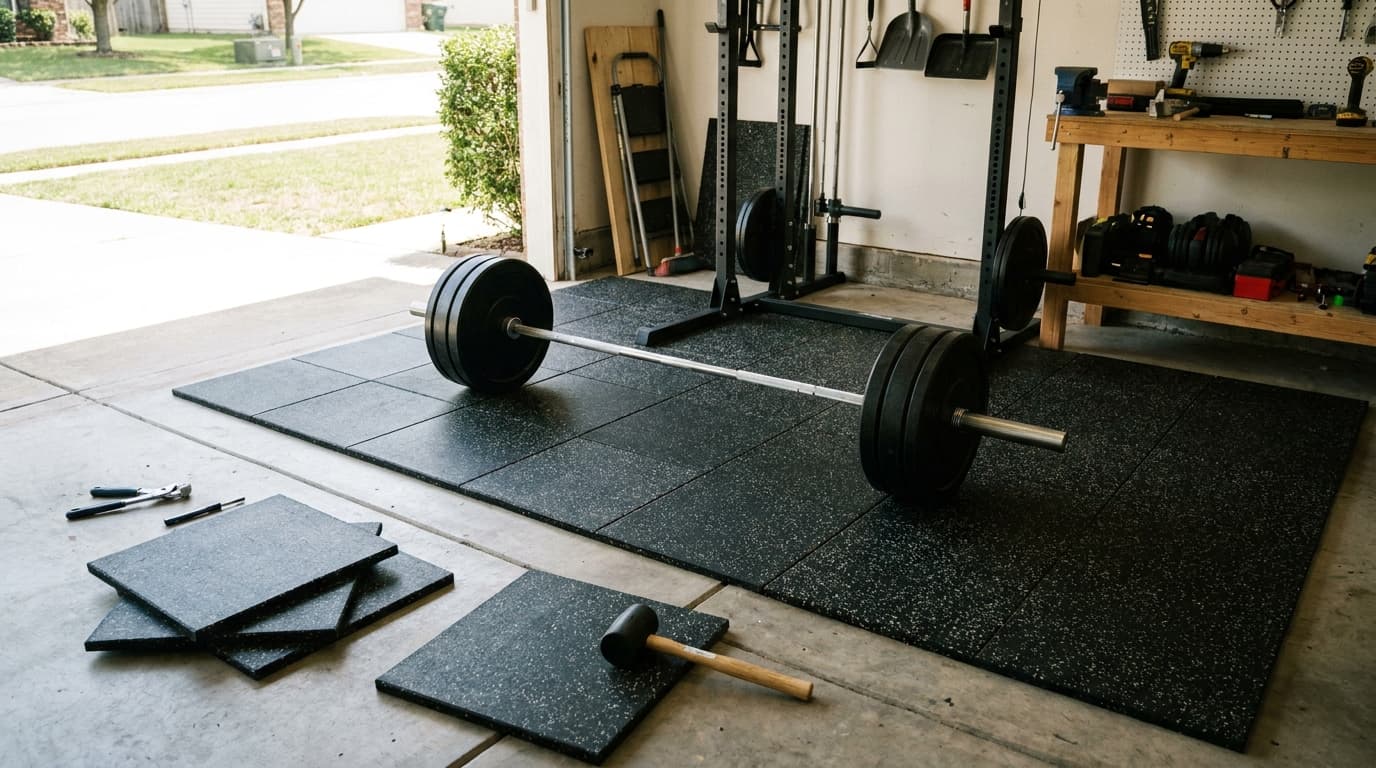
Best Gym Flooring for Home Gyms in 2026: Stall Mats Win
Horse stall mats win best home gym flooring for barbell setups, no contest. We scored 7 flooring options on thickness, durability, and impact reduction.
Hilly Shore Labs
Editorial teamThe independent product research team behind GymScored. Every recommendation is researched, never hands-on tested — recommendations draw on manufacturer specifications and available published research. Category order is editorial; the Gym Score is a separate comparison aid.
170 listed products across 26 home gym categories. Scores use category criteria, value and owner-rating inputs; missing evidence limits what a score can tell you.
See the scoring methodology and who we are.
Affiliate disclosure: GymScored is a participant in the Amazon Services LLC Associates Program. We earn from qualifying purchases at no extra cost to you. Full disclosure →