Recumbent vs Upright Bike: What Changes, What Doesn't
Same riders, both bikes: the recumbent lowered peak and threshold power, not muscle activity or cost per watt. What the lab data says about each bike.
Pick the frame you will ride most. In one lab study the same 18 adults reached about 15% less peak power on a recumbent than upright, yet muscle activity was broadly the same and the energy cost at a moderate 70 W did not differ significantly. The recumbent trades power ceiling for back support and easy access.
How GymScored is paid: Amazon Associates commission plus brand-direct affiliate (Rogue / REP / Titan when approved). No sponsored placements, no paid reviews, no pay-to-rank. Picks are ranked by the Gym Score formula and nothing else. Read the full disclosure.
Choose a recumbent for back support, easy mounting or limited mobility, and an upright for a higher power ceiling and a cycling-like position. Neither builds different muscles, and calories follow the watts you sustain rather than the seat. Comfort, which decides how often you ride, is the tiebreaker.
| Product | Owner rating | Key specs | Pros | Cons | Price | Buy |
|---|---|---|---|---|---|---|
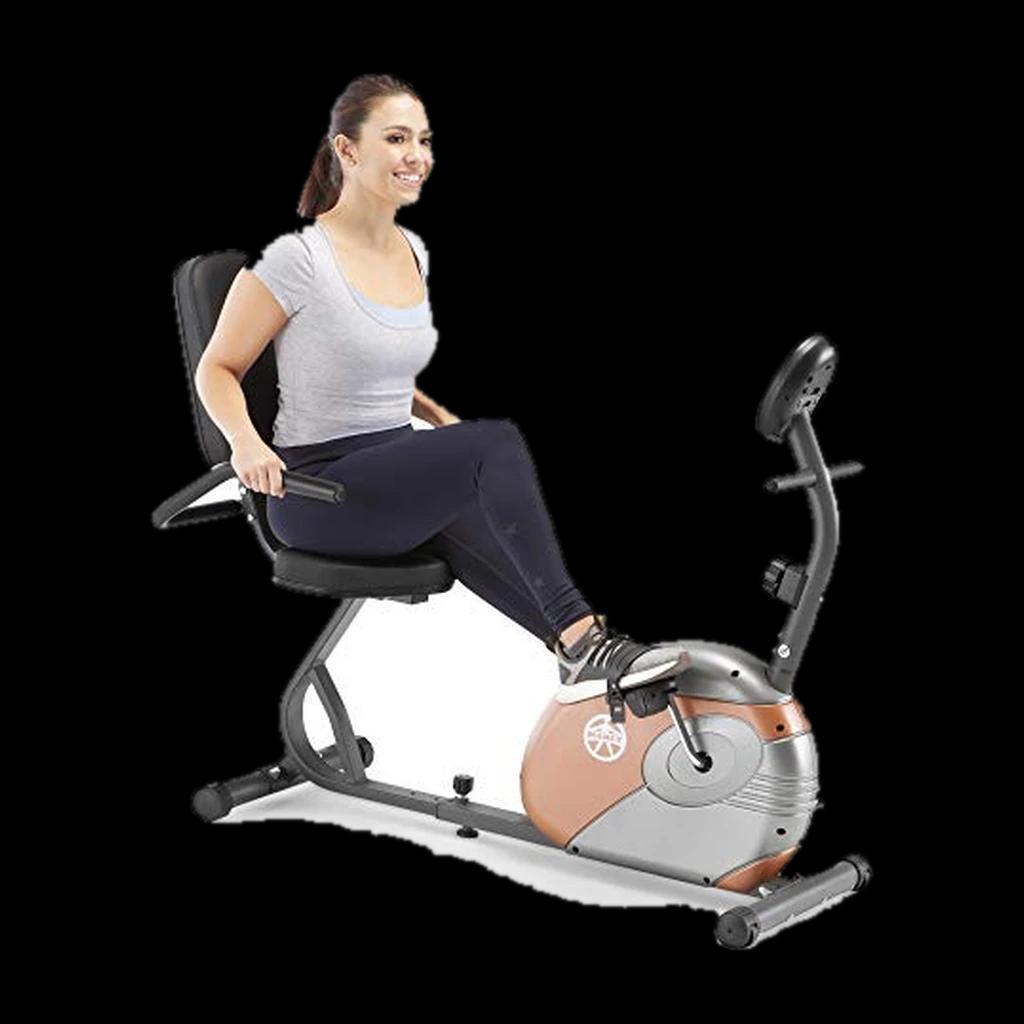 The only recumbent here: a back-supported seat and a step-through frame for low-impact riding, with eight magnetic levels and a basic LCD, per Marcy. | Owner rating Gym Score 77Amazon rating pooled with the upright Marcy variant on the same listing (read 2026-10-21). | Key specs
| Pros
| Cons
| $159.99 | Buy on Amazon |
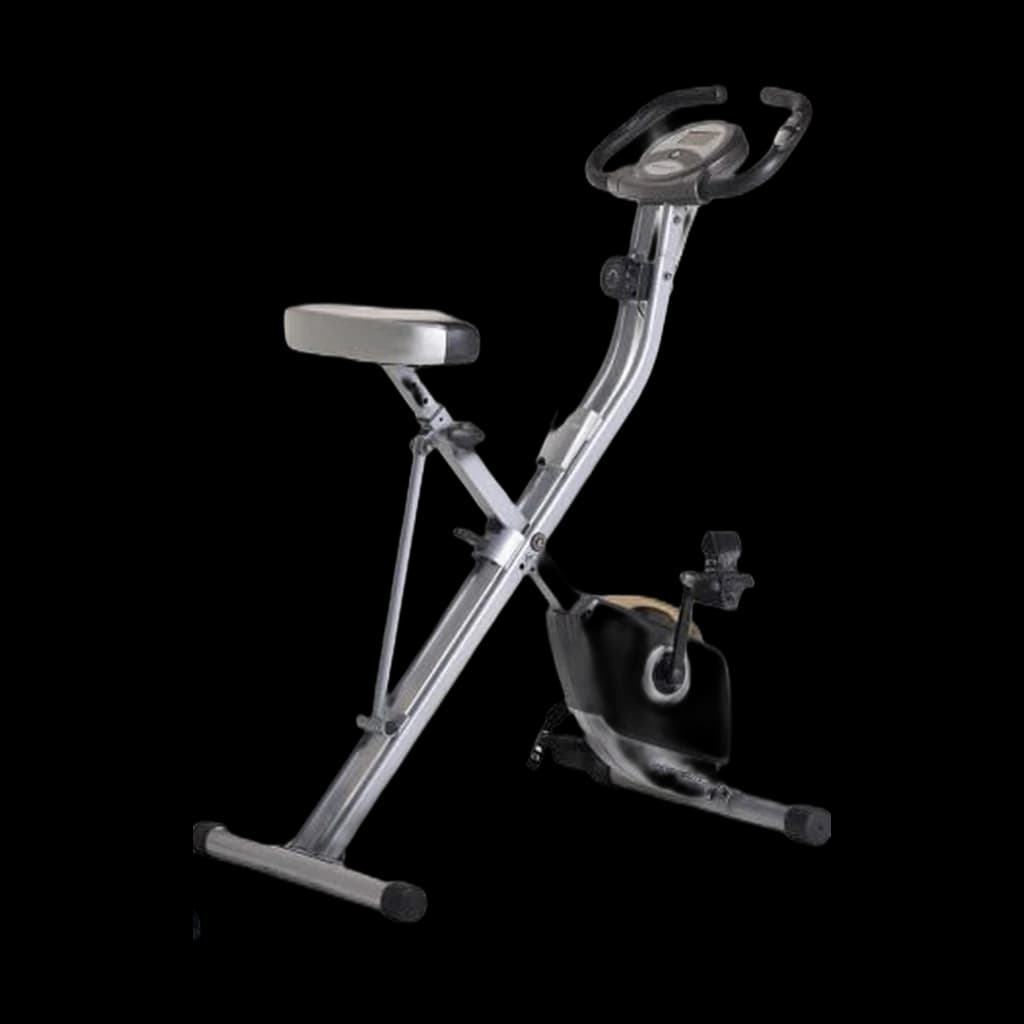 The bike that folds away: half its size folded, 39 lb, transport wheels and a 300 lb capacity, per Exerpeutic. A casual upright for small apartments, not a training tool. | Owner rating Gym Score 79 | Key specs
| Pros
| Cons
| $219.00 | Buy on Amazon |
Amazon prices checked Nov 18, 2026. Amazon prices change often — the listing is authoritative.
Recumbent or upright, by situation
Decide by your situation, not the generic ranking.
| If | You want | Pick |
|---|---|---|
| Getting on a bike is the hard part | A low, step-through frame with a backrest | Recumbent |
| A saddle is uncomfortable after 15 minutes | A large seat that carries your upper body | Recumbent |
| You want hard intervals and the highest output | The position where the same riders made more power | Upright |
| Floor space is tight | A frame that folds and moves on wheels | Folding upright |
| You ride outdoors and train indoors in winter | A position close to your road bike | Indoor-cycling bike |
Most comparisons answer this with a feeling: the recumbent is the easy bike, the upright is the workout bike. Put the same people on both and measure them, and the picture is narrower. The seat changes how hard you can push. It does not change which muscles do the pushing, and at the same output it does not change the energy cost much either.
Same riders, two seats: what one lab measured
The cleanest comparison we found is a 2021 study in Frontiers in Sports and Active Living. Eighteen healthy adults, mean age 47, rode three incremental tests to exhaustion: upright, recumbent with the seat tilted back 40 degrees, and supine. Every figure below is the paper's median.
| Measure | Upright | Recumbent (40°) | Significant? |
|---|---|---|---|
| Peak power | 201 W | 170 W | Yes |
| Peak oxygen uptake | 35.0 ml/kg/min | 31.6 ml/kg/min | Yes |
| Power at lactate threshold | 100 W | 77 W | Yes |
| Peak heart rate | 170 bpm | 168 bpm | No |
| Peak perceived effort (6-20) | 19 | 19 | No |
| Gross efficiency at 70 W | 17.4% | 15.9% | No |
The pattern: on the recumbent the same riders topped out about 15% lower and hit their threshold about 23% lower, while feeling just as spent at the end.
Reading the table
- The ceiling moves. Peak power, peak oxygen uptake and threshold power were all lower on the recumbent in the same people.
- The effort does not. Peak heart rate and perceived exertion were statistically the same, so a hard recumbent ride still feels hard.
- The cost per watt moves less than you would think. At a fixed 70 W, gross efficiency differed only for supine riding; upright and recumbent were not significantly apart. At peak power, upright riding was the more efficient of the two.
An older test of six men points the same way: maximal power was 381 W sitting upright against 355 W and 341 W in two recumbent positions, while maximal oxygen uptake did not differ significantly.

Top pick in this guide
The only recumbent here: a back-supported seat and a step-through frame for low-impact riding, with eight magnetic levels and a basic LCD, per Marcy.
The calorie question is a watts question
Every calorie readout on a stationary bike leans on numbers like the 2024 Compendium of Physical Activities. Its stationary-cycling rows are indexed by watts alone, from 25-30 W at 3.5 METs up to over 325 W, and there is no separate row for a recumbent or an upright frame.
That gives a usable rule:
- At the same easy-to-moderate watts, expect roughly the same burn. The 70 W efficiency data above does not support a big seat effect.
- At the same effort, expect fewer watts on a recumbent. The study's riders held 77 W at threshold on the recumbent and 100 W upright.
- So the gap is in what you can sustain, not in the seat. A recumbent rider who matches an upright rider's wattage is doing the same work.
Rule of thumb: compare bikes by the watts you will actually hold, not by the frame. The seat changes your ceiling, not the math.
How that plays out over an hour depends on your body weight and pace; our walking pad calorie guide walks through the same MET arithmetic for a different machine.
Muscles: the difference you were promised is not in the data
Product pages often say a recumbent works the glutes or hamstrings more, or the core less. Two electromyography studies measured it.
- Lopes et al. 2014: ten men who were not regular cyclists pedaled both ergometers at a moderate load. Peak activity in the rectus femoris, semitendinosus, tibialis anterior and medial gastrocnemius showed no statistically significant difference between the two bikes.
- Bouillon et al. 2016: twelve recreationally active adults rode an upright bike, a recumbent bike, a treadmill and an ElliptiGO at 40-50% of heart rate reserve. The lateral calf was most active on the upright bike. Glutes, hamstrings, the low-back erectors and the abdominals were similar across devices.
The one consistent difference is small and in the calf. If a listing promises a different body from the same pedal stroke, ask which study it means.
What actually separates them
The real differences are about getting on, staying comfortable and fitting the room.
What the recumbent changes
- A backrest and a large seat carry your upper body
- The frame sits low, which the Lopes authors note makes access easier for wheelchair users and people with mobility impairments
- A step-through frame on models like the Marcy ME-709 means no leg swing over a bar
What the upright keeps
- A higher power ceiling in the same rider, per the table above
- A saddle and riding position closer to outdoor cycling
- Often a smaller footprint: the Exerpeutic Foldable measures 31 by 19 inches assembled and folds, per Exerpeutic
An indoor-cycling bike such as the Schwinn IC4 is a third geometry again, with a weighted flywheel and a forward-leaning position. Our exercise bike roundup covers that category.
Hard intervals are not ruled out
A 2010 study ran ten active men at 85% of their peak workload until they quit. Time to failure was 13.1 minutes upright, 10.5 minutes at a 65-degree recline and 11.5 minutes at 30 degrees, and the differences were not significant. Only lying fully flat cut it short. A recumbent can host genuinely hard work, just at a lower wattage than the same rider produces upright.
Gentler on the heart is a different claim
In a 1995 study of nine stable male cardiac patients, blood pressure, ventilation and perceived effort did not differ between supine, recumbent and upright cycling. Heart rate and oxygen uptake were lower only lying flat. In the 2021 study, peak systolic pressure differed across the three positions overall, but not once each pair was compared. Neither paper shows a recumbent lowering cardiovascular strain at the same workload. If a heart condition is behind the question, your cardiologist's guidance beats any frame type.
What these studies cannot settle
The evidence limit: these are short lab sessions in small samples, mostly healthy adults. None followed people for months to compare fitness gains, weight change or how often they kept riding.
That last one may matter most. A bike you find comfortable enough to ride four times a week will beat one you avoid, and comfort is the one variable here only you can measure. Our heart rate zone guide helps you set the effort on either frame.
Frequently Asked Questions
Does an upright bike burn more calories than a recumbent bike?+
Only if you ride it harder. Calorie estimates follow watts, and one study found no significant difference in efficiency between the two at 70 W. The same riders did sustain more watts upright, so at equal effort the upright usually comes out ahead.
Do recumbent and upright bikes work different muscles?+
Mostly not. Two EMG studies found similar activity in the quads, hamstrings, glutes, shin, low back and abs. The one difference reported was more lateral calf activity on the upright bike.
Is a recumbent bike better for a bad back?+
It offers a backrest and a large seat, which many riders find more comfortable. The studies here did not test people with back pain, so treat it as a comfort choice and ask a clinician about your own back.
Can you do HIIT on a recumbent bike?+
Yes. In a 2010 study, time to exhaustion at 85% of peak workload did not differ significantly between upright and two recumbent positions. Expect lower wattage than you would hold upright.
Is a recumbent bike easier on the heart?+
The research here does not show that. A study of nine cardiac patients found similar blood pressure and perceived effort across positions, with lower heart rate only when lying flat. Follow your cardiologist's advice.
Sources & Research
- Frontiers in Sports and Active Living — Wehrle et al. 2021: Power Output and Efficiency During Supine, Recumbent, and Upright Cycle Ergometryresearch
- Int J Sports Phys Ther — Lopes et al. 2014: Electromyography during pedaling on upright and recumbent ergometerresearch
- Int J Sports Phys Ther — Bouillon et al. 2016: Trunk and lower extremity muscle activity on upright bike, recumbent bike, treadmill and ElliptiGOresearch
- Eur J Appl Physiol — Egana et al. 2010: Exercise performance and VO2 kinetics during upright and recumbent high-intensity cyclingresearch
- Eur J Appl Physiol Occup Physiol — Welbergen and Clijsen 1990: The influence of body position on maximal performance in cyclingresearch
- Arch Phys Med Rehabil — Quinn et al. 1995: Physiologic responses of cardiac patients to supine, recumbent, and upright cycle ergometryresearch
- Compendium of Physical Activities — 2024 Compendium: Bicycling activity codes and MET valuesauthority
Your next step
Picked a frame? Compare the ranked exercise bikes.
Related reviews
Best Exercise Bikes for Home Gym Use
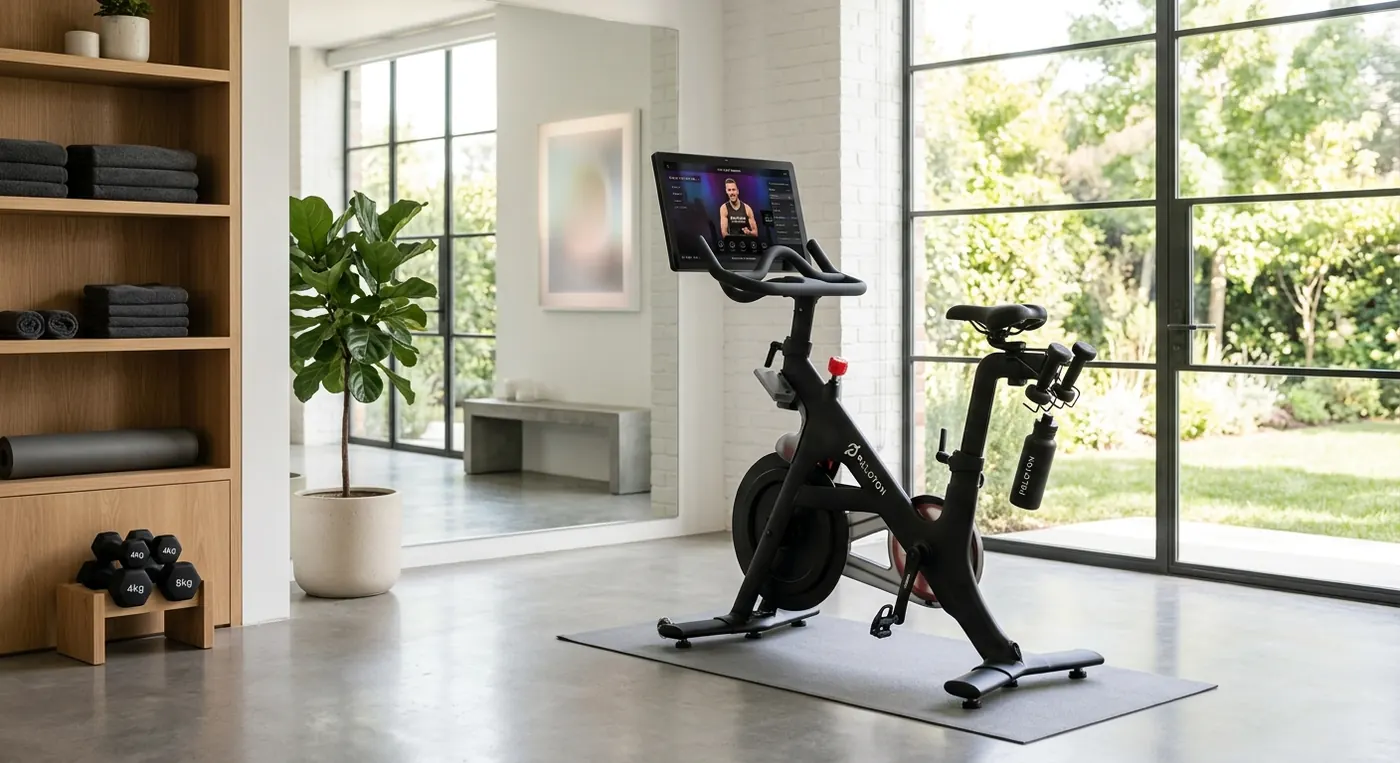
The Schwinn IC4 is the best exercise bike under $1,000, with Peloton-app support; Peloton's Cross Training Bike+ leads the premium tier. Six bikes ranked.

How to Use Heart Rate Zones for Home Cardio (the Right Way)
Set heart rate zones from your max HR, spend most home cardio time moderate with some vigorous work, and skip the fat-burning-zone myth. The simple system.
How Many Calories Does a Walking Pad Burn? The Real Math
A 13-study meta-analysis puts a walking pad at about 105 extra calories an hour over sitting. The MET math by speed and weight, and what it doesn't show.
Hilly Shore Labs
Editorial teamThe independent product research team behind GymScored. Every recommendation is researched, never hands-on tested — recommendations draw on manufacturer specifications and available published research. Category order is editorial; the Gym Score is a separate comparison aid.
174 listed products across 27 home gym categories. Scores use category criteria, value and owner-rating inputs; missing evidence limits what a score can tell you.
See the scoring methodology and who we are.
Affiliate disclosure: GymScored is a participant in the Amazon Services LLC Associates Program. We earn from qualifying purchases at no extra cost to you. Full disclosure →