Trap Bar vs Barbell Deadlift: Which Should You Own?
Own one bar? Buy the barbell. What six studies report on 1RM, hamstrings and back load, plus the trap bar sizes and weights that matter in a home gym.
Buy the straight barbell first if you can own only one bar, because it also squats, presses and rows. Add a trap bar second for a heavy pull that shifts work toward the quads. Published 1RM gaps range from none to about 15% in the trap bar's favor, and handle height accounts for part of the difference.
How GymScored is paid: Amazon Associates commission plus brand-direct affiliate (Rogue / REP / Titan when approved). No sponsored placements, no paid reviews, no pay-to-rank. Picks are ranked by the Gym Score formula and nothing else. Read the full disclosure.
The straight bar is the first purchase and the trap bar is the useful second one. Choose the trap bar sooner only if you already own a barbell or need the pull itself more than the other lifts. Claims that it is safer for backs go beyond what these studies of trained lifters measured.
| Product | Owner rating | Key specs | Pros | Cons | Price | Buy |
|---|---|---|---|---|---|---|
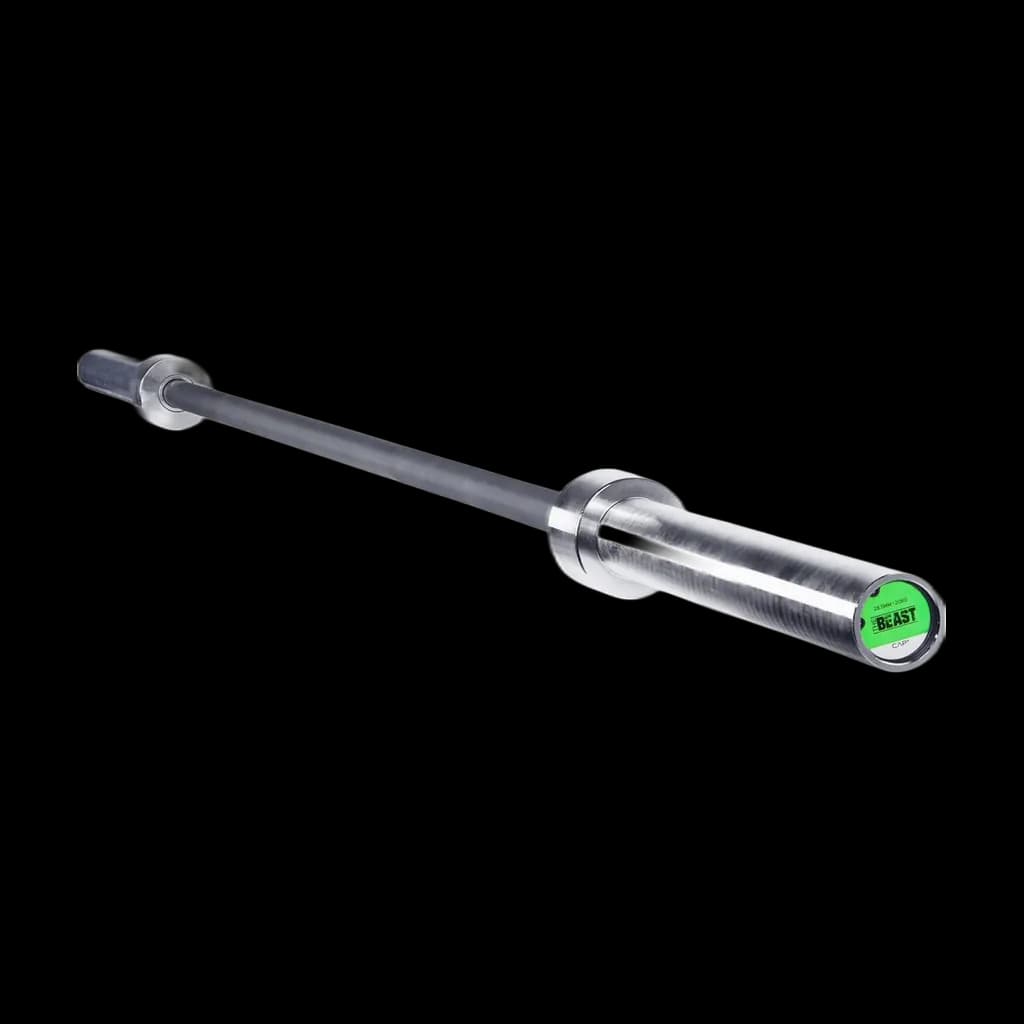 Honest budget pick. Lower tensile than Rogue, but CAP rates it to 1,200 lb and 120,000 PSI. ↑ Quality↑ Value for moneyBased on 1,851 buyer mentions | Owner rating Gym Score 92 | Key specs
| Pros
| Cons
| $149.00 | Buy on Amazon |
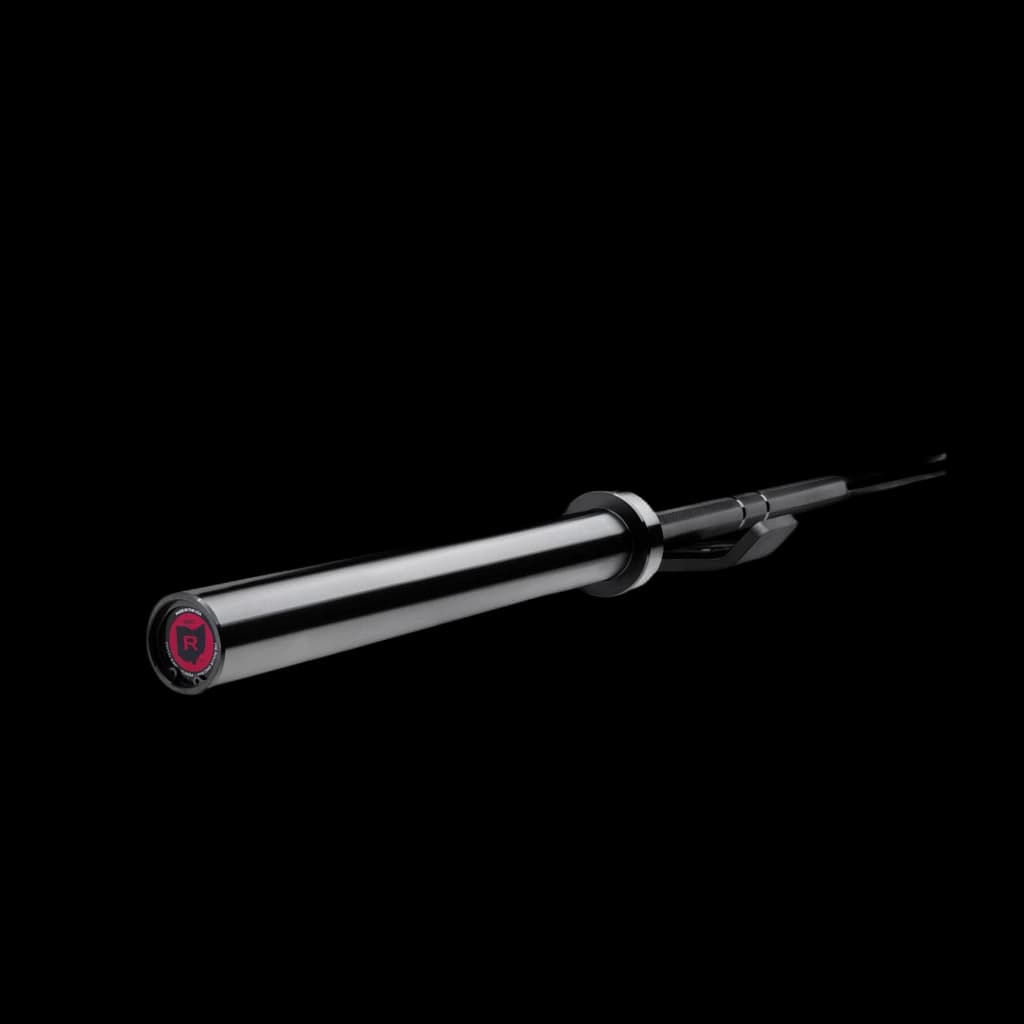 Rogue's flagship 20 kg multi-purpose bar: 190K PSI tensile, dual knurl marks, bronze bushings, a 16.4-inch loadable sleeve and a lifetime warranty against bending. The default home-gym barbell. | Owner rating Gym Score 96 | Key specs
| Pros
| Cons
| ~$305 | See our review |
Amazon prices checked Oct 30, 2026. Amazon prices change often — the listing is authoritative.
If you can own only one bar, buy the straight barbell, because it also squats, presses and rows. Add a trap bar second if you want a heavy pull that shifts work toward the quads. If a sore back or a meet is the reason you are asking, the answer changes, and the evidence is thinner than the usual summary suggests.
Many comparisons lean on one or two studies. Read several side by side and the headline claims get less tidy.
What the papers actually report
Each row below comes from the paper's published abstract. "Hex" is the bar these authors call a hexagonal barbell, which is the same tool as a trap bar.
| Paper | Who lifted | 1RM result | Other finding |
|---|---|---|---|
| Swinton 2011 | 19 male powerlifters | Hex 265 kg, straight 245 kg | Lower peak moments at lumbar spine, hip and ankle on hex; higher at the knee |
| Camara 2016 | 20 men with deadlift experience | No difference: 181.1 vs 181.4 kg | Hex drew more quad activation; straight drew more hamstring and, while lowering, more spinal erector activation |
| Malyszek 2017 | 20 resistance-trained men | Not the question asked | No difference in peak ground reaction force between bars |
| Lake 2017 | 11 men proficient on both | Hex 194 kg, straight 183 kg | Same bar displacement; 28% more power on hex at 90% 1RM |
| Lockie 2018 | 21 men, 10 women, strength-trained | High-handle hex 154.5 kg, straight 134.7 kg | Lift distance 22% shorter on high handles; more total work on straight |
| Andersen 2018 | 13 resistance-trained men | Not a comparison in the abstract | Straight drew 28% more hamstring activation; no difference in spinal erectors |
The honest range: the trap bar advantage runs from nothing to about 15% at 1RM, depending on the study and the handle.
Three things follow from that table:
- "You'll lift more" is usual, not guaranteed. Swinton, Lake and Lockie favor the hex bar by about 6% to 15%, and Camara found no gap.
- Handle height changes the comparison. Lockie's high handles cut the lift distance by 22%, while Lake reported no displacement difference. Part of a big number may simply be a shorter pull.
- "Easier on the back" means two different things. Swinton measured a lower lumbar moment, but Andersen found no difference in erector activation during the lift. Lifters in these samples were trained, not people with back pain.
None of these six papers is a long-term trial of what each bar builds. They measure what happens in the lift, so the muscle-growth conclusions you will read elsewhere go beyond them.
Pick by what you are training for
| If your priority is | Choose | Basis |
|---|---|---|
| One bar for everything | Straight bar | It also handles squats, presses and pulls |
| A powerlifting meet | Straight bar | Named for powerlifting in Rogue's own comparison |
| Hamstrings | Straight bar | Andersen and Camara both measured more activation |
| Quads in a heavy pull | Trap bar | Camara's activation data, Swinton's knee moment |
| Moving the load fast | Trap bar | Swinton, Camara and Lake all report more power |
| Shorter range of motion | Trap bar, high handles | Lockie's 22% shorter pull |
Rogue, which sells both, calls the trap bar the better default for most general gym-goers. That holds if you already have a straight bar or only need to pull. Starting from an empty garage, it leaves you with nothing to bench or press with.
If a joint is the reason you're asking: the trap bar moves demand rather than removing it. Swinton's knee moment went up as the lumbar moment went down, so ask a clinician about your own back or knee.
For the mechanics in between, one 2024 comparison of 16 trained lifters found higher hip extension moments in the back squat than the hex bar deadlift, with no difference at the knee. That supports treating the trap bar pull as its own lift rather than a squat substitute.
What a trap bar costs you in floor space
Published specs undercut the usual assumption that a trap bar is the compact option. All figures come from each maker's product page.
| Bar | Weight | Length | Width | Loadable sleeve |
|---|---|---|---|---|
| Rogue Ohio Bar, straight | 20 kg | 86.75 in | Bar only | 16.40 in |
| REP Trap Bar | 55 lb | 71 in | 25.5 in | 16 in |
| Rogue TB-3, by configuration | 48 to 69 lb | 73.8 or 83.4 in | 25.65 or 28 in | 16 in |
| Rogue TB-2 | 60 lb | 88.5 in | 28.5 in | 16 in |
These are spec references rather than picks, because GymScored does not currently score a trap bar. What they show:
- Length is not the saving. The TB-2 is longer than the Ohio Bar, while REP's bar is about 16 inches shorter.
- Width is the real cost. Every trap bar here needs at least 25.5 inches of clearance, where a straight bar stores along a wall. Our small-space storage guide covers the layout side.
- Your plates mostly carry over. REP says its bars take any plate with a 2-inch center hole, and Rogue lists its TB-2 sleeves as Olympic compatible.
- Your collars may not. Rogue warns that some standard collars may not work on the TB-2 and recommends axle collars.
- Ratings vary. REP lists a 500 lb static rating, which matters if your pull is heading there. Rogue's TB-2 spec list gives none.
Your logbook needs the bar weight
Trap bars don't share the 20 kg convention. For a 225 lb pull, you load 181 lb of plates on a 44 lb straight bar but 170 lb on REP's 55 lb trap bar, and a TB-3's own weight spans 21 lb across configurations.
Rule of thumb: log the bar weight beside the number, and treat your first trap bar max as a new baseline rather than a comparison.
Grip changes too: REP's handles are 25 mm and the TB-2's are 1.34 in, against 28.5 mm on the Ohio Bar. A thinner or thicker handle can change how a hard set feels before your legs have any say.
How to buy in the right order
- Start with the straight bar. The CAP Barbell The Beast keeps the spend low enough to leave room for a second bar, and the Rogue Ohio Bar is the step up if this will be your only bar for years.
- Run your deadlift for a while. If the pull is going well, you may not need anything else.
- Measure before buying a trap bar. Check its length and width against your actual floor, not just the rack bay.
- Choose dual handles if you can. Two heights let you test the shorter pull without buying again.
Our barbell and plate guide compares the straight bars, and the bumper math shows how a sleeve fills up.
Frequently Asked Questions
Is the trap bar deadlift better than the barbell deadlift?+
Neither is better overall. Studies report more quad activation and more power on the trap bar, and more hamstring activation on the straight bar. The straight bar is also the competition lift and handles squats and presses.
Do you lift more with a trap bar?+
Usually, not always. Three of the four comparisons we read that report both maxes favored the hex bar, by a modest margin. The fourth found no difference, at about 181 kg on both bars.
Is a trap bar better for a bad back?+
Not established. Swinton 2011 measured a lower lumbar moment, but Andersen 2018 found no difference in spinal erector activation, and these samples were trained lifters rather than people with back pain. Ask a clinician about your own back.
How much does a trap bar weigh?+
It depends on the bar. REP lists 55 lb, Rogue lists 60 lb for the TB-2, and the Rogue TB-3 runs 48 to 69 lb by configuration. A standard men's straight bar is 20 kg, or about 44 lb, so check the spec before comparing numbers.
Can you use regular Olympic plates on a trap bar?+
On Olympic-sleeve models, yes. REP says its bars take plates with a 2-inch center hole, and Rogue lists the TB-2 sleeves as Olympic compatible. Check your collars, since Rogue warns some standard ones may not fit the TB-2.
Sources & Research
- J Strength Cond Res — Swinton et al. 2011: A biomechanical analysis of straight and hexagonal barbell deadlifts using submaximal loadsauthority
- J Strength Cond Res — Camara et al. 2016: An examination of muscle activation and power characteristics while performing the deadlift exercise with straight and hexagonal barbellsauthority
- J Strength Cond Res — Malyszek et al. 2017: Comparison of Olympic and hexagonal barbells with midthigh pull, deadlift, and countermovement jumpauthority
- Sports (Basel) — Lake et al. 2017: Effect of a hexagonal barbell on the mechanical demand of deadlift performanceauthority
- J Strength Cond Res — Lockie et al. 2018: The 1 repetition maximum mechanics of a high-handle hexagonal bar deadlift compared with a conventional deadliftauthority
- J Strength Cond Res — Andersen et al. 2018: Electromyographic comparison of barbell deadlift, hex bar deadlift, and hip thrust exercisesauthority
- J Strength Cond Res — Stahl et al. 2024: A biomechanical comparison of the back squat and hexagonal barbell deadliftauthority
- REP Fitness — REP Trap Bar product page and tech specsauthority
- Rogue Fitness — Rogue TB-2 Trap Bar product page and gear specsauthority
- Rogue Fitness — Rogue TB-3 Open Trap Bar product page and gear specsauthority
- Rogue Fitness — Rogue Ohio Bar, Black Oxide, product page and gear specsauthority
- Rogue Fitness — The Index: Barbell vs trap bar deadlift, which is betterauthority
Related reviews
Best Barbell and Plates for Home Gyms 2026: Rogue Ohio Wins
The Rogue Ohio Bar is the best barbell for home gyms in 2026, and Rep V2 bumpers are the plate standard. Plus when a trap bar wins, and bumper vs iron.
How Much Weight Fits on a Barbell With Bumper Plates?
Thick bumpers fill a 16.4-inch sleeve near 405 lb. The pounds-per-inch math for Rogue HG, Echo, competition and iron plates, and why mixing is a bad idea.
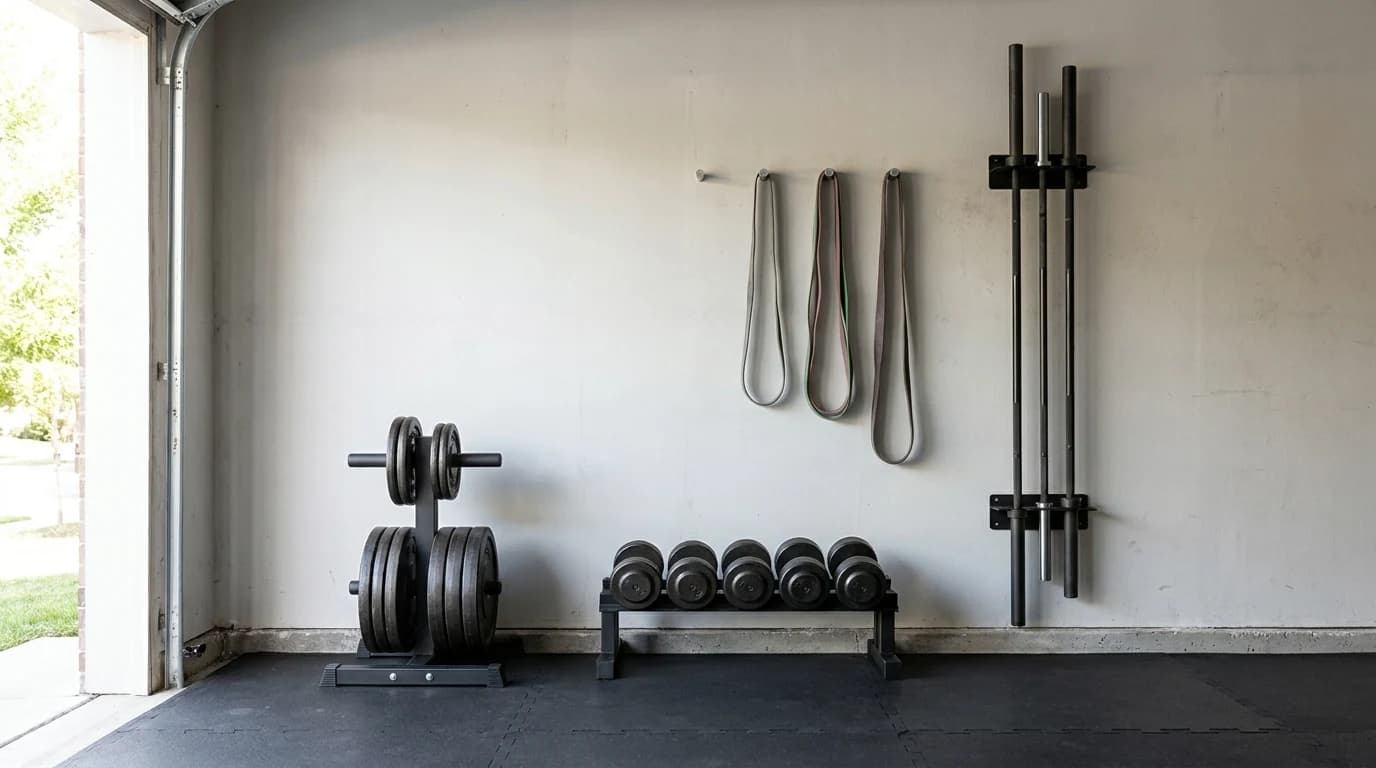
Home Gym Storage: Where to Put Plates, Bars, and Dumbbells
Store home gym gear by weight, not type: heavy stays low, bars and bands go vertical. Where plates, dumbbells, and accessories belong in a small space.
Hilly Shore Labs
Editorial teamThe independent product research team behind GymScored. Every recommendation is researched, never hands-on tested — recommendations draw on manufacturer specifications and available published research. Category order is editorial; the Gym Score is a separate comparison aid.
170 listed products across 26 home gym categories. Scores use category criteria, value and owner-rating inputs; missing evidence limits what a score can tell you.
See the scoring methodology and who we are.
Affiliate disclosure: GymScored is a participant in the Amazon Services LLC Associates Program. We earn from qualifying purchases at no extra cost to you. Full disclosure →