Vibration Plate Exercises: 14 Moves, Grouped by Goal
Fourteen vibration plate exercises grouped by goal, with hold times, weekly frequency, 10- and 20-minute routines, and the safety rules that apply.
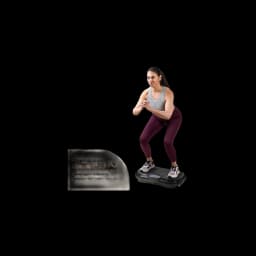
- 1-99 speed range
- 330 lb user weight cap
- Resistance bands included
Evidence snapshot · Updated September 23, 2026
The evidence-backed answer
LifePro Waver Vibration Plate is our default pick for the scope of this guide: 1-99 speed dial, 330 lb user weight cap and the loop bands the upper-body block needs. The plate these routines were written around.
Scope: 3 shortlisted products compared using published specifications, owner-feedback signals, value and category-specific performance. 3 comparison entries match our catalog. Retailer rating totals are snapshots, not a count of people whose reviews we independently analyzed. This is research synthesis, not hands-on testing.
The side-by-side comparison below carries each shortlisted product's owner rating, price context, pros, cons and buy state in one actionable view.
How GymScored is paid: Amazon Associates commission plus brand-direct affiliate (Rogue / REP / Titan when approved). No sponsored placements, no paid reviews, no pay-to-rank. Picks are ranked by the Gym Score formula and nothing else. Read the full disclosure.
Hold positions on the plate rather than standing on it: half squats, lunges, planks, single-leg stands and calf raises, 10 to 20 minutes, three times a week. That is the shape the published protocols used, and the LifePro Waver is the plate this routine was written around.
| Product | Owner rating | Key specs | Pros | Cons | Price | Buy |
|---|---|---|---|---|---|---|
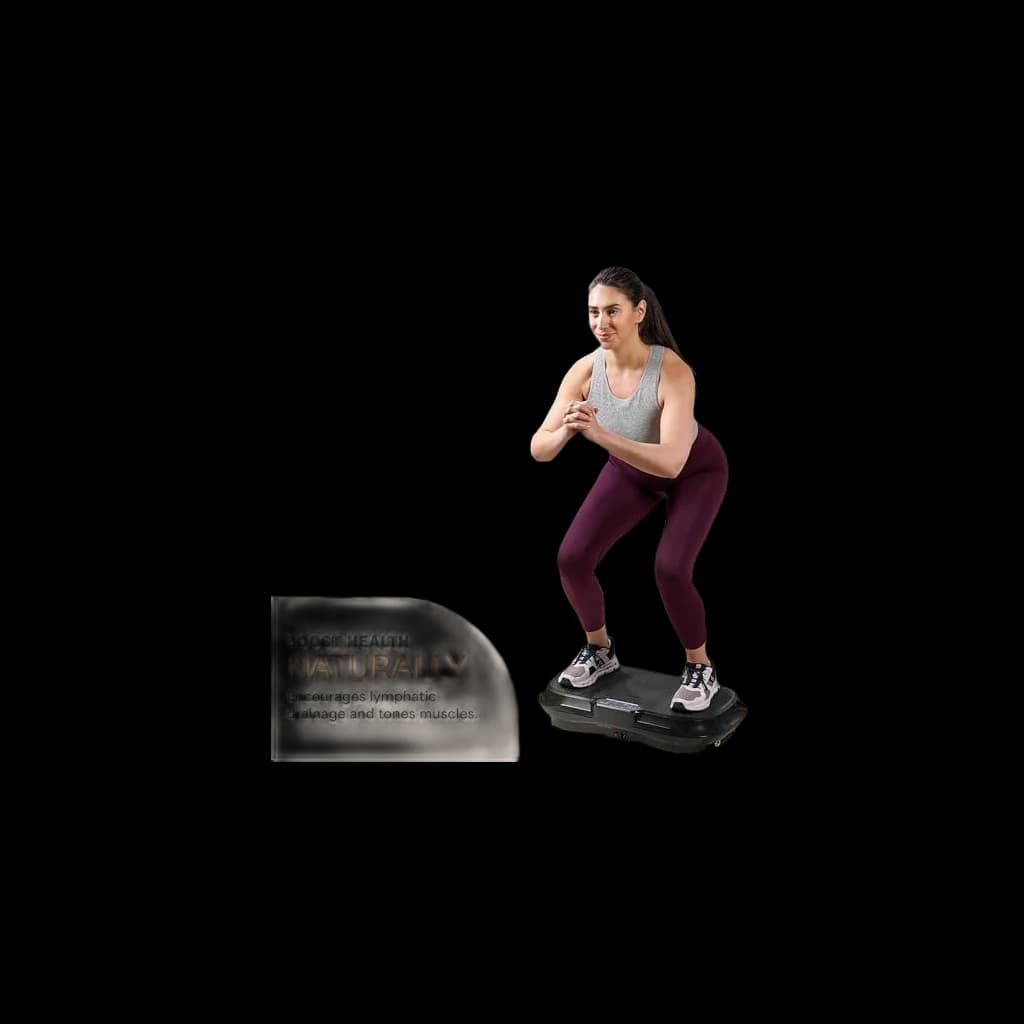 Oscillating plate with a 1-99 speed dial and a 330 lb user weight cap. Ships with loop bands, which is what makes the upper-body block possible. ↑ Quality↑ Muscle ToningBased on 10,487 buyer mentions | Owner rating Gym Score 92 | Key specs
| Pros
| Cons
| $199.99 | Buy on Amazon |
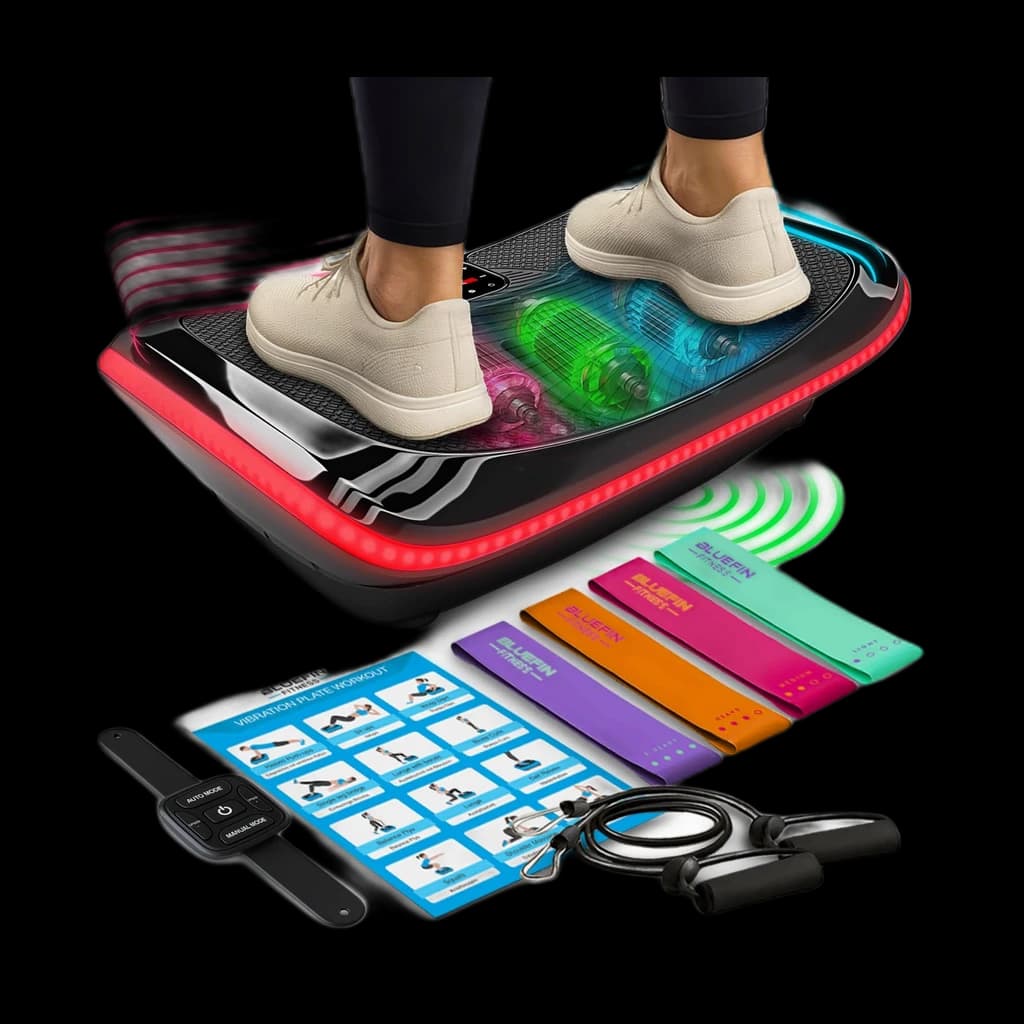 Oscillation plus linear vibration across a 1-180 range on a curved deck. The wider dial is the reason to pick it over the Waver. ↑ Quality↑ Muscle Work↓ Remote ControlBased on 128 buyer mentions | Owner rating Gym Score 93 | Key specs
| Pros
| Cons
| $249.99 | Buy on Amazon |
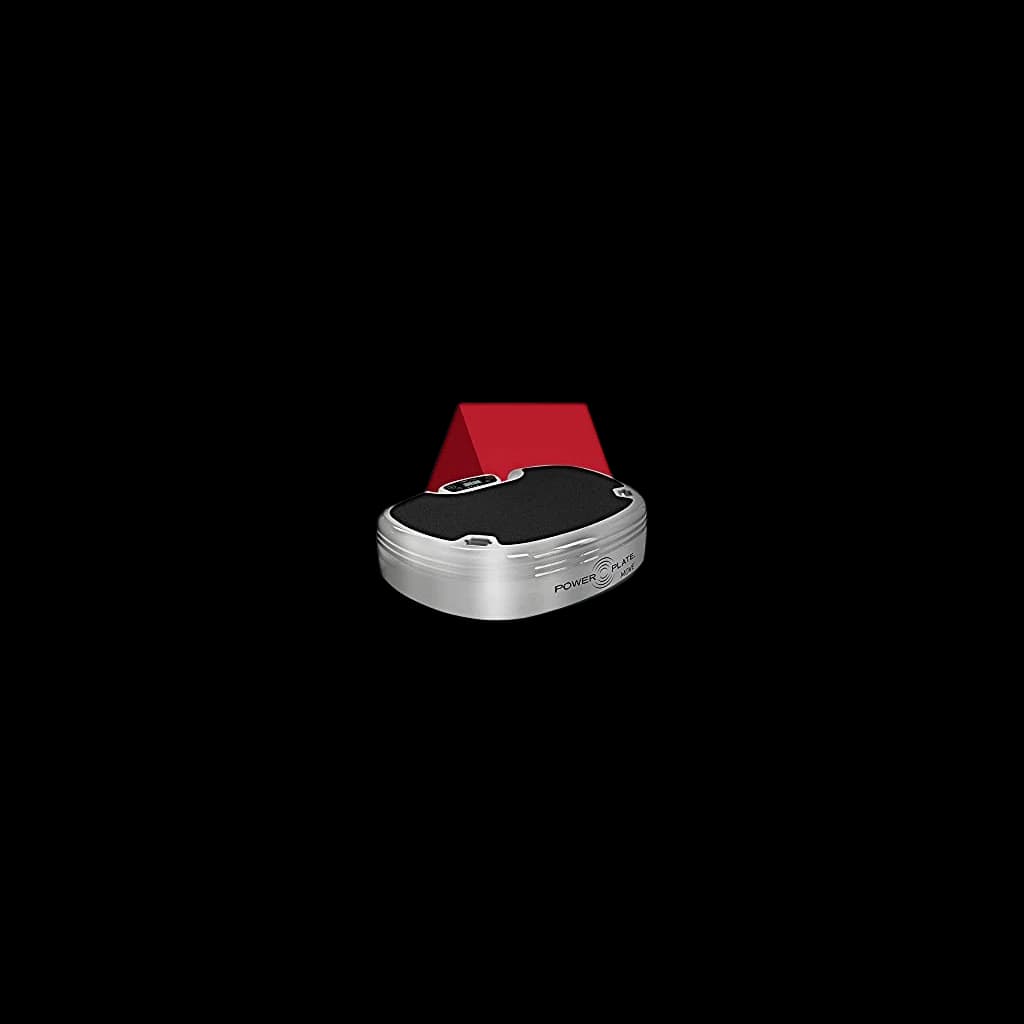 Tri-planar at a fixed 35 Hz — the only plate in this set whose published setting sits inside the band the dynamic-balance and gait findings came from. ↑ Effectiveness↑ Quality↓ Value for moneyBased on 18 buyer mentions | Owner rating Gym Score 90 | Key specs
| Pros
| Cons
| $1,700.00 | Buy on Amazon |
Amazon prices checked Oct 17, 2026. Amazon prices change often — the listing is authoritative.
Hold times and weekly frequency by goal
Movement groups from this guide, with the hold guidance used above. Session and frequency figures come from the protocol parameters reported across 34 pooled randomized trials.
| Goal | Movements | Hold or rep guidance | Where it sits in a session |
|---|---|---|---|
| Balance and warm-up | 3 | 20-60 seconds per position | First 3 minutes |
| Lower body | 4 | 20-60 second holds | Main block |
| Core | 3 | 15-40 second holds | Main block |
| Upper body with bands | 2 | 10-15 reps or a 15-30 second hold | 20-minute version only |
| Recovery and mobility | 2 | 30 seconds to 3 minutes | Finish |
Pick by situation
Decide by your situation, not the generic ranking.
| If | You want | Pick |
|---|---|---|
| Ten minutes, three times a week | You want balance and lower-limb work you will actually keep doing, and loop bands for the upper-body block | LifePro Waver Vibration Plate |
| You want the widest speed range | You expect to progress past a 1-99 dial and prefer oscillation combined with linear motion on a curved deck | Bluefin Fitness 4D Vibration Plate |
| You want to match a studied frequency | You care that the platform publishes its hertz settings so a session can be compared against the research | Power Plate Personal Power Plate |
The short version
- A vibration plate is a platform for bodyweight work, not a workout by itself. In the 34 trials pooled by a 2023 Journal of Clinical Medicine review, 61.8% of protocols had people performing lower-limb strengthening movements on the platform; only 31.4% used a static posture.
- Fourteen movements below, grouped by goal: balance and warm-up, lower body, core, upper body with loop bands, and recovery.
- Hold times, not rep counts. Most of these are 30-to-60-second holds; the trials measured sessions in minutes, not sets.
- Session lengths across those trials ran from 2 to 30 minutes, most commonly three times a week.
- Add speed before you add minutes, and add minutes before you add load.
- Pregnancy, a pacemaker or implanted device, recent surgery and a clotting history all need medical clearance first.
Our pick
1-99 speed dial, 330 lb user weight cap and the loop bands the upper-body block needs. The plate these routines were written around.
Set the plate before you set the routine
Speed is the variable that changes what a session does, and most consumer plates hide it behind a 1-99 dial instead of publishing hertz. Where a plate does publish frequencies, the research gives you something to aim at.
| Band | What it feels like | What the trials associate with it |
|---|---|---|
| Low, under about 20 Hz | A gentle buzz you can talk through | Circulation and warm-up — foot skin blood flow rose 126-150% above control at 15 Hz |
| Medium, about 20-30 Hz | Firm; a 60-second hold becomes work | Static balance ranked best in this band across 27 trials |
| High, about 30-40 Hz | Aggressive; 30 seconds is plenty | Dynamic balance and gait performance ranked best here |
Rule of thumb: add speed before you add minutes, and add minutes before you add load. A 60-second hold that has stopped feeling like work is a speed problem, not a duration problem.
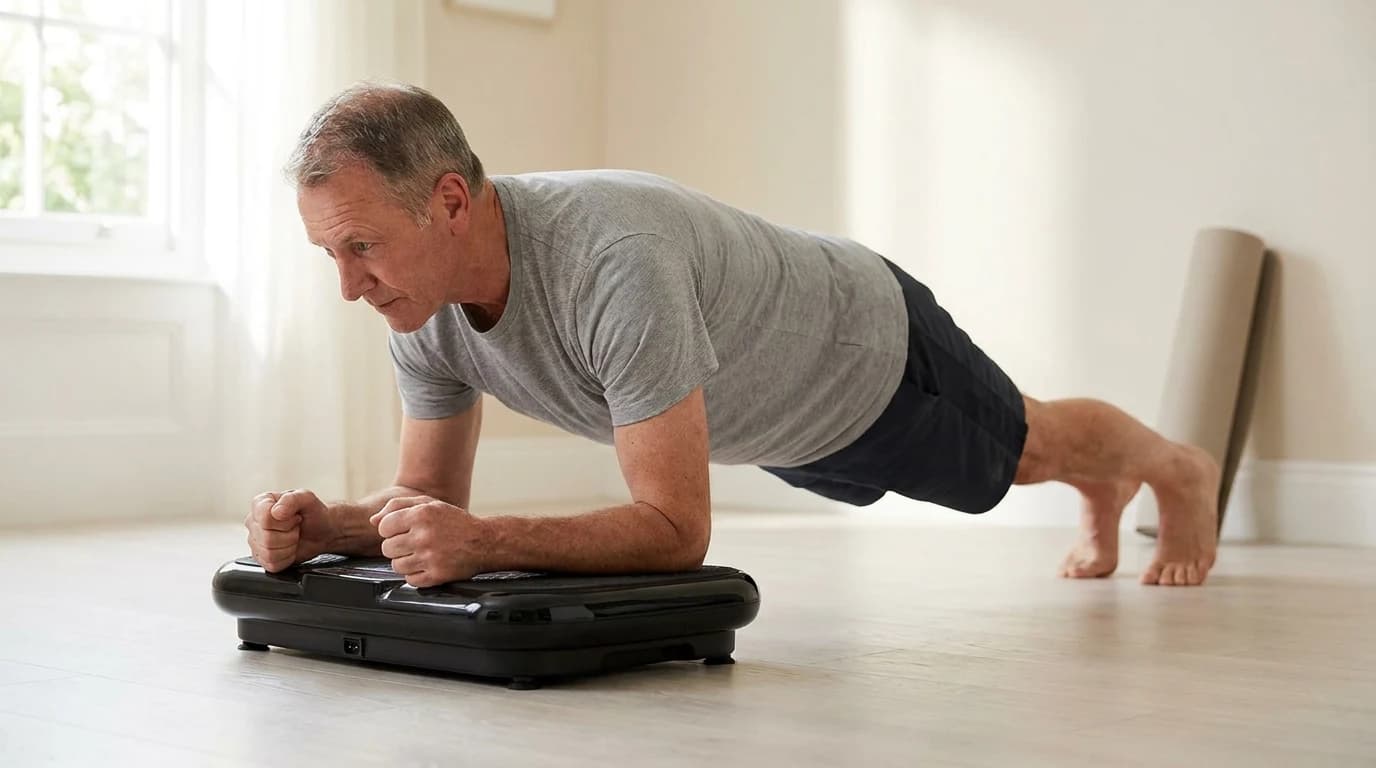
The fourteen movements, grouped by goal
Every one of these is a position you could hold on the floor. The plate is what makes an easy position hard, which is why the hold times look short.
Balance and warm-up: the first three minutes
- Two-foot stand, soft knees — 60 seconds. Feet hip-width, knees unlocked, weight through the midfoot. This is the warm-up, not the workout.
- Weight shifts, side to side — 60 seconds, slow. Move your weight over one foot, pause, come back. Hands free of the handles once you trust it.
- Single-leg stand — 20-30 seconds per side, holding a wall at first. The hardest thing here, and the closest to what the balance trials measured.
Lower body: four holds that do the actual work
- Half squat hold — 30-60 seconds, knees tracking over the toes. The most-used position in the published protocols.
- Deep squat hold — 20-40 seconds. Go lower only once the half squat is comfortable at your working speed.
- Static lunge hold — 30 seconds per side, back knee soft, front shin vertical.
- Calf raise hold — 30-45 seconds at the top, heels lifted, or slow raises at a two-seconds-up, three-seconds-down count.
Core: three positions, none of them crunches
- Forearm plank, forearms on the plate — 20-40 seconds. Feet on the floor, hips level.
- Side plank, forearm on the plate — 15-30 seconds per side. The shortest hold on the list for a reason.
- Seated hollow hold, feet on the plate — 20-30 seconds, sitting on the floor with heels on the platform and hands behind you.
Upper body: two moves using the loop bands
Most plates in this category ship with loop bands that clip to the base, which is what turns a lower-body machine into a full-body one.
- Standing band row — 10-15 slow reps, elbows driving back and down, shoulder blades finishing the movement.
- Push-up hold, hands on the plate — 15-30 seconds at the top or in a half-depth hold. Knees down is a legitimate version.
Recovery and mobility: two ways to finish
- Seated calf and hamstring rest — 2-3 minutes on a chair, feet flat on the plate, low speed. This is the circulation use, and the one benefit that shows up within a single session.
- Standing forward fold — 30-60 seconds, hinging at the hips with soft knees, hands toward the floor.
Two routines you can run tomorrow
| Block | 10-minute session | 20-minute session |
|---|---|---|
| Warm-up | Two-foot stand, 60s | Two-foot stand + weight shifts, 2 min |
| Balance | Single-leg stand, 30s per side | Single-leg stand, 2 x 30s per side |
| Lower body | Half squat 45s, calf raise hold 45s | Half squat, deep squat, static lunge, calf raise — 45s each, twice through |
| Core | Forearm plank 30s | Forearm plank, side plank, hollow hold — 30s each, twice through |
| Upper body | Skip | Band rows 12 reps, push-up hold 20s |
| Finish | Forward fold 60s | Seated rest 3 min, forward fold 60s |
The 10-minute version survives a busy week. The 20-minute version is closer to the dose the strength trials used.
How often, and for how long
- Three sessions a week was the most common weekly frequency in the pooled trials, used by 58.8% of them.
- Individual sessions ran from 2 to 30 minutes, with short interval formats such as three bouts of two minutes appearing repeatedly.
- Interventions ran from ten consecutive days to eighteen months — the strength and bone outcomes are a multi-week story, not a single-session one.
- Circulation is the exception. The acute blood-flow response appears during the session and fades within minutes of stepping off.
Worth being clear about: these are the protocols the studies used, and almost all of those studies enrolled adults over 60. We researched this rather than measuring it ourselves.
Who should not do these workouts
Read this before the routine, not after it.
Power Plate's own guidance says vibration training should be avoided, or cleared with a clinician first, if you are pregnant, have a pacemaker, defibrillator, spinal cord stimulator or deep brain stimulator, have severe heart disease, uncontrolled hypertension or arrhythmias, have had recent surgery — joint replacements and spinal procedures in particular — or have an active or recent deep vein thrombosis or a clotting disorder. It also tells beginners to start with shorter sessions at lower speeds and build gradually.
On clotting specifically, a 2023 systematic review in npj Microgravity pooled 33 studies covering 492 participants and reported neutral or potentially positive effects on coagulation, fibrinolysis and endothelial function, with no warning signs of increased clotting or venous thrombosis risk. That is reassuring for healthy users; it is not clearance for anyone already carrying a diagnosis.
If you are managing osteoporosis, high blood pressure or a circulatory condition, raise it at your next appointment rather than reason your way past it here.
What owners actually do with them
In an r/Biohackers thread on whether vibration plates are worth anything, the most-endorsed answers describe the plate as a ten-minute morning wake-up or a warm-up before kettlebell work — a bracket around training rather than the training itself. The counterweight is in r/workout, where the prevailing view is that nothing supports these machines driving strength or muscle growth on their own.
Both readings match the data. Our claim-by-claim evidence review grades which benefits survive pooling and which do not.
Which plate for these workouts
The routine needs three things: a platform stable at your bodyweight, a speed range you can progress through, and loop bands for the upper-body block. Full rankings live in the vibration plates category and the home vibration plate roundup.
LifePro Waver Vibration Plate — $199.99 — best for these routines
The LifePro Waver is an oscillating plate with a 1-99 speed dial, a 330 lb user weight cap and the loop bands the upper-body block calls for. It is the plate these movements were written around, and the one readers here buy most often. It publishes no hertz figure, so treat the dial as relative rather than matched to a studied frequency.
Bluefin Fitness 4D Vibration Plate — $249.99 — if you want a wider dial
The Bluefin 4D combines oscillation with linear vibration across a 1-180 range on a curved deck. Owner reports are mixed on noise and the remote, and the 265 lb cap is the spec to check first.
Power Plate Personal Power Plate — $1,700.00 — if published frequency matters
The Power Plate Personal runs tri-planar at a fixed 35 Hz, per Power Plate — the only plate here whose setting sits in the 30-40 Hz band the dynamic-balance and gait findings came from. It costs roughly eight times the Waver and caps at 264 lb.
Bottom line
Hold positions on the plate that you would find hard on the floor: half squats, lunges, planks, single-leg stands, calf raises. Three sessions a week, ten to twenty minutes, speed before duration. That is the shape the trials used, and the honest ceiling of what this machine does — a low-impact adjunct for balance, lower-limb work and circulation, particularly after 60. Not a strength programme, and not a weight-loss device.
Frequently Asked Questions
What exercises can you do on a vibration plate?+
Anything you can hold still on the floor. The practical list is half and deep squat holds, static lunges, calf raise holds, forearm and side planks with the forearms on the platform, a seated hollow hold, single-leg stands, weight shifts, band rows and push-up holds, plus a seated rest and a forward fold to finish. Fourteen of them are grouped by goal in this guide.
How long should a vibration plate workout be?+
Across the 34 randomized trials pooled in a 2023 Journal of Clinical Medicine review, sessions ran from 2 to 30 minutes, and short interval formats such as three bouts of two minutes appeared repeatedly. Ten minutes is a realistic floor for a routine you will repeat; twenty minutes is closer to the dose those trials used.
How often should you use a vibration plate?+
Three times a week was the most common weekly frequency in the pooled trials, used by 58.8% of them. Interventions ran from ten consecutive days to eighteen months, so the strength and bone outcomes are a multi-week story. Circulation is the exception: that response appears during a single session and fades within minutes of stepping off.
Should you stand still on a vibration plate or move?+
Move. In the pooled trials, 61.8% of protocols had participants performing lower-limb strengthening exercises on the platform and only 31.4% used a static posture such as semi-flexed knees. Passive standing is the least-studied version of the thing, which is why every group in this guide is built around a held position rather than a stand.
What speed should a beginner use on a vibration plate?+
The lowest setting that still makes a 60-second hold feel like work, then progress speed before duration. Power Plate's own guidance for new users is to start with shorter sessions at lower frequencies and build gradually. Where a plate publishes hertz, roughly 20-30 Hz is the band associated with static balance and 30-40 Hz with dynamic balance and gait.
Who should not do vibration plate exercises?+
Power Plate states that vibration training should be avoided or cleared with a clinician first during pregnancy, with a pacemaker, defibrillator, spinal cord stimulator or deep brain stimulator, with severe heart disease, uncontrolled hypertension or arrhythmias, after recent surgery including joint replacements and spinal procedures, and with an active or recent deep vein thrombosis or clotting disorder. If you are managing osteoporosis or a circulatory condition, raise it at your next appointment first.
Sources & Research
- Journal of Clinical Medicine — Impacts of Whole-Body Vibration on Muscle Strength, Power, and Endurance in Older Adults: A Systematic Review and Meta-Analysis (2023) — protocol parameters across 34 randomized trialsresearch
- Archives of Physical Medicine and Rehabilitation — Does Frequency of the Mechanical Vibration Matter? Whole-Body Vibration Training on Older Adults Strength, Balance, and Gait Performance — network meta-analysis of 27 trialsresearch
- International Journal of Environmental Research and Public Health — Acute Effects of Whole-Body Vibration on Peripheral Blood Flow, Vibrotactile Perception and Balance in Older Adults (2020)research
- Frontiers in Physiology — Effects of whole-body vibration training with different frequencies on the balance ability of the older adults: a network meta-analysis (2023)research
- npj Microgravity — Effects of whole-body vibration or resistive-vibration exercise on blood clotting and related biomarkers: a systematic review (2023)research
- Power Plate — Who shouldn't use vibration plates — manufacturer contraindication and beginner-progression guidanceauthority
Related reviews
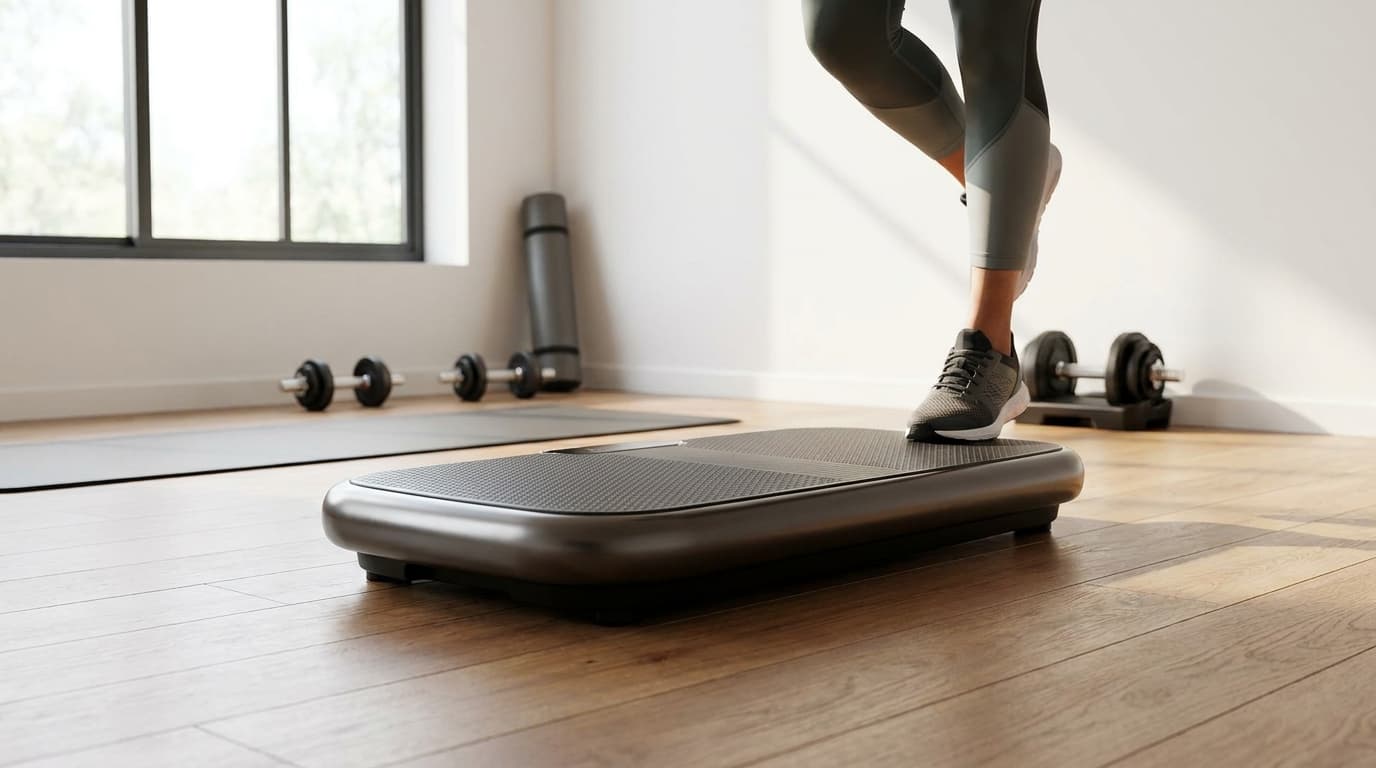
Best Vibration Plates for Home Use in 2026: LifePro Waver Wins
The LifePro Waver is the best value vibration plate; the Power Plate Personal wins the premium tier on published frequency. Four plates ranked.
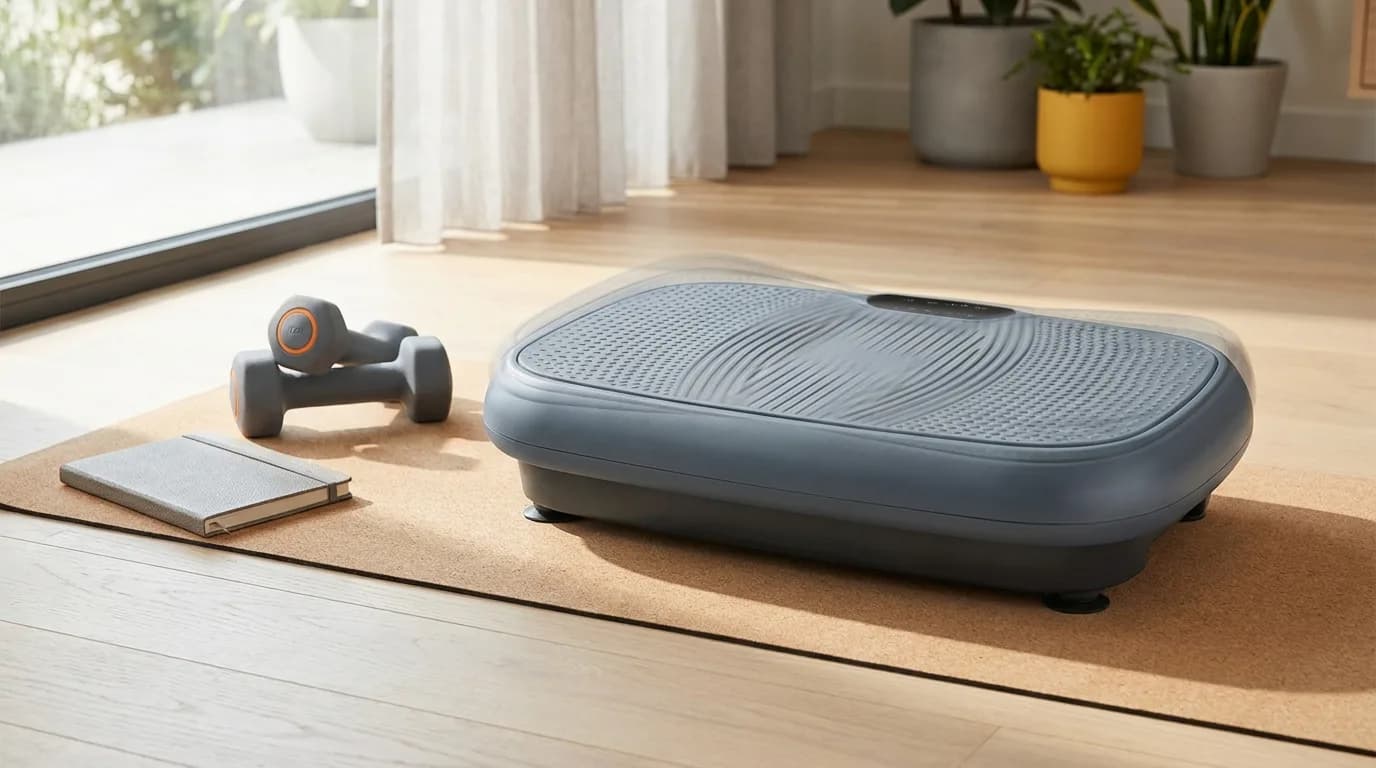
Vibration Plate Benefits: 9 Claims, Graded by the Evidence
Bone density, circulation, balance, recovery, fat loss: each vibration plate benefit graded strong, mixed or weak, with the trial data behind it.
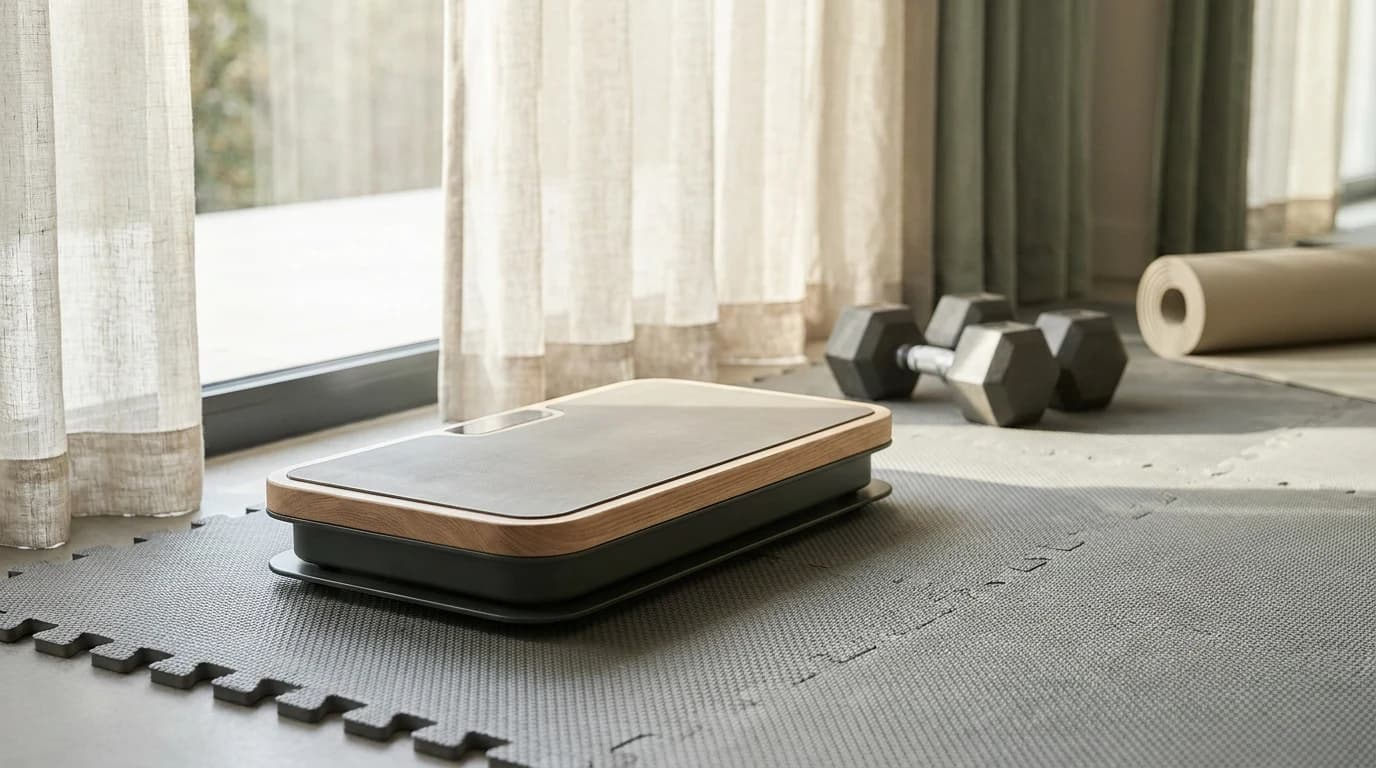
Do Vibration Plates Actually Work? What the Science Says
Vibration plates build lower-limb strength and some hip-bone density in older adults - but the research kills the fat-loss claim. What the science shows.
Hilly Shore Labs
Editorial teamThe independent product research team behind GymScored. Every recommendation is researched, never hands-on tested — recommendations draw on manufacturer specifications and available published research. Category order is editorial; the Gym Score is a separate comparison aid.
161 listed products across 26 home gym categories. Scores use category criteria, value and owner-rating inputs; missing evidence limits what a score can tell you.
See the scoring methodology and who we are.
Affiliate disclosure: GymScored is a participant in the Amazon Services LLC Associates Program. We earn from qualifying purchases at no extra cost to you. Full disclosure →