Vibration Plates and Lymphatic Drainage: What the Evidence Shows
Vibration raises skin blood flow measurably. No trial has ever tested a vibration plate on lymphedema. What the research supports, and what is marketing.
Partly, and less than the marketing says. Whole-body vibration reliably raises peripheral blood flow — one study in older adults measured foot skin blood flow roughly 300% above control during 25 Hz exposure — and a 2005 study in 18 perimenopausal women found plantar vibration raised the tissue pressure threshold for swelling, which the authors attributed to enhanced lymphatic flow. But no randomized controlled trial has tested a consumer vibration plate against a lymphatic outcome such as limb volume, and a 2011 BMJ trial found even manual lymphatic drainage did not reduce lymphedema incidence versus exercise and guidelines alone. Treat a plate as a movement tool with a plausible circulation effect. If you have lymphedema or lipedema, talk to your doctor or a certified lymphedema therapist before using one.
How GymScored is paid: Amazon Associates commission plus brand-direct affiliate (Rogue / REP / Titan when approved). No sponsored placements, no paid reviews, no pay-to-rank. Picks are ranked by the Gym Score formula and nothing else. Read the full disclosure.
Vibration has a real, measured effect on peripheral blood flow and one small study linking it to lymphatic flow — but no randomized trial has ever tested a vibration plate against a lymphatic outcome, and even manual lymphatic drainage failed to reduce lymphedema incidence in a 160-patient BMJ trial. Buy a plate as a movement tool, not as a drainage treatment, and manage diagnosed lymphedema with your care team.
| Product | Owner rating | Key specs | Pros | Cons | Price | Buy |
|---|---|---|---|---|---|---|
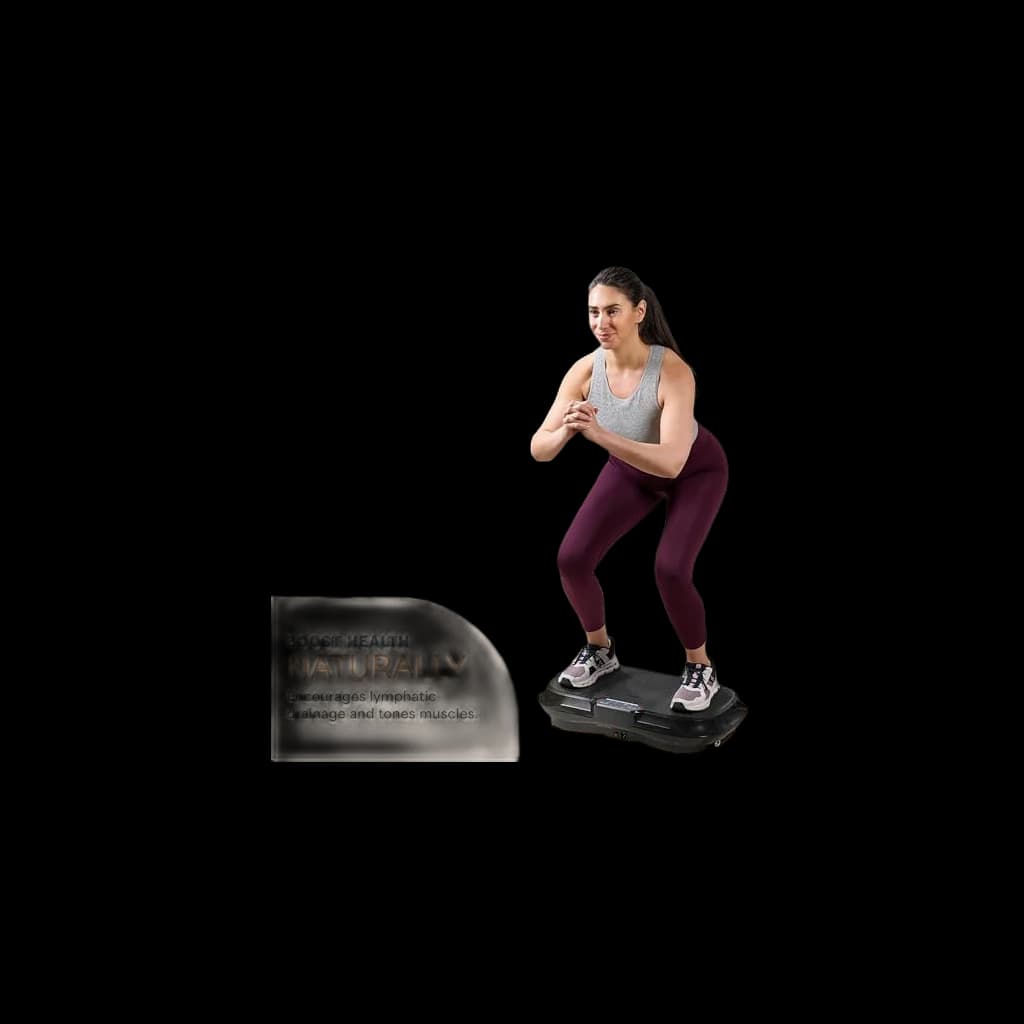 The sensible default for seated leg work: 1-99 speed range, 330 lb platform, and our #1 pick in the vibration plates category. | Owner rating Gym Score 92 | Key specs
| Pros
| Cons
| $199.99 | Buy on Amazon |
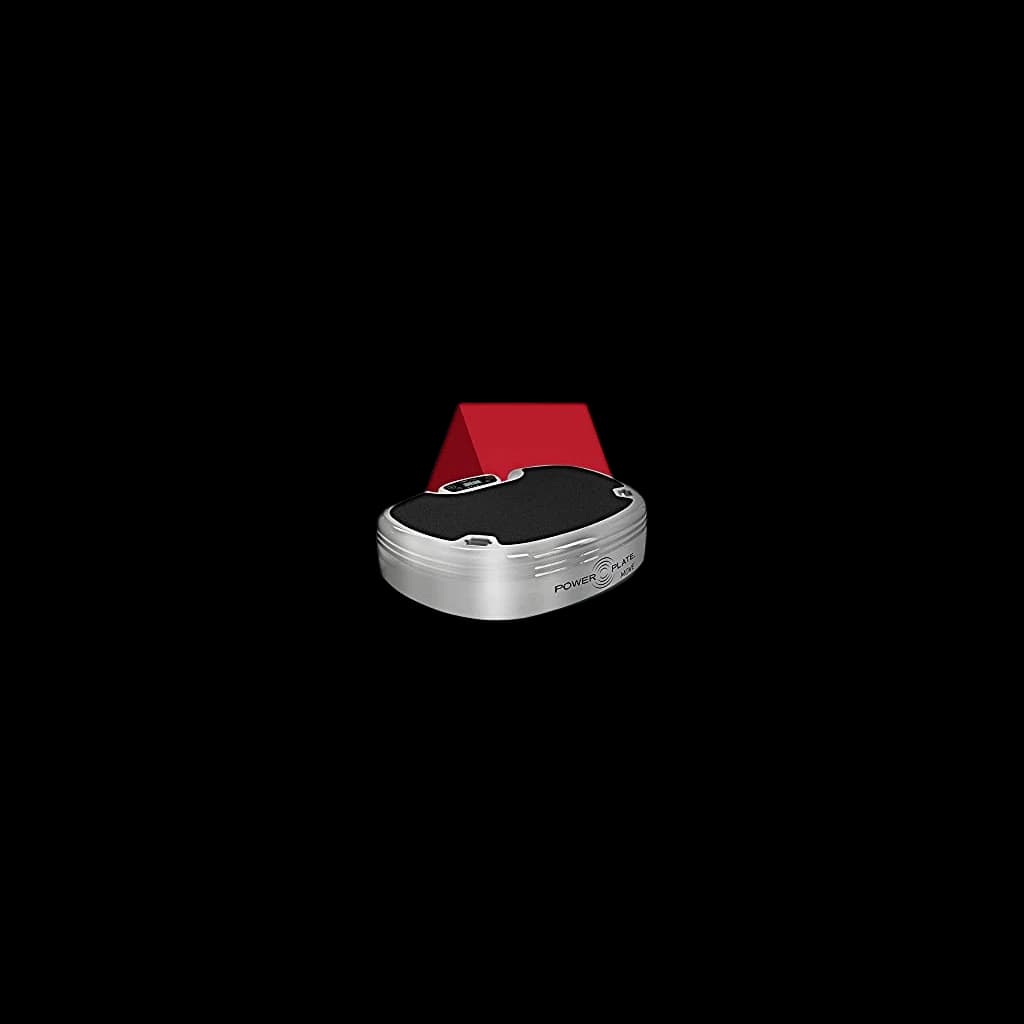 The only plate here that publishes its vibration frequency in hertz — a fixed 35 Hz — which is the disclosure that lets you match what the research actually used. | Owner rating Gym Score 90 | Key specs
| Pros
| Cons
| $1,836.00 | Buy on Amazon |
Amazon prices checked Oct 10, 2026. Amazon prices change often — the listing is authoritative.
What we can and cannot say
Search "vibration plate for lymphatic drainage" and you hit a wall of confident language: flushes toxins, drains the lymph, beats cellulite, ten minutes replaces an hour of exercise. We went looking for the trials behind those sentences.
Here is the honest position. Vibration does move fluid — small human studies show large, immediate increases in skin blood flow, and one tilt-table study found vibration raised the pressure at which tissue starts to swell, which its authors attributed to enhanced lymphatic flow. What does not exist is a single randomized controlled trial of a consumer vibration plate against a lymphatic outcome such as limb volume in lymphedema. Plausible mechanism and proven treatment are different claims, and nearly every page selling a plate blurs them.
If you have diagnosed lymphedema or lipedema, read this as background and let a certified lymphedema therapist make the decisions.
Key takeaways
- Lymph has no heart. It moves when muscles squeeze and arteries pulse — so anything that makes you contract muscles rhythmically is at least in the right mechanical family.
- The circulation evidence is real but acute. Whole-body vibration raised foot skin blood flow by roughly 300% during exposure at 25 Hz in older adults, and the effect fades within minutes of stepping off.
- The lymph-specific evidence is one small study. Plantar vibration shifted the edema threshold in 18 perimenopausal women. That is a mechanism signal, not a treatment result.
- No plate has been tested on lymphedema. The nearest trial used vibration as an in-clinic add-on to hands-on therapy in lipedema, not a home plate.
- Even manual lymphatic drainage failed its big randomized test. If the gold-standard hands-on technique could not shift lymphedema incidence, a machine deserves at least the same scrutiny.
How lymph actually moves
Your capillaries leak on purpose. Cleveland Clinic puts the daily numbers at roughly 20 litres of plasma pushed out through capillary walls, about 17 litres reabsorbed directly, and the remaining 3 or so litres collected by the lymphatic system and returned to the bloodstream. That leftover fraction is what "drainage" refers to.
The system that carries it has no dedicated pump. As Cleveland Clinic describes it, "the pulsing of nearby arteries and squeezing of nearby muscles help fluid move through your lymphatic vessels." Lymphatic vessels also contract on their own, and breathing helps move fluid through the chest.
Two things follow, and they matter more than any product spec.
First, movement is the mechanism. The National Cancer Institute's lymphedema summary calls exercise "a natural pump for the lymph system." Walking is the least glamorous and best-supported lymphatic intervention there is.
Second, lymph is not sludge waiting to be shaken loose. Nothing in the Cleveland Clinic or NCI descriptions supports the idea of a drainage event you trigger with a ten-minute session. The system runs continuously. When it fails, it fails structurally — nodes removed, vessels damaged, or a congenital malformation — and that is a medical problem, not a maintenance one.
What vibration demonstrably does to circulation
This is the part with genuine data behind it.
A study of 30 healthy older adults (average age 71 to 73) exposed them to whole-body vibration at 15, 20 and 25 Hz with 4 mm peak-to-peak displacement, in three one-minute bouts. Skin blood flow on the top of the foot rose sharply against control during exposure:
| Frequency | Skin blood flow vs control (during) | After exposure |
|---|---|---|
| 15 Hz | 126-150% higher | Not sustained |
| 20 Hz | 171-206% higher | 26% higher |
| 25 Hz | 300-322% higher (p < 0.001) | 49% higher |
The authors' own bottom line was narrow: vibration at 20 Hz within recommended magnitude limits "can be effective in inducing enhancements in peripheral blood flow" — while the same exposure did not improve balance.
An earlier trial in 45 adults aged 18 to 43 split them into vibration-plus-exercise, exercise-only and vibration-only groups, and found the vibration-only group roughly doubled mean skin blood flow, with the effect holding for at least ten minutes after the session.
The caveat is the whole story here: skin blood flow is blood, not lymph. More perfusion is a reasonable precondition for more lymph formation and clearance. It is not a measurement of it.
The one study that measured something lymphatic
The closest thing to direct human evidence is a 2005 physiology study in 18 women aged 46 to 63. Researchers combined a vibrating platform under the feet with tilt-table testing at 0, 15 and 45 Hz.
At 45 Hz, supine blood flow rose significantly in the calf (30%), pelvis (26%) and thorax (20%). More interestingly, the microvascular filtration relationship shifted: the threshold pressure at which fluid starts to accumulate in tissue climbed from 24 mmHg at 0 Hz to 27 at 15 Hz to 31 at 45 Hz while supine, and from 25 to 35 mmHg upright. The authors attributed that shift to enhanced lymphatic flow.
Read that honestly and it is encouraging and thin at the same time. It is 18 women, one session, an indirect derived measure rather than a lymph flow rate, and a plantar vibration protocol on a tilt table — not fifteen minutes standing on a home plate. It is the best mechanistic evidence in existence for the lymphatic claim, and it is a single study.
What nobody has tested
We searched the biomedical literature for whole-body vibration paired with lymphedema and with lymphatic drainage. There is no randomized controlled trial of a vibration plate measuring a lymphatic outcome — no limb volume, no bioimpedance, no lymphoscintigraphy.
The nearest published trial is a 2020 pragmatic randomized study in Physiotherapy Theory and Practice. Thirty women with stage 2 to 3 lipedema were assigned either six sessions of manual lymphatic drainage or six sessions of manual lymphatic drainage combined with low-frequency vibrotherapy. The combined arm did substantially better, with effect sizes on lipedema size between 1.1 and 3.2 and a quality-of-life effect of 1.0.
Four things keep that from being a green light for a plate purchase. It is 30 participants. It is unblinded and pragmatic. Lipedema is a different condition from lymphedema. And the vibration was an adjunct delivered inside a course of hands-on physiotherapy, not a stand-alone home session.
Why "it moves lymph" doesn't finish the argument
The mechanism-to-outcome gap is not hypothetical in this field. It has already swallowed the discipline's flagship technique.
A 2011 randomized trial in The BMJ followed 160 women after axillary lymph node dissection for breast cancer. Both arms got guidelines and exercise therapy; one also received six months of manual lymphatic drainage from trained therapists. At twelve months, lymphedema incidence was 24% in the manual drainage group and 19% in the control group — odds ratio 1.3, p = 0.45. The authors concluded that adding manual lymph drainage "is unlikely to have a medium to large effect in reducing the incidence of arm lymphoedema in the short term."
Manual lymphatic drainage is still part of complete decongestive therapy, the standard of care the NCI describes: compression garments and bandaging, skin care, exercise, and manual drainage, managed by a certified lymphedema therapist. But if the hands-on technique — applied with anatomical precision by clinicians — did not move the outcome in a properly powered trial, a platform that shakes at an unlabelled frequency has not earned a stronger claim.
The claims that don't survive contact with the evidence
"Flushes toxins." Neither Cleveland Clinic nor the NCI describes the lymphatic system as a toxin store you can purge. It filters waste and returns fluid, continuously.
"Reduces cellulite." No lymphatic trial supports this. It is a cosmetic claim borrowed from massage marketing.
"Ten minutes equals an hour of exercise." The vibration trials that produced strength gains used weeks of active movement on the platform. Our evidence review of vibration plates covers what those protocols actually looked like.
"Drains fat and puffiness." Pooled trials in older adults found no significant effect of whole-body vibration on fat mass, lean mass or skeletal muscle mass. We grade that claim and six others in vibration plate benefits, ranked by evidence.
Safety: the part the marketing skips
Lymphatic work has real contraindications. Cleveland Clinic lists blood clots and deep vein thrombosis, cellulitis, active infection, fever, heart disease, kidney failure and stroke among reasons not to have lymphatic drainage massage, and says it should not be applied over cancerous tissue or skin damaged by radiation. The NCI notes that lymphedema raises the risk of cellulitis, "a potentially life-threatening bacterial infection of the skin," and to contact a doctor immediately at any sign of it.
None of that changes because the stimulus comes from a motor instead of a hand. If any of those apply to you, ask your doctor before using a plate at all — and if you have been fitted with a compression garment, ask your therapist before adding vibration to your routine.
The reassuring counterpart: movement itself is safe here. A 2019 systematic review of 15 trials of weight lifting and resistance exercise in breast-cancer-related lymphedema found no arm-volume change and no exercise-triggered adverse events. Being cautious about a machine's claims is not a reason to be cautious about moving.
If you want a plate anyway
Buy it as a movement tool with a plausible circulation side effect, and the purchase makes sense. Buy it as a lymphatic treatment and you are paying for a claim nobody has tested.
One spec problem worth knowing before you shop: the studies that raised blood flow specify frequency in hertz — 20 Hz, 25 Hz, 45 Hz. Consumer oscillating plates almost universally market a speed scale of 1 to 99 with no hertz equivalent published. You cannot reproduce a protocol you cannot read, so treat any "clinically proven frequency" marketing as unverifiable unless the brand publishes the number.
| Plate | Motion | Weight cap | Price |
|---|---|---|---|
| LifePro Waver Vibration Plate | Oscillating, 1-99 speeds | 330 lb | $199.99 |
| Power Plate Personal Power Plate | Tri-planar, fixed 35 Hz published | 264 lb | $1,836.00 |
The LifePro Waver is the sensible default for seated leg work and our #1 pick in the vibration plates category. The Bluefin 4D earns its step up only if you want to stand and do squats or lunges on it, where the larger platform and multi-motion modes matter. The Power Plate Personal is the one plate here that publishes its frequency in hertz — a fixed 35 Hz — which is the single most useful disclosure in this category if you care about matching what the research used. It also costs several times what the LifePro plates do.
How to use one without overclaiming
Move on it, don't stand on it. Calf raises, heel lifts, marching, gentle squats. Muscle contraction is the pump the physiology describes; passive standing is not.
Keep sessions short and regular — a few minutes, a few times a week — rather than long single sessions.
Walk afterwards. The best-evidenced lymphatic stimulus in this whole article costs nothing.
Keep doing what your clinician prescribed. Compression garments, skin care and complete decongestive therapy are the treatment. A plate is not a substitute for any of them.
Watch for the wrong signals. Increased swelling, redness, warmth or fever after sessions means stop and call your doctor, not push through.
Bottom line
A vibration plate has a defensible circulation story and an untested lymphatic one. The blood-flow data is real, immediate and short-lived; the single study touching lymphatic flow is small, acute and indirect; and no trial has ever measured what a plate does to a swollen limb. For a generally healthy person who wants to move more and likes the format, that is fine. For anyone managing lymphedema or lipedema, the evidence points at your care team and your compression garment, not at a platform — talk to your doctor before adding one.
Sources
- Cleveland Clinic - Lymphatic System
- Cleveland Clinic - Lymphatic Drainage Massage
- National Cancer Institute - Lymphedema (PDQ)
- Acute Effects of Whole-Body Vibration on Peripheral Blood Flow, Vibrotactile Perception and Balance in Older Adults (PMC, 2020)
- The effect of whole body vibration on lower extremity skin blood flow in normal subjects (Medical Science Monitor, 2007)
- Plantar vibration improves leg fluid flow in perimenopausal women (American Journal of Physiology, 2005)
- Low-frequency vibrotherapy improves the effectiveness of manual lymphatic drainage in lipedema (Physiotherapy Theory and Practice, 2020)
- Effect of manual lymph drainage in addition to guidelines and exercise therapy on arm lymphoedema related to breast cancer: randomised controlled trial (The BMJ, 2011)
- Effects of weight-lifting or resistance exercise on breast cancer-related lymphedema: a systematic review (2019)
Frequently Asked Questions
Does a vibration plate help lymphatic drainage?+
There is a plausible mechanism and no direct proof. Vibration measurably increases peripheral blood flow, and one 2005 study of 18 perimenopausal women found plantar vibration raised the tissue pressure threshold for swelling, which the researchers attributed to enhanced lymphatic flow. No randomized trial has tested a consumer vibration plate against a lymphatic outcome such as limb volume, so nobody can honestly claim a plate drains lymph.
Can I use a vibration plate if I have lymphedema?+
Ask your doctor or certified lymphedema therapist first. Lymphedema care follows complete decongestive therapy — compression, skin care, exercise and manual lymphatic drainage — and lymphedema raises the risk of cellulitis, which needs urgent medical attention. Cleveland Clinic also lists blood clots, active infection, fever, heart disease, kidney failure and stroke as reasons to avoid lymphatic drainage work. A plate does not replace prescribed treatment.
How long should you stand on a vibration plate for circulation?+
The blood-flow studies used very short exposures. The clearest one used three one-minute bouts at 15 to 25 Hz, and the increase in skin blood flow faded within minutes of stopping. Short, frequent sessions with active movement — calf raises, heel lifts, marching — match what was studied better than long passive standing.
Do vibration plates flush toxins out of the body?+
No. Neither Cleveland Clinic's description of the lymphatic system nor the National Cancer Institute's lymphedema summary describes lymph as a store of toxins waiting to be released. The system continuously filters waste and returns roughly three litres of fluid to the bloodstream each day. Detox framing is marketing language, not physiology.
Is exercise safe if you have lymphedema?+
The evidence says yes, under clinical guidance. A 2019 systematic review of 15 trials of weight lifting and resistance exercise in breast-cancer-related lymphedema found no change in arm volume and no exercise-triggered adverse events. The National Cancer Institute describes exercise as a natural pump for the lymph system. Follow your care team's guidance on compression garments during exercise.
Sources & Research
- Cleveland Clinic — Lymphatic Systemreview
- Cleveland Clinic — Lymphatic Drainage Massagereview
- National Cancer Institute — Lymphedema (PDQ) - Patient Versionreview
- International Journal of Environmental Research and Public Health — Acute Effects of Whole-Body Vibration on Peripheral Blood Flow, Vibrotactile Perception and Balance in Older Adultsresearch
- Medical Science Monitor — The effect of whole body vibration on lower extremity skin blood flow in normal subjectsresearch
- American Journal of Physiology — Plantar vibration improves leg fluid flow in perimenopausal womenresearch
- Physiotherapy Theory and Practice — Low-frequency vibrotherapy considerably improves the effectiveness of manual lymphatic drainage (MLD) in patients with lipedemaresearch
- The BMJ — Effect of manual lymph drainage in addition to guidelines and exercise therapy on arm lymphoedema related to breast cancer: randomised controlled trialresearch
- International Journal of Nursing Sciences — Effects of weight-lifting or resistance exercise on breast cancer-related lymphedema: A systematic reviewresearch
Related reviews
Do Vibration Plates Actually Work? What the Science Says
Vibration plates build lower-limb strength and some hip-bone density in older adults - but the research kills the fat-loss claim. What the science shows.
Vibration Plate Benefits: 9 Claims, Graded by the Evidence
Bone density, circulation, balance, recovery, fat loss: each vibration plate benefit graded strong, mixed or weak, with the trial data behind it.
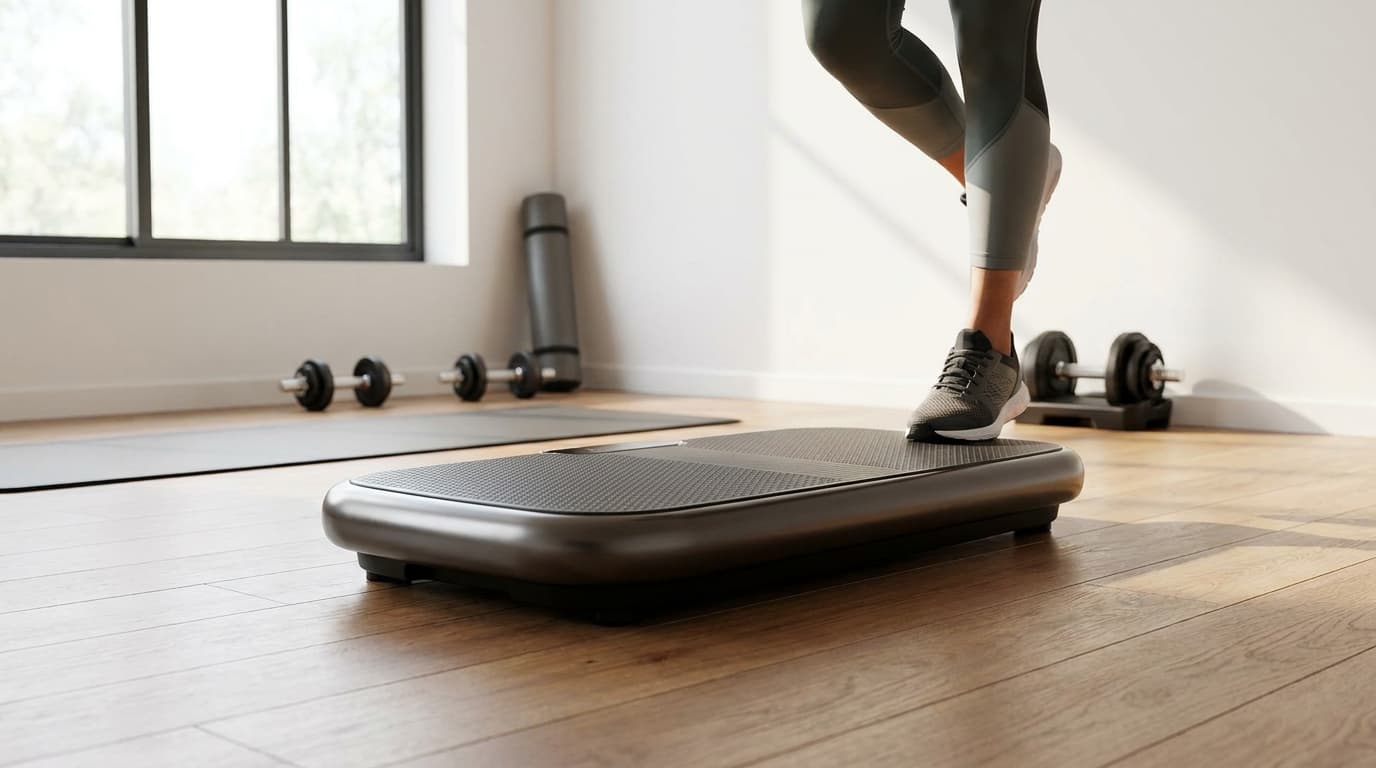
Best Vibration Plates for Home Use in 2026: LifePro Waver Wins
The LifePro Waver is the best value vibration plate; the Power Plate Personal wins the premium tier on published frequency. Four plates ranked.
Hilly Shore Labs
Editorial teamThe independent product research team behind GymScored. Every recommendation is researched, never hands-on tested — rankings come from manufacturer specifications, published standards, and aggregated buyer sentiment.
161 products scored across 26 home gym categories, each on the same 5-dimension Gym Score formula.
See the scoring methodology and who we are.
Affiliate disclosure: GymScored is a participant in the Amazon Services LLC Associates Program. We earn from qualifying purchases at no extra cost to you. Full disclosure →