Weight Bench Height: What the 17-Inch Standard Means
Competition benches sit 42 to 45 cm tall, about 16.5 to 17.7 inches. See how five home benches measure up, and what to do when yours is too tall for you.
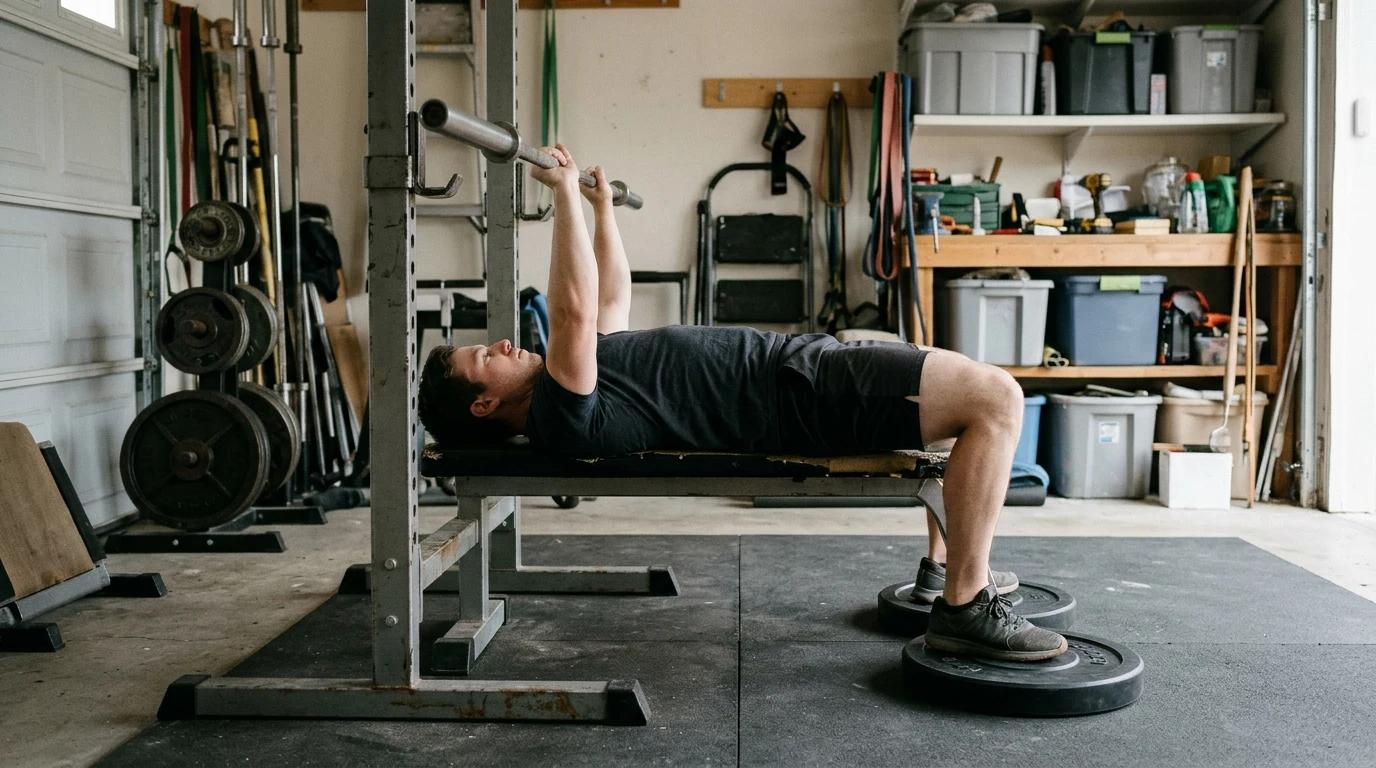
The IPF competition rule is 42 to 45 cm to the top of the pad, about 16.5 to 17.7 inches, and most home benches are listed between 16.5 and 18 inches. Inside that range, the right height is the one that lets you plant your whole foot. If a bench is too tall for you, raise the floor under your feet with flat plates rather than raising the bench.
How GymScored is paid: Amazon Associates commission plus brand-direct affiliate (Rogue / REP / Titan when approved). No sponsored placements, no paid reviews, no pay-to-rank. Picks are ranked by the Gym Score formula and nothing else. Read the full disclosure.
Most home benches land between 16.5 and 18 inches, inside or within a hair of the IPF's competition band. The published number matters less than your feet: if your heels float, raise the floor with flat plates as competitions do, and if your knees ride high, choose a bench from the top of the range.
| Product | Owner rating | Key specs | Pros | Cons | Price | Buy |
|---|---|---|---|---|---|---|
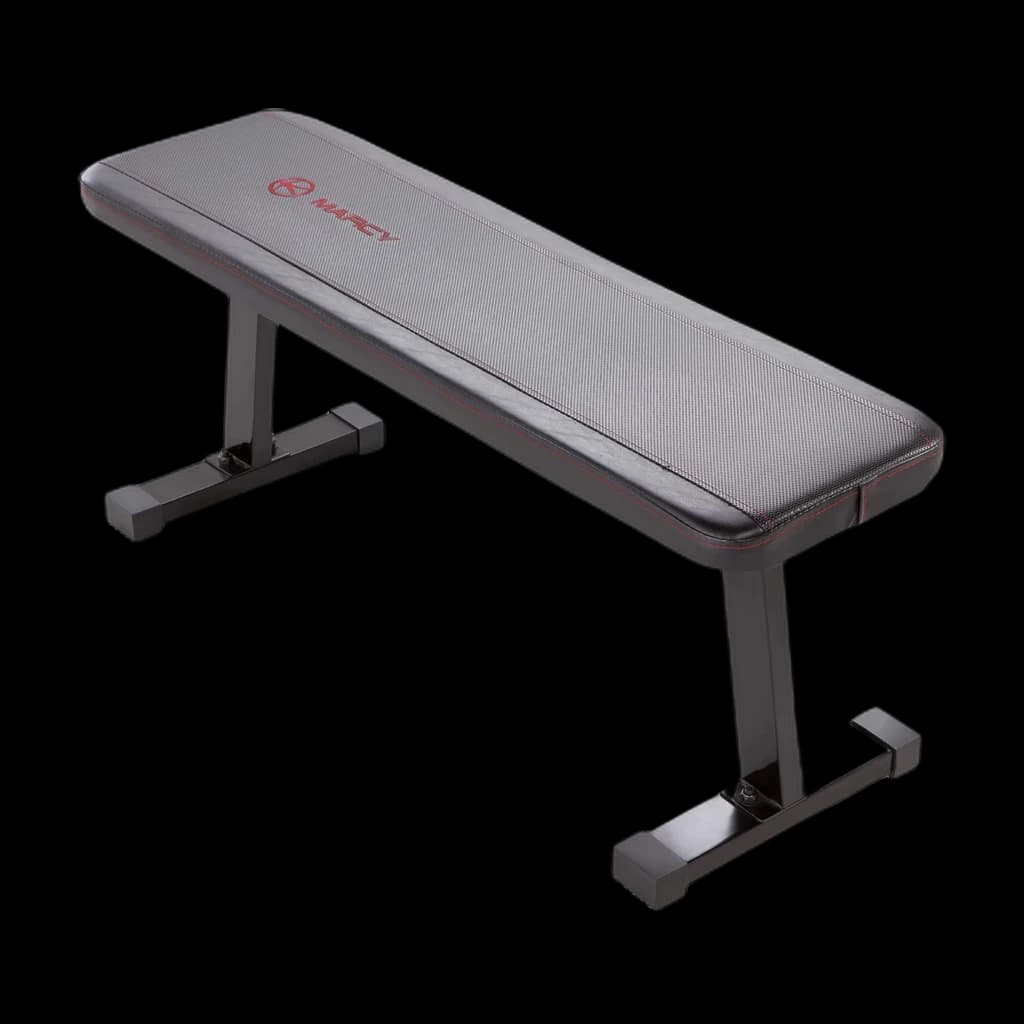 The low bench. Marcy lists 16.5 inches to the top of the pad, the bottom edge of the competition band, which suits lifters whose heels float on taller benches. | Owner rating Gym Score 79 | Key specs
| Pros
| Cons
| $67.99 | Buy on Amazon |
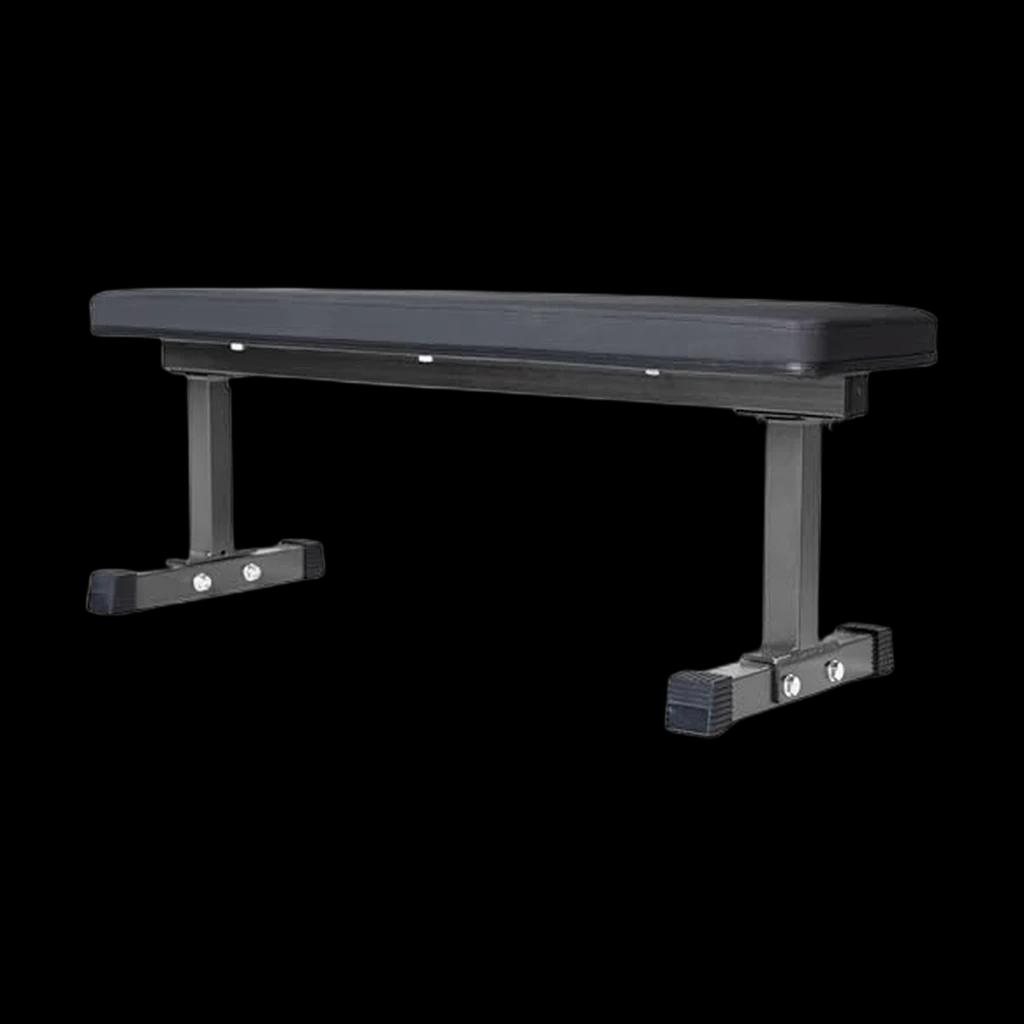 The tall flat bench. REP lists 18 inches, about 7 mm over the IPF ceiling on paper, which can suit tall lifters whose knees ride high on lower benches. | Owner rating Gym Score 79 | Key specs
| Pros
| Cons
| $134.99 | Buy on Amazon |
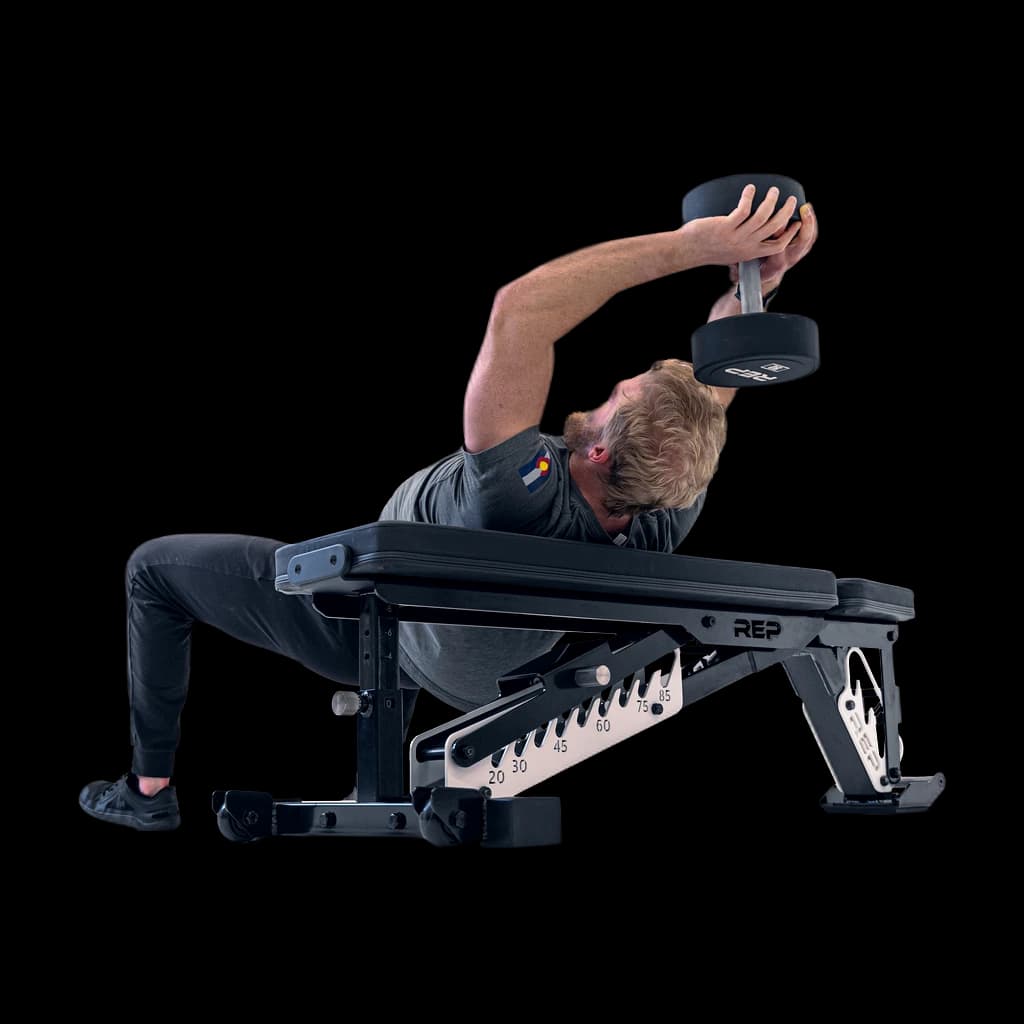 The adjustable that stays in the band. REP lists 17.5 inches with the pad, inside the competition range when flat, with a standard 12-inch or wide 14-inch pad. | Owner rating Gym Score 80 | Key specs
| Pros
| Cons
| — | See our review |
Amazon prices checked Nov 21, 2026. Amazon prices change often — the listing is authoritative.
Which bench height, by situation
Decide by your situation, not the generic ranking.
| If | You want | Pick |
|---|---|---|
| Your heels lift off the floor on most benches | The lowest pad you can find, plus a flat platform under your feet | Marcy Flat Utility Weight Bench (SB-315)$67.99Buy on Amazon |
| You are tall and your knees ride above your hips | A pad at the top of the range | REP FB-3000 Flat Bench$134.99Buy on Amazon |
| You want one bench for flat and incline work | An adjustable that sits inside the band when flat | REP AB-5200 2.0 |
| You compete or plan to | Height inside 42 to 45 cm and a pad 29 to 32 cm wide | A competition-spec flat bench |
| Two lifters of very different heights share one bench | A mid-range bench, with plates for the shorter lifter | Bench plus foot platform |
Most bench advice stops at capacity and adjustment. Height gets a line, if that. Yet the bench press is the one lift where the equipment decides where your feet go, and a pad that sits an inch too high or too low changes the whole setup. Here is what the competition standard actually says, how five real home benches measure against it, and how to tell whether a bench fits your legs.
The number the federation fixed
The International Powerlifting Federation's 2026 Technical Rulebook sets three bench dimensions for competition:
- Height: 42 to 45 cm, measured from the floor to the top of the pad without compressing it. That is about 16.5 to 17.7 inches.
- Width: 29 to 32 cm, about 11.4 to 12.6 inches.
- Length: at least 1.22 m, about 48 inches, flat and level.
That 3 cm height window is where the "17-inch bench" shorthand comes from. It is a narrow band, and it applies to every lifter in the meet regardless of height.
Rule of thumb: the competition range is roughly 16.5 to 17.7 inches to the top of the pad. Anything a home bench lists inside that band is a normal bench height.
Top pick in this guide
The low bench. Marcy lists 16.5 inches to the top of the pad, the bottom edge of the competition band, which suits lifters whose heels float on taller benches.
Five home benches against the rulebook
Here are the published heights from each maker's own pages, converted to centimetres and set against the IPF limits.
| Bench | Published height | Pad width | Against the IPF limits |
|---|---|---|---|
| Marcy SB-315 | 16.5 in (41.9 cm) | Not published | About 1 mm under the 42 cm floor |
| REP FB-5000 | 16.9 in (42.9 cm) | 12 in, or 13.8 in wide | Inside; the wide pad is over 32 cm |
| REP AB-5200 2.0 | 17.5 in with pad (44.5 cm) | 12 in, or 14 in wide | Height inside |
| Rogue Adjustable Bench 3.0 | 17.5 in flat (44.5 cm) | 11 to 11.25 in | Pad under the 29 cm minimum |
| REP FB-3000 | 18 in (45.7 cm) | 11.8 in | About 7 mm over the 45 cm ceiling |
Pad length tells a similar story. REP lists the FB-5000 pad at 48 inches, right on the IPF minimum, and the FB-3000 pad at 47.2 inches, just under it. Rogue gives 52 inches of overall pad length on the Adjustable Bench 3.0.
The misses are smaller than the tolerance
REP's bench dimensions page lists a 3% tolerance next to several of its benches, including the FB-5000 and FB-3000. On a 17-inch bench, 3% is about half an inch. That is bigger than any of the misses in the table.
The tolerance trap: a bench that reads a few millimetres outside the rulebook on paper can measure inside it on your floor, and the reverse. Measure your own before you worry.
So "IPF-compliant" on a home bench is a useful signal that the maker aimed for the competition band. It is not a promise about the one that arrives, and it says nothing about whether the height suits you.
Does the height fit your legs? A two-minute check
Competition rules require the feet to stay flat on the floor through the lift. At home that is still the useful test, because a foot that cannot plant cannot push.
- Lie down in your pressing position with your eyes roughly under the racked bar.
- Set your upper back the way you would for a working set.
- Put your feet where you want to drive from, whole foot down.
- Check the heels. If they float, or you have to reach with your toes, the bench is tall for you.
- Check the knees. If they sit well above your hips and your feet keep sliding forward to find the floor, the bench is short for you.
Most lifters of average build land inside the competition band without trouble. The test matters most at the ends: shorter lifters on an 18-inch bench, and tall lifters on a 16.5-inch one.
When the bench is too tall, raise the floor
The IPF solves this exact problem without changing the bench. Its rules let a lifter build up the platform with flat plates or blocks of up to 30 cm total, with a surface of at least 60 by 40 cm, and they ask international meets to supply blocks of 5, 10, 20 and 30 cm. One bench height, adjustable floor.
Fixes that hold up:
- Flat bumper plates or a solid block under each foot, wide enough to stand on
- Choosing a bench from the low end of the range, such as the Marcy at 16.5 inches
- For tall lifters, a bench from the top of the range, such as the FB-3000 at 18 inches
Fixes to skip:
- Small iron plates stacked loose, which can shift under a hard leg drive
- Putting the bench itself up on plates, which leaves the frame, and the bar over your face, on a base it was not built to sit on
- A thicker aftermarket pad on a bench that is already tall for you
Feet first: if your heels float, build the floor up under your feet. Do not build the bench up.
Pad width and length, the other two numbers
Height gets the attention, but the same rulebook fixes width and length too.
- Width. The IPF band is 29 to 32 cm. A wider pad supports more of a broad back; a narrower one leaves more room for the shoulder blades. REP sells standard and wide pads on the same frame, which is the honest answer: pick for your back, not the label.
- Length. At 48 inches or more, a tall lifter's head and hips both stay on the pad. A shorter pad matters less for dumbbell work than for barbell pressing.
- Footprint. REP lists the AB-5200 2.0 at 25.8 inches across the rear foot and the FB-3000 at 17.7 inches wide. Check that against the inside width of your rack before you buy; our rack attachments guide covers the J-cup side of the same fit.
Flat or adjustable changes the height question
An adjustable bench is measured flat, and most sit at the top of the range because the hinge and seat hardware live under the pad. If you only press flat and your heels already float on a 17.5-inch bench, a dedicated flat bench is the cheaper fix. For the wider choice between benches, see our weight bench rankings and the best weight benches guide.
Frequently Asked Questions
What is the standard height of a weight bench?+
The International Powerlifting Federation sets competition benches at 42 to 45 cm, measured to the top of the uncompressed pad. That is about 16.5 to 17.7 inches, which is why 17 inches is the usual shorthand. Home benches are commonly listed between 16.5 and 18 inches.
Is an 18-inch bench too tall?+
It is about 7 mm over the IPF ceiling on paper, which is within the 3% tolerance REP lists for its benches. For a tall lifter it can be the better fit. For a shorter lifter whose heels float, flat plates under the feet fix it.
How wide should a bench pad be?+
The IPF allows 29 to 32 cm, about 11.4 to 12.6 inches. Wider pads support a broad back; narrower ones leave the shoulder blades more room. Several makers offer both widths on the same frame.
Can I put my bench on plates to make it taller?+
We would not. It puts the frame, and the bar over your face, on a base it was not designed to sit on. Raising the floor under your feet is the fix competitions use for a bench that is tall for the lifter.
Sources & Research
- International Powerlifting Federation — IPF Technical Rulebook 2026, section 2.6 Bench and the bench press rulesgoverning body
- REP Fitness — REP bench guide: bench dimensions for adjustable and flat benchesmanufacturer
- Rogue Fitness — Rogue Adjustable Bench 3.0 specificationsmanufacturer
- Marcy — Marcy Utility Flat Bench SB-315 specificationsmanufacturer
Related reviews
Best Weight Benches for a Home Gym
The REP AB-5200 2.0 is the best bench for most home gyms; the Rogue AB-3 is the lifetime pick. Seven benches ranked on stability, adjustability, and pads.
Power Rack Attachments: What to Buy First
Which power rack attachments to buy first, in order, with the two fitment numbers to measure before you shop and four verified picks under $70.
Should You Warm Up Before Lifting at Home? (And How)
Static stretching before a heavy set costs you strength. The 5-minute dynamic warm-up that works before lifting at home, and what most get wrong.
Hilly Shore Labs
Editorial teamThe independent product research team behind GymScored. Every recommendation is researched, never hands-on tested — recommendations draw on manufacturer specifications and available published research. Category order is editorial; the Gym Score is a separate comparison aid.
174 listed products across 27 home gym categories. Scores use category criteria, value and owner-rating inputs; missing evidence limits what a score can tell you.
See the scoring methodology and who we are.
Affiliate disclosure: GymScored is a participant in the Amazon Services LLC Associates Program. We earn from qualifying purchases at no extra cost to you. Full disclosure →